Biotin can interfere with lab tests: match the supplement, assay, and timing
Biotin in hair, skin, nail, multivitamin, and high-dose products can cause falsely high or low results in susceptible assays. The effect depends on dose, timing, assay design, platform, and analyte; disclose every product and let the ordering clinician and laboratory set retesting or pause instructions.
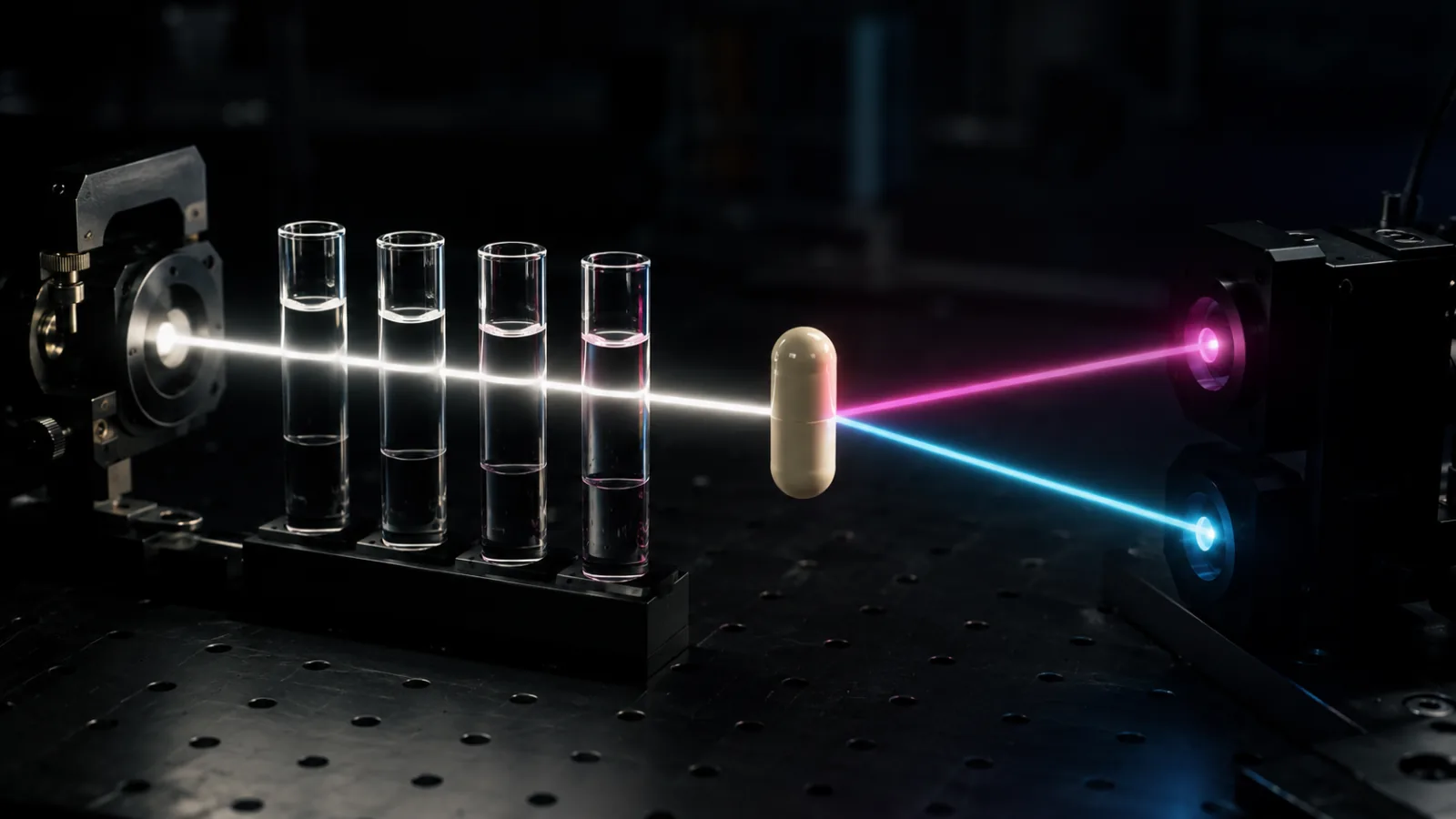
Supplemental biotin can make some laboratory tests report falsely high or falsely low values, depending on the assay design. The risk is not determined by the test name alone: record the exact supplement and dose, time of last use, specimen time, laboratory, method and platform, then tell the ordering clinician and laboratory before testing; do not use a universal internet “washout” or stop a prescribed product without their instructions.1234
Biotin may appear as vitamin B7, vitamin H, a standalone high-dose product, or an ingredient in hair/skin/nail, multivitamin, prenatal, and wellness blends. The front label may not state the dose prominently.
Interference happens in the measurement system
Some immunoassays use the strong interaction between biotin and streptavidin to capture or detect a target. Extra biotin in a specimen can disrupt that architecture. Depending on whether the assay is designed as a sandwich or competitive method, the reported result may shift in opposite directions.24
This is analytical interference: the instrument can generate a plausible number that does not accurately reflect the analyte concentration. It is different from biotin causing a true physiologic change.
| Field | What to record | Why a shortcut fails |
|---|---|---|
| Product | Brand, full Supplement Facts, form, serving, all biotin-containing products | “Multivitamin” or “hair vitamin” hides dose and duplicates |
| Use | Amount actually taken, frequency, start date, last date and time | The package serving may differ from actual use |
| Specimen | Blood-draw date and time, fasting status, collection site | A calendar date alone cannot establish elapsed time |
| Assay | Analyte, manufacturer, platform, method, specimen type | Two labs may measure the same analyte with different susceptibility |
| Result | Value, units, reference interval, flags, prior values, clinical context | A portal arrow cannot reveal interference direction or importance |
| Resolution | Laboratory consultation, alternate method, dilution or other investigation, retest plan | Repeating the same susceptible assay without a plan may repeat the problem |
FDA’s guidance asks manufacturers to test clinically relevant concentrations and communicate known interference to laboratories and clinicians.2 It does not make every assay biotin-sensitive, and it does not allow a consumer to infer the exact susceptibility of an unnamed platform.
Troponin shows why the issue can be urgent
FDA has continued to warn about falsely low troponin results in certain assays affected by biotin and publishes an assay-specific list.1 Troponin may be used in evaluating possible heart injury. The lesson is not that biotin always lowers troponin; it is that an incorrect but believable result can affect a time-sensitive decision.
If someone has chest pain, trouble breathing, fainting, severe weakness, or another potential emergency, seek emergency care and disclose biotin use. Do not delay evaluation to wait out a supplement or attempt to interpret a troponin result from this page.
Hormone and wellness panels need platform-level questions
Thyroid, reproductive, adrenal, cardiac, tumor-marker, infectious-disease, and other immunoassays may use different test designs. A wellness panel can send specimens to multiple laboratories or use multiple platforms. Therefore, “biotin affects thyroid tests for X hours” is too broad to safely transfer across dose, analyte, manufacturer, renal function, or method.
Ask the ordering practice:
- Which exact measurements will be ordered, and what clinical question does each answer?
- Which laboratory and platforms will perform them?
- Does the manufacturer identify biotin interference at relevant concentrations?
- What product-specific instructions does the ordering clinician give?
- Who contacts the laboratory if a result conflicts with symptoms or prior data?
The AACC guidance describes laboratory strategies such as checking the method, consulting the manufacturer, using another assay or specimen approach when available, and communicating with clinicians.4 Those are laboratory decisions, not home experiments.
There is no safe one-size pause interval
Circulating biotin depends on actual dose, frequency, last use, absorption, renal clearance, and other factors. Assays differ in the biotin concentration that creates meaningful interference. NIH advises consumers to tell health professionals about all supplements and notes that amounts above recommended intakes can cause false results in some tests.3
Do not copy a stop period from a different product, hospital, or analyte. Ask the ordering clinician and performing laboratory for a written instruction. If biotin was prescribed or is being used for a diagnosed condition, include that prescriber in the decision.
If a specimen was already drawn, do not conceal use or discard the result. Report product, dose, and timing promptly so the clinician and laboratory can decide whether investigation, reinterpretation, an alternative method, or repeat collection is appropriate.
Read the report for method clues
Keep the complete report, not a screenshot. It should identify the laboratory, specimen, collection time, result, units, reference interval, and often the method or platform. If the method is absent, ask the laboratory—not the supplement seller—to identify it and describe known biotin susceptibility.
A “normal” result does not prove no interference, and an abnormal result does not prove interference. Look for discordance: a result that conflicts with the clinical picture, prior measurements, another method, or related analytes. The responsible clinician and laboratory determine whether that discordance is meaningful.
Design future testing for continuity
- Inventory every source. Collect labels and actual use for all supplements, multivitamins, beauty products, powders, injections, and IV ingredients.
- Notify both sides. Tell the ordering clinician and performing laboratory before collection; do not rely only on a portal medication list.
- Get test-specific instructions. Use the product, dose, assay, platform, clinical urgency, and prescribing context—not a universal pause interval.
- Investigate discordance. If a result conflicts with symptoms or prior data, provide exact timing and let the clinician and laboratory select the next step.
- Preserve the resolved record. Keep the original result, method, interference inquiry, any alternate or repeat result, and the final clinical interpretation.
The decisive laboratory question is: “For this exact biotin exposure and this exact assay platform, what interference is known, and how will the laboratory and ordering clinician resolve a result that does not fit?”
Sources
- U.S. Food and Drug Administration. Biotin Interference with Troponin Lab Tests—Assays Subject to Biotin Interference. FDA warning used for serious incorrect-result risk and the assay-specific troponin list; it is not generalized to every platform or analyte. Accessed .
- U.S. Food and Drug Administration. Testing for Biotin Interference in In Vitro Diagnostic Devices. FDA guidance used for assay-design, direction-of-error, interference testing, and labeling context; it does not set one patient stop interval. Accessed .
- National Institutes of Health Office of Dietary Supplements. Biotin Fact Sheet for Consumers. NIH source used for supplement-dose context and the advice to tell health professionals about supplements before laboratory testing. Accessed .
- AACC Academy. AACC Guidance Document on Biotin Interference in Laboratory Tests. Laboratory-medicine guidance used for biotinylated immunoassays, platform variability, communication, alternative methods, and laboratory-led retesting. Accessed .