Cellulite treatments by mechanism: septa, skin, fat, and temporary effects
Cellulite is not one removable substance. Visible dimples can involve fibrous septa, fat lobules, skin thickness and laxity, and anatomy. Tissue release, acoustic energy, radiofrequency, laser, massage, and fat treatments target different parts of that picture.
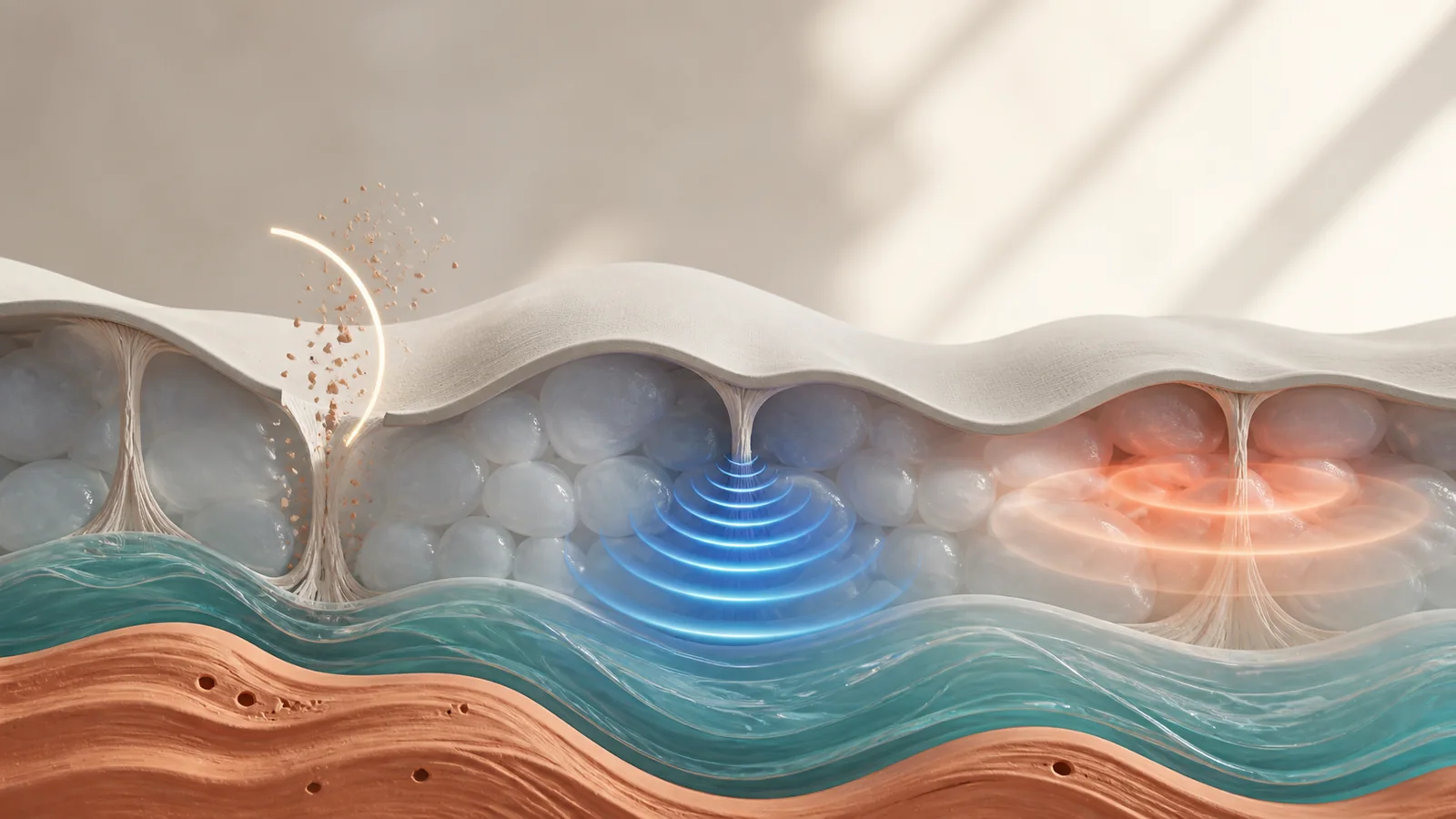
Cellulite treatment should be matched to the structure creating the visible pattern. A discrete tethered dimple is a different target from broad skin laxity, surface texture, or a fat bulge. Tissue-release devices cut selected fibrous septa; energy devices may heat, mechanically pulse, or change the temporary appearance of tissue; massage and topical effects are usually temporary. None is a general weight-loss treatment.
FDA describes cellulite as dimpling related to connective bands between skin and deeper tissue, with fat pushing between them.1 Body fat can make a pattern more visible, but cellulite is not simply “toxin” or “fat” waiting to be melted.
Name the visible pattern before the treatment
| Observed problem | Possible treatment target | What not to assume |
|---|---|---|
| Discrete depression present at rest | A specific fibrous septum or local tether | That global fat reduction will release it |
| Broad rippling or lax surface | Skin support, tissue elasticity, or wider structural pattern | That cutting one septum treats the whole field |
| Contour bulge with or without dimpling | Subcutaneous fat plus a separate cellulite pattern | That cellulite treatment causes meaningful weight loss |
| Texture visible only with compression or muscle contraction | Dynamic surface behavior | That an at-rest device study predicts the same endpoint |
| Post-procedure indentation or scar | Scar tether, volume change, fibrosis, or another diagnosis | That a consumer cellulite protocol is the correct category |
A clinician needs to distinguish these patterns. A reader can still insist that the quote names which one the device is meant to change and how the change will be measured.
Tissue release targets individual tethers
FDA’s OUP device classification covers powered instruments that temporarily improve the appearance of cellulite through controlled cutting of subcutaneous tissue beneath depressions or dimples.3 K221336 is one device-specific clearance with defined anatomy, population, and temporary-appearance language.4
This approach is often called subcision or septa release, but techniques and devices differ. Ask how the clinician identifies a causal septum, confirms release, limits the treated map, controls depth, manages bleeding and bruising, and handles an indentation that is not caused by a releasable tether.
Because the device enters subcutaneous tissue, compare the professional, sterile setup, anesthesia, incision care, activity limits, and follow-up—not only the number of dimples quoted.
Acoustic, RF, light, and mechanical devices use different endpoints
Acoustic devices deliver pressure waves or pulses; RF creates heat through electrical energy; laser or light systems use wavelength-dependent energy; mechanical systems may massage or apply vacuum. FDA’s body-contouring page describes these mechanisms and repeatedly limits many endpoints to temporary changes in circumference or cellulite appearance.1
An exact clearance can be more specific. K233804, for example, includes a defined cellulite appearance indication and observation period for one acoustic-pulse device.5 Do not transfer that wording to an unrelated acoustic system or use it to imply permanent septa removal.
Fat reduction and cellulite treatment are different contracts
Fat-reduction devices and liposuction change fat volume or contour. AAD notes that losing weight may make cellulite less visible for some people, while loose skin can also make it more noticeable; cellulite can persist at many body sizes.2
If a package combines fat reduction and cellulite treatment, split the quote into two endpoints. Define the area and measurement for contour or circumference, then define the number and severity of dimples or the validated cellulite scale for the surface pattern. One favorable photograph cannot reveal which component created the change.
The CoolSculpting, Emsculpt, and liposuction guide compares fat, muscle, and surgical contour mechanisms. Use it when the primary concern is volume rather than tethered texture.
Topicals and massage need duration language
Topicals can moisturize, alter surface reflection, or use ingredients that produce limited appearance changes. Massage, vacuum, and compression can temporarily redistribute fluid or change the way the surface looks. A result photographed immediately after pressure or hydration is not evidence of structural release.
Ask when the “after” image was taken and whether the endpoint persisted without ongoing sessions. Price maintenance into the comparison. A lower-disruption option can still be useful when a temporary event-focused change is the goal; it should simply be named accurately.
Make the image protocol expose the mechanism
Cellulite photographs are unusually sensitive to stance, muscle contraction, camera angle, side lighting, compression, hydration, and how recently the area was massaged. A persuasive image can therefore answer the wrong question. Build the capture plan around the proposed mechanism before treatment begins.
For a discrete tether-release plan, mark the individual depressions selected for treatment and reproduce a neutral standing position. Count or grade those same mapped depressions later; do not substitute a generally smoother pose. For a skin-support or energy plan, define whether the endpoint is surface roughness, laxity, a validated cellulite scale, or a patient-reported appearance measure. For massage or vacuum, record the interval between the last session and the photograph so an immediate fluid or compression effect is not presented as a durable structural change.
Combination packages require a staged record. If fat reduction, tissue release, and RF are performed together, one final image cannot identify which component changed contour, dimples, or skin appearance. A cleaner plan sets a baseline, names the endpoint for each component, and schedules a checkpoint before the next mechanism is added when clinically feasible. If everything must occur in one course, the clinic should say that attribution will be limited.
Use at least these capture controls:
- the same camera height, distance, lens, and crop;
- the same room, lighting direction, and time relationship to treatment;
- relaxed and deliberately contracted views when both patterns matter;
- no garment indentation, topical sheen, retouching, or unreported posing change; and
- a date far enough from transient bruising, swelling, massage, or compression to match the claimed endpoint.
FDA device language may define an appearance endpoint and a stated observation period for one exact system.45 The clinic’s review should preserve that specificity rather than converting every smoother photograph into proof of fat loss, skin tightening, or permanent septa release.
Build a mechanism-matched plan
- Map the pattern at rest and in motion. Use consistent standing photographs and note discrete depressions, broad laxity, contour bulges, contraction effects, scars, and prior treatment.
- Name one primary target. Ask whether the plan targets a septum, skin support, fat, circulation or fluid, or a temporary surface effect.
- Open the exact device record. Match model, applicator, mechanism, anatomy, population, endpoint, and duration wording to the proposal.
- Normalize the treatment burden. Compare anesthesia, incisions, sessions, bruising, wound care, visible recovery, maintenance, and follow-up.
- Measure the same endpoint later. Repeat position, lighting, muscle state, timing, and scale; do not substitute weight loss for dimple change.
The clearest cellulite consultation can point to the structure it intends to change and the record supporting that exact mechanism. A device that releases a tether, one that heats tissue, and one that produces a temporary massage effect should not compete under one unexplained promise to “smooth everything.”
Sources
- U.S. Food and Drug Administration. Non-invasive body contouring technologies. FDA explanation of cellulite anatomy, temporary appearance endpoints, and RF, light, ultrasound, cold, and mechanical device categories. Accessed .
- American Academy of Dermatology. Cellulite treatments: what really works?. Dermatology evidence overview distinguishing cellulite from fat and comparing procedures, creams, exercise, and durability. Accessed .
- U.S. Food and Drug Administration. Product classification: powered surgical instrument for cellulite. Official definition of devices that temporarily improve cellulite appearance through controlled release of subcutaneous tissue. Accessed .
- U.S. Food and Drug Administration. 510(k) summary K221336. Official device-specific tissue-release clearance record and indication for an exact cellulite system. Accessed .
- U.S. Food and Drug Administration. 510(k) summary K233804. Official example of acoustic-pulse indications and duration language for an exact cellulite device. Accessed .