Estradiol gel versus patch for menopause: same route family, different daily logistics
Both deliver systemic estradiol through skin, so the core decision is not oral-versus-transdermal risk. Exact labels distinguish a metered gel's transfer precautions from a patch's adhesive, wear, and application-site issues.
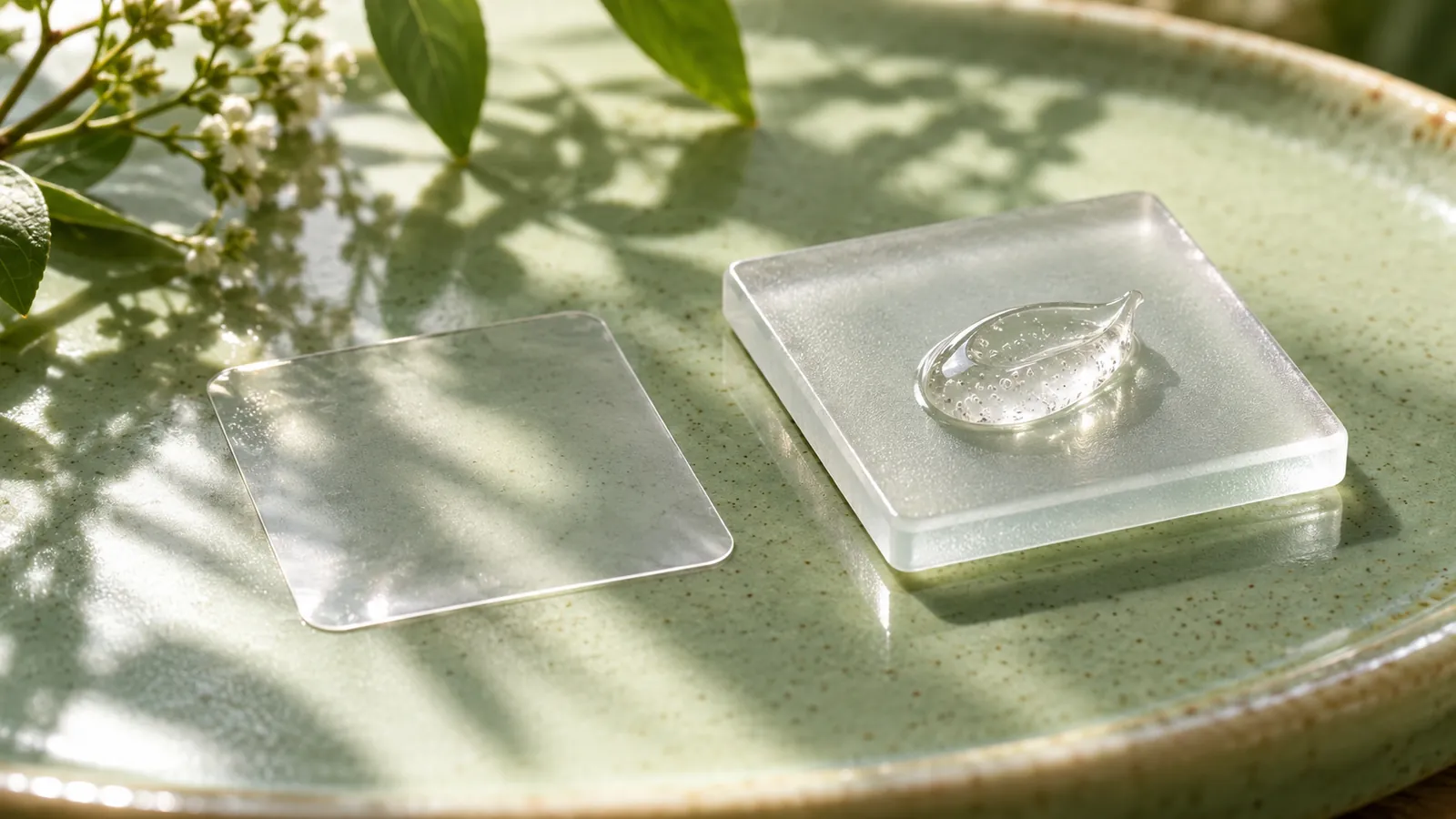
Estradiol gel and estradiol patches are both systemic transdermal estrogen products, but they create different use and contact questions. A metered gel such as EstroGel has product-specific drying and transfer precautions; a patch such as Climara has product-specific wear and skin-adhesion considerations. Neither is automatically the “safer transdermal form,” and strengths are not interchangeable by comparing printed numbers. A prescriber should match the exact finished product to the person’s symptoms, uterus status, history, and routine.12
Compare the work each product asks of the user
For gel, the central practical issue is a repeated use routine with separate product-specific drying and skin-contact precautions; drying does not end the label’s contact restriction. The EstroGel label discusses application conditions and possible transfer. For a patch, the practical issue is wearing an adhesive system for its labeled interval and noticing whether it adheres and how the skin responds. Climara’s label identifies application-site reactions among its adverse-event information. The details vary among brands; do not generalize one gel or patch label to every transdermal product.12
| Decision point | Metered gel example | Patch example |
|---|---|---|
| Routine | Daily use and separate contact precautions matter. | Adhesion and the exact wear schedule matter. |
| Contact with others | Transfer precautions are explicit in the gel label. | Patch disposal and secure wear remain product-specific. |
| Skin issue | Application-area response may affect use. | Adhesive or contact-site reactions may affect use. |
| Prescription change | Pump amount is not a patch-strength conversion formula. | A patch's printed strength is not a gel-volume formula. |
This comparison is not the patch-versus-pill question. Both products here bypass swallowing a tablet. Their shared route does not eliminate the systemic-estrogen warnings, and a gel-versus-patch choice should not be sold as a way to avoid evaluating the underlying indication or contraindications.12
Describe the household and skin context
If close skin contact with a child or partner is common, ask the clinician to explain the exact gel’s transfer precautions and whether that routine is realistic. If adhesives have repeatedly caused irritation or patches do not stay attached, bring photographs or product names. The estradiol-patch rash guide explains why an adhesive-outline rash does not automatically mean allergy to estradiol. Neither a household issue nor a rash photo can decide the replacement product alone.
Ask how the practice will evaluate whether the selected product is working and how it handles adherence or contact problems. A written plan should name the actual brand or generic product and its patient instructions. “Use estrogen on your skin” is too vague for two different delivery systems.
Do not convert the package numbers yourself
Household routines can turn a small label detail into the deciding factor. A gel’s secondary-exposure precautions matter when daily life includes close skin contact with children or partners. Drying and contact restrictions are distinct label instructions, so ask the prescriber or pharmacist to explain the exact product’s precautions. A patch’s adhesive routine matters when clothing, sweat, or a skin reaction repeatedly interrupts wear. It is reasonable to describe these realities to the prescriber rather than choosing a product solely because it sounds convenient. The exact EstroGel and Climara labels provide the details to review; this article cannot substitute one product’s instructions for another’s.12
Ask what the clinician considers a failed trial of a product: poor symptom control, a skin reaction, inability to follow the routine, or a new contraindication are different reasons to revisit the plan. Documenting the reason helps avoid a blind series of equivalent-sounding switches. If the original question is actually “Should I use systemic estrogen at all?” neither gel nor patch logistics answer it.
Gel labels may express a measured amount per pump or amount of estradiol in a preparation; patch labels describe delivery over time. Those are different measurements and do not provide a simple self-switch equation. Product changes belong with a prescriber and pharmacist, including review of other systemic hormone components when relevant. A person with a uterus may need a separate endometrial-protection discussion; a gel or estradiol-only patch is not a combination product by default.12
Use Treomark’s hormone-therapy hub to compare follow-up access. Ask a candidate clinician: “Which exact gel or patch fits my daily routine, how do you review the label-specific contact and skin issues, and what is the follow-up if the first product is impractical?”
Sources
- National Library of Medicine DailyMed. ESTROGEL estradiol metered gel prescribing information. Exact gel's application, transfer, and systemic-estrogen precautions. Accessed .
- National Library of Medicine DailyMed. CLIMARA estradiol patch prescribing information. Exact patch's wear and application-site labeling; no assumed equivalence to another patch. Accessed .