Hair-transplant cost per graft vs package: normalize the quote before comparing
A per-graft quote is comparable only when “graft” means the same counted event and the plan shows intended, harvested, usable, and placed follicular units. A package must be unpacked into diagnosis, surgeon and technician roles, method, anesthesia, travel, aftercare, revisions, and the donor reserve.
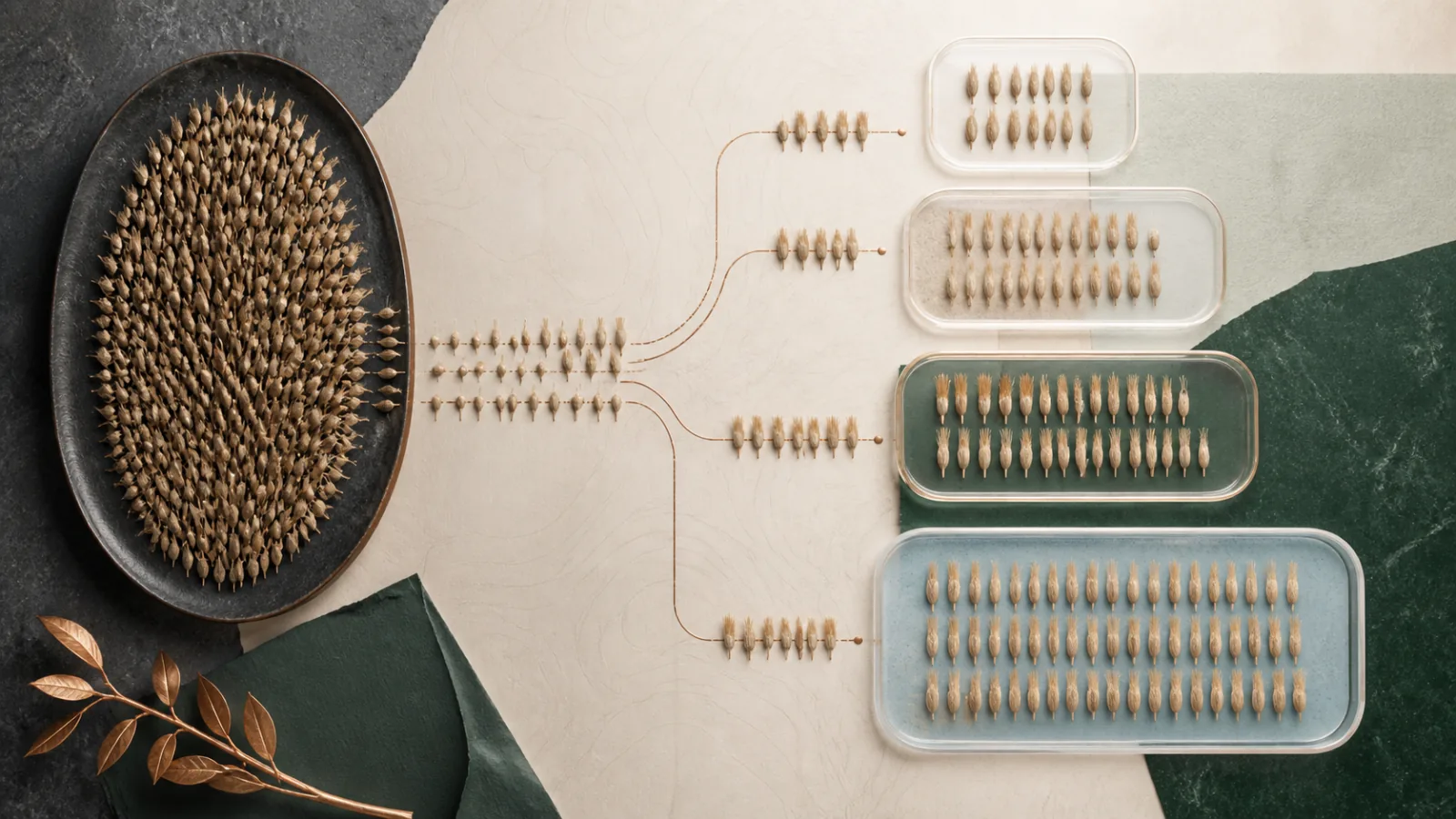
A hair-transplant “price per graft” is comparable only when each quote uses the same method-specific denominator and connects it to a measured donor plan. For FUE, distinguish punch attempts from intact extracted follicular units; for FUT, distinguish the strip from units produced through microscopic dissection. Then reconcile usable and placed units, diagnosis, named roles, anesthesia, aftercare, travel, complication care, and revision terms.123
A graft is not a standardized cosmetic outcome. One follicular unit can contain one or several hairs, and equal graft counts can produce different coverage depending on caliber, curl, color contrast, survival, distribution, recipient area, and future loss.
Compare method-specific counts, not one sales number
The following is Treomark’s editorial reconciliation framework, not an ISHRS standard count. It keeps FUE and FUT records from being collapsed into one ambiguous “harvest” number.
| Count | What it means | Quote risk if omitted |
|---|---|---|
| Planned | The target number used for design and scheduling | It may be marketed as guaranteed even though the operative count can change |
| Method-specific harvest | FUE punch attempts and intact extracted units, or FUT strip-derived follicular units after microscopic dissection, recorded separately | A procedure or attempt count may be confused with intact grafts |
| Usable grafts | Follicular units accepted after extraction, dissection, and quality review | Discarded or transected units disappear from the sales number |
| Placed grafts | Units documented as inserted into recipient sites | A package maximum may be mistaken for the completed placement count |
Ask whether the clinic records hair count as well as follicular-unit count. A single-hair graft may be selected for a soft hairline while multi-hair units add density elsewhere. Neither should be silently multiplied into a more impressive “hair” total after the quote was sold as “grafts.”
The donor budget determines whether the quote makes sense
Hair transplantation redistributes a finite donor supply; it does not create follicles. A quote should follow diagnosis, examination for miniaturization or scarring, donor density and caliber assessment, safe-zone assumptions, recipient measurement, and a future-loss plan.2
The FUE-versus-FUT guide explains why the harvesting choice is a long-term donor strategy. A low per-graft price can become expensive if the design spends reserve too aggressively, creates difficult scars, or requires another operation to repair density or direction.
Request a diagram showing:
- measured donor regions;
- proposed harvest area and method;
- estimated follicular-unit density;
- target recipient zones;
- graft and hair distribution;
- reserve after the procedure; and
- how the design works if native hair continues to thin.
Without that map, the denominator is detached from the person.
Per-graft, flat package, and day rate allocate uncertainty differently
A per-graft quote moves price with the final count. It needs a minimum, target, maximum, recount method, and rule for a material intraoperative change. A flat package may cap the price but can hide the graft denominator, staffing, or aftercare. A day rate defines time rather than delivered units and needs a plan for what happens if the target is not reached.
Do not add unlike numbers. A package including travel and postoperative care is not directly comparable to a procedure-only per-graft quote.
Named roles belong in the estimate
Hair transplantation includes diagnosis, hairline and recipient design, anesthesia, donor harvesting, donor closure when applicable, graft dissection and handling, recipient-site creation, placement, prescribing, and complication management. ISHRS recommends asking who performs the evaluation and surgery, the physician’s experience, and how follow-up is handled.1
Get the legal name, license, and exact task of the surgeon and each team category. “Our medical team” does not disclose whether the quoted physician will be present for the critical steps or whether a technician count changes staffing.
The estimate should say whether a robotic or motorized device adds a fee, which model is planned, and what the manual fallback is. Equipment does not replace operator identity or donor judgment.
Travel packages need a second cost horizon
Airfare and hotel are only the visible travel expenses. Include preoperative testing, passport or visa costs, companion travel, time away from work, local transportation, length-of-stay changes, medication access, early wash, suture removal for FUT, remote check-ins, and an unplanned local evaluation after returning home.
The cosmetic-surgery travel guide builds the location-to-location handoff. Ask which clinician can examine donor or recipient problems after return and who pays for the visit, imaging, medicines, wound care, or corrective procedure.
A result guarantee is not a quote term
Graft survival, visual density, scar visibility, shedding, native-hair loss, and healing vary. A clinic can define the service, documentation, and revision policy; it cannot turn a biological outcome into a guaranteed count of growing hairs.
Ask what the revision policy actually covers:
- eligibility and assessment date;
- how growth and placement are documented;
- whether additional grafts, facility, anesthesia, medicines, and travel are included;
- what exclusions apply;
- who determines causation; and
- whether the policy survives a business or surgeon change.
“Free touch-up” may exclude the expensive parts.
Close the graft ledger after surgery
The final operative record should reconcile planned, method-specific harvest, intact, discarded, usable, and placed units; single-, double-, and multi-hair distribution; donor method and region; recipient sites; team roles; medicines; device use; unexpected events; and photographs.
Keep the original quote beside that record. If the price changes, request the calculation and consent that authorized it. For qualifying uninsured or self-pay care, federal good-faith-estimate and dispute protections may also apply.4 The good-faith-estimate guide helps reconcile separate surgeon, facility, and other bills.
Price the donor strategy, not the sales unit
- Establish candidacy and diagnosis. Document the hair-loss process, stability, donor measurements, future-loss assumptions, and alternatives before discussing a graft target.
- Define the counted unit. Require planned, method-specific harvest, intact, usable, and placed follicular units plus estimated hairs by graft type.
- Map the donor budget. Connect the count to harvest region, FUE or FUT method, scar strategy, recipient design, and reserve.
- Name the operating team. Record who diagnoses, designs, anesthetizes, harvests, closes, dissects, creates sites, places, prescribes, and follows up.
- Unpack every included cost. Normalize procedure, facility, anesthesia, products, follow-up, travel, time, complication care, and revision terms.
- Reconcile the final ledger. Compare the invoice and operative record with the estimate, count each stage, and preserve photographs and aftercare ownership.
The decisive question is: “What exactly is being counted and paid for, how does it fit my measured donor reserve, and which named people and services remain responsible after the last graft is placed?”
Sources
- International Society of Hair Restoration Surgery. Questions to ask your hair restoration physician. Professional, operative-role, facility, diagnosis, complication, and follow-up questions for hair-restoration surgery. Accessed .
- International Society of Hair Restoration Surgery. Surgical treatments for hair loss. Follicular-unit transplantation, donor hair, harvesting approaches, procedure steps, and candidate evaluation. Accessed .
- International Society of Hair Restoration Surgery. FUE vs FUT. Current professional comparison of FUE and FUT harvest, scarring, donor management, and procedural tradeoffs. Accessed .
- Centers for Medicare & Medicaid Services. Your rights and protections against surprise medical bills. Federal consumer framework for good-faith estimates and billing disputes for qualifying uninsured or self-pay care. Accessed .