Iron infusion at a med spa: verify the product, reason, monitoring, and follow-up
An iron infusion is prescription treatment, not a generic vitamin drip. Before booking, identify the exact IV iron product, documented reason, dose course, laboratory plan, clinician, monitoring, reaction response, and follow-up owner—including product-specific warnings such as ferric carboxymaltose and low phosphate.
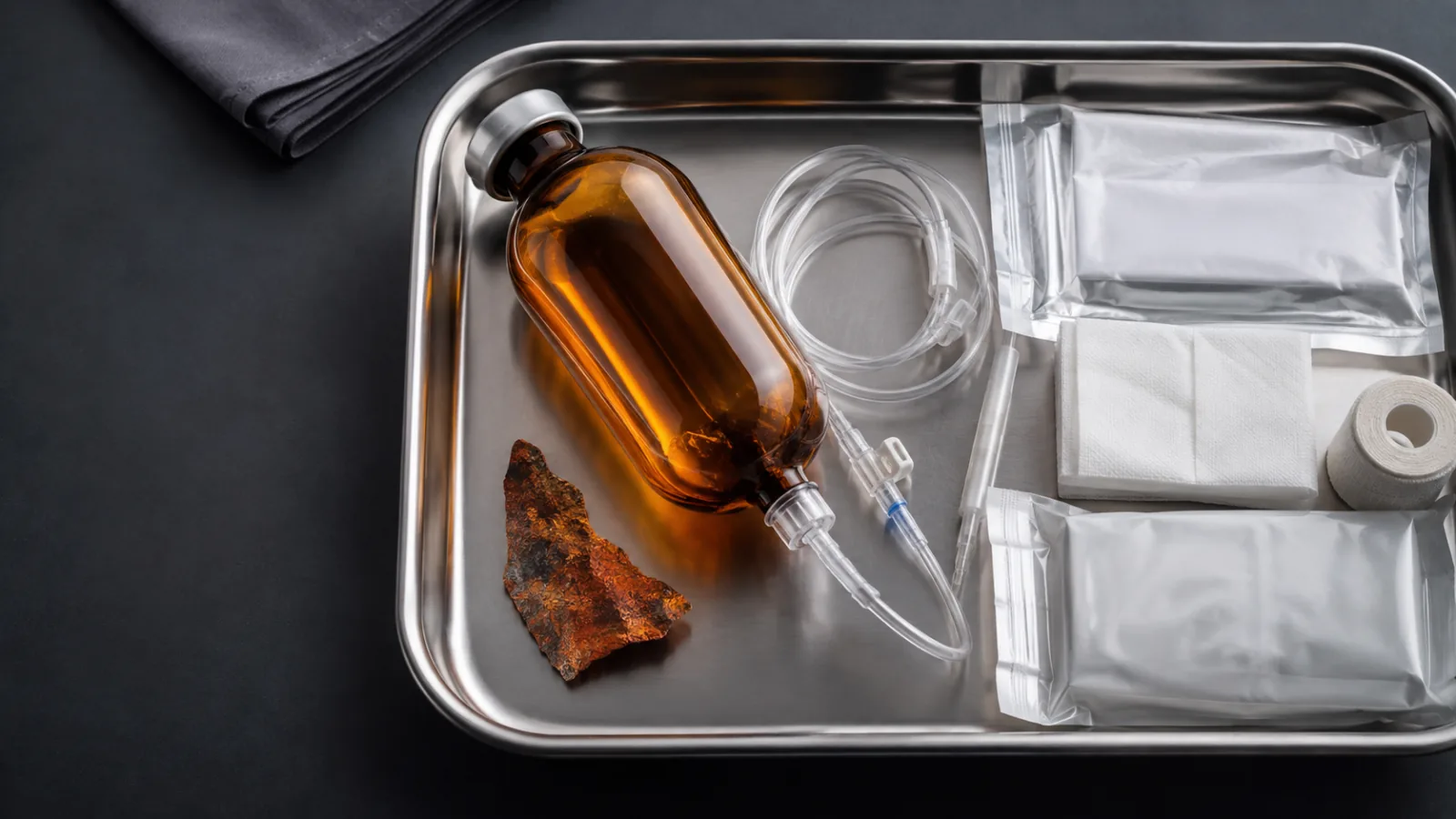
Before an iron infusion at a med spa or outpatient clinic, verify the named prescription product, the documented condition it is intended to treat, the prescriber and administering clinician, the dose course, relevant laboratory plan, monitoring and emergency capability, and the clinician who owns follow-up. “Iron drip” is not enough: intravenous iron products have different labels, dosing, and warnings, and FDA added a boxed warning in September 2026 about symptomatic hypophosphatemia with ferric carboxymaltose.12
This is a record-building checklist, not a way to decide whether someone needs iron or which formulation to receive.
Start with the exact finished drug
Ask the clinic to put the proprietary name, established name, manufacturer, strength, container, National Drug Code when applicable, and proposed dose on the order. Then compare that record with the pharmacy label and the container presented on infusion day.
| Record | Question it answers | What it cannot establish alone |
|---|---|---|
| Prescription or order | Who ordered which product, amount, route, schedule, and indication | That the history, labs, setting, and follow-up are adequate |
| Container and pharmacy label | What finished product and lot are actually being administered | That a similarly named product has the same label or risks |
| FDA prescribing information | Approved uses, contraindications, warnings, administration, and monitoring for that product | That the drug is appropriate for this individual |
| Lab report | What was measured, by which laboratory, on what date, with what reference interval | Why the result occurred or which treatment should follow |
| Visit note and discharge plan | What was assessed, administered, observed, and assigned for follow-up | That an unrecorded verbal promise will be available later |
An FDA-approved IV iron product is not FDA approval of a clinic, a wellness package, or every reason the clinic might offer it. Likewise, a drug appearing on a menu does not identify the product that will be infused.
The new boxed warning is specific, not generic shorthand
On September 1, 2026, FDA announced a boxed warning for ferric carboxymaltose injection, currently marketed as Injectafer, describing symptomatic hypophosphatemia—low blood phosphate. FDA said its 2026 assessment used adverse-event, literature, and Sentinel data. The communication and revised label identify monitoring circumstances and describe possible manifestations and longer-term complications.12
That update should change the questions asked about ferric carboxymaltose. It should not be rewritten as “all iron infusions have the same boxed warning,” nor should a clinic use another product name as proof that no meaningful precautions apply. Read the label for the actual finished drug.
For ferric carboxymaltose, the record should show how the prescriber addressed the current label’s risk factors and serum-phosphate monitoring language, especially when another course is proposed within the period identified by the label.2 A consumer should not invent a laboratory cutoff or alter a course from this article; the useful action is to ask who reviewed the product-specific label and who will review any results.
A diagnosis name and a single number are different evidence
“Low iron,” “fatigue,” ferritin, hemoglobin, transferrin saturation, and iron deficiency are not interchangeable labels. Ask for the actual clinical reason on the order and a copy of the relevant reports. A complete explanation should connect:
- the condition being treated and how it was established;
- the current symptoms and medical history considered;
- the dated laboratory measurements and their reference intervals;
- whether blood loss, absorption, nutrition, kidney disease, pregnancy, inflammation, or another cause needs separate evaluation;
- why intravenous rather than oral treatment is being proposed; and
- who will evaluate response and the underlying cause.
The goal is not to turn the client into the diagnostician. It is to ensure the infusion is attached to accountable medical care rather than sold from a symptom word.
Check the people, pharmacy chain, and setting separately
Identify the prescribing clinician, the person who assesses the patient, the person who starts and monitors the infusion, and the clinician immediately available if the plan changes. Verify each professional’s Florida license through an independent source. A certificate in IV therapy is not a substitute for the professional license and scope needed for the tasks performed.
Ask where the drug came from, whether it is the FDA-approved finished product or another preparation, which pharmacy dispensed it, how it was stored, and how lot and expiration details enter the medical record. If the clinic describes a compounded preparation, the compounding and pharmacy-verification framework explains why pharmacy status does not make a compounded drug FDA approved.
The physical room also matters. Confirm that there is a written monitoring protocol, working vital-sign equipment, trained staff, emergency supplies, an escalation process, and a transfer plan appropriate to the product and patient. A pleasant lounge and a nearby hospital are not substitutes for immediate response capacity.
Observation is an active clinical period
The current Injectafer label directs observation for signs and symptoms of hypersensitivity during and after administration for the labeled period and until clinically stable.2 The label also describes the response to a serious reaction. Do not translate this into a universal observation time for every iron product; obtain the exact label-based protocol.
Ask what is recorded during the infusion, who can stop it, who evaluates a symptom, which medicines or equipment are immediately available, and when emergency medical services are activated. Also ask what symptoms after leaving require the clinic, the prescribing team, urgent evaluation, or emergency services. The written answer should be product-specific.
Build one traceable infusion packet
Before payment, collect the order, product name, current medication list, allergies and previous reactions, relevant laboratory reports, prescriber note, clinic and pharmacy details, consent, quote, cancellation terms, and after-hours contact. Afterward, add the administration record: date, dose, lot, site, staff, start and stop times, observations, symptoms, interventions, and discharge instructions.
The quote should identify what happens if the clinician decides not to infuse, the product is unavailable, new laboratory work is needed, or a reaction requires transfer. Separate the drug, clinical assessment, administration, laboratory, facility, and follow-up charges rather than relying on an all-inclusive headline.
- Name the product. Match the written order, dispensing label, container, manufacturer, lot, strength, and current FDA labeling.
- Connect it to accountable care. Record the condition, evidence, prescriber, alternatives discussed, and the clinician responsible for the underlying cause.
- Review product-specific risks. Ask how contraindications, prior reactions, current medicines, repeat courses, and label-specific laboratory monitoring were handled.
- Verify the team and response system. Check licenses, assessment and administration roles, observation, emergency capability, transfer, and after-hours routing.
- Close the loop. Obtain the administration record and a dated follow-up plan that identifies measurements, timing, result owner, and next decision.
The decisive booking question is: “What exact IV iron product and course are being ordered for what documented reason, and who owns product-specific monitoring, a reaction, and follow-up after the infusion?”
Sources
- U.S. Food and Drug Administration. FDA Adds Boxed Warning to Labeling for Ferric Carboxymaltose Injection (Injectafer) to Describe Risk of Low Phosphate Levels. September 1, 2026 safety communication used for the product-specific boxed warning, risk framing, monitoring language, and symptom escalation boundaries. Accessed .
- U.S. Food and Drug Administration. Injectafer prescribing information. Current product label used for approved indications, administration, contraindication, warnings, observation, and repeat-course monitoring requirements. Accessed .