IV infiltration vs extravasation vs infusion reaction: location and mechanism change the response
Infiltration and extravasation are local catheter-site events: nonvesicant fluid versus a vesicant escapes into tissue. An infusion reaction is a systemic response that may involve skin, breathing, circulation, or gastrointestinal symptoms. They are not severity grades of one problem and can occur together.
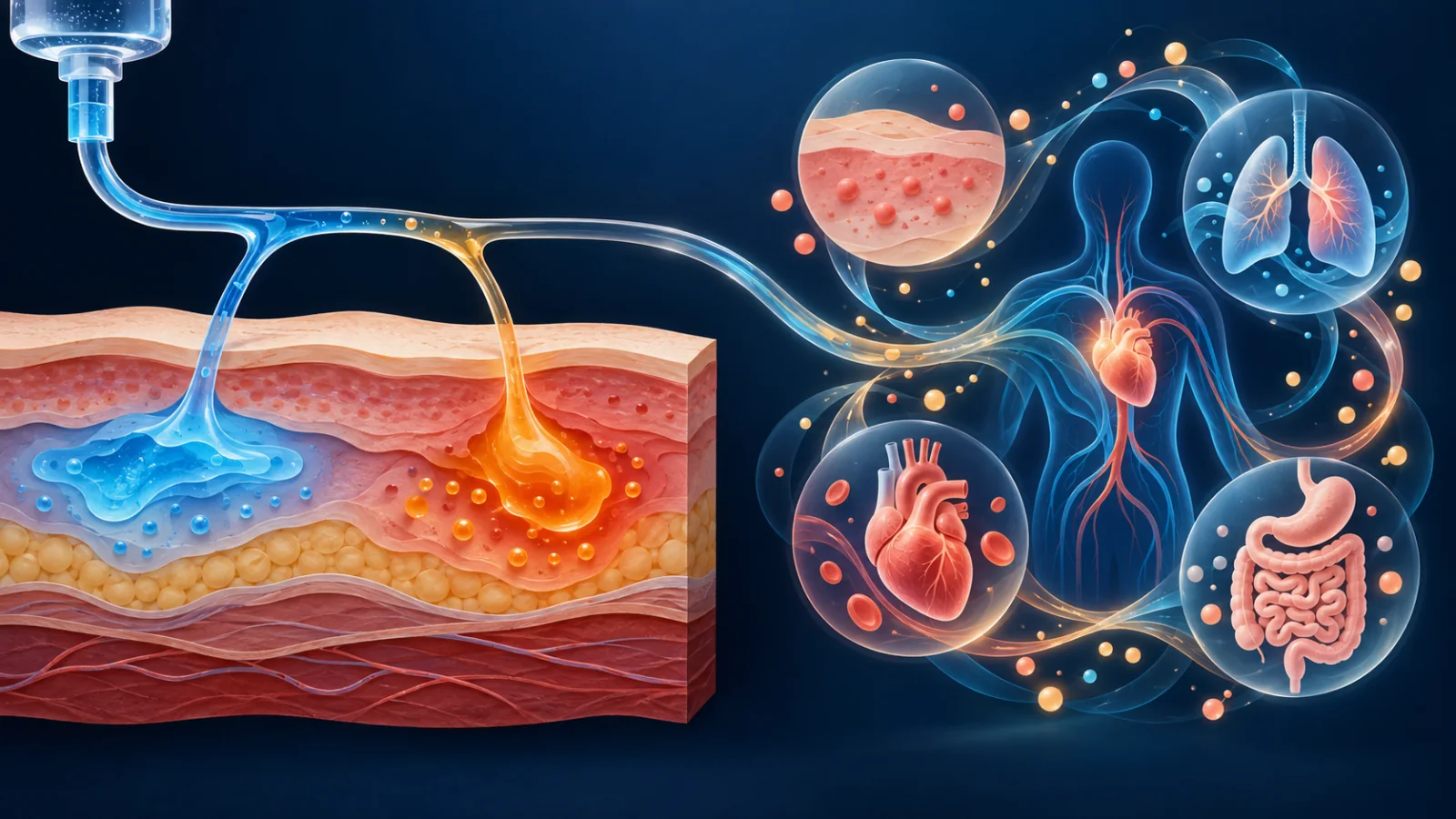
Infiltration, extravasation, and an infusion reaction are different events. Infiltration is leakage of a nonvesicant solution from the vascular pathway into surrounding tissue. Extravasation is leakage of a vesicant or otherwise tissue-damaging infusate, with potential for local injury. An infusion reaction is a systemic adverse response that can affect skin, breathing, circulation, the gastrointestinal system, or other organs. A local leak and a systemic reaction can occur at the same time, so the response must assess both.124
These terms should not be used as a mild-to-severe ladder. Classification depends on where symptoms occur, whether the catheter still functions, what exact substance and concentration were infused, dose and rate, timing, and the whole-person assessment.
Separate the local and systemic maps
| Event | Primary pattern | Records that drive the response |
|---|---|---|
| Infiltration | Local fluid outside the vein from a nonvesicant infusion; swelling, coolness, discomfort, slowed flow, or site change may occur | Solution, volume estimate, site, catheter, limb findings, timing, neurovascular assessment, photographs, follow-up |
| Extravasation | Local escape of a vesicant or tissue-damaging agent; pain, burning, blistering, color or perfusion change, and delayed injury are possible | Exact drug/ingredient, concentration, dose, volume estimate, agent-specific protocol, aspiration, antidote/compress instructions, specialist escalation |
| Infusion reaction | Systemic response during or after exposure; flushing, hives, chest or back discomfort, breathing change, blood-pressure change, nausea, fever, or other signs may occur | All ingredients, sequence, rate, dose, vital signs, onset, severity, treatments, response, emergency transfer, and future-exposure plan |
A swollen arm does not automatically identify the infusate as a vesicant. Hives do not prove that the IV is correctly positioned. Staff need an assessment rather than a vocabulary shortcut.
The ingredient list determines more than the menu name
“Hydration,” “Myers cocktail,” “NAD,” “vitamin C,” “glutathione,” “iron,” and “wellness drip” do not provide the complete exposure. Preserve every finished drug or compounded preparation, manufacturer or pharmacy, lot, concentration, diluent, total volume, sequence, route, rate, start and stop time, and any injection pushed through the line.
For a local event, determine whether each ingredient is a vesicant, irritant, or nonvesicant under the applicable source and concentration. For a systemic event, assess all substances, excipients, latex/chlorhexidine or adhesive exposures, rate, prior reactions, and timing. Do not declare an allergy to one ingredient solely because it was the most marketable item in a multi-ingredient bag.
The clinic should have access to product-specific labeling, pharmacy information, poison-control or specialty resources, emergency services, and protocols suited to its formulary. A laminated universal “IV burn” card is not enough.
Immediate management is agent- and severity-specific
Extravasation guidance is deliberately specific about substances, aspiration, antidotes, warming or cooling, observation, photographs, consultation, and follow-up.23 The correct compress for one agent may be wrong for another. Removing a catheter immediately can also eliminate a route that a protocol uses for aspiration or antidote administration. This article therefore does not provide a home-treatment algorithm.
An infusion reaction can progress quickly. Staff should stop or adjust exposure under the clinical protocol, assess airway, breathing, circulation, vital signs, and severity, activate emergency response when indicated, and document treatment and response. A wellness setting needs the same clarity about emergency escalation as a hospital infusion unit; the menu category does not reduce physiology.
After the acute event, document tissue and neurologic findings, photograph the site with consent and scale, mark progression when directed, identify the solution and estimated volume, give written follow-up, and arrange serial reassessment when delayed injury is possible. Persistent or increasing pain, swelling, blistering, color change, numbness, weakness, reduced movement, altered perfusion, fever, breathing symptoms, faintness, or widespread symptoms deserve prompt clinical reassessment—not a sales follow-up.
Prevention begins before catheter placement
The safety record should include clinical indication, alternative route, complete formula, allergies and prior reactions, medicine and health review, venous access assessment, catheter site and gauge, number of attempts, patency checks, securement, visibility of the site, pump or gravity method, programmed rate, monitoring intervals, and the person’s ability to report symptoms.
High-risk infusates, poor access, long duration, impaired sensation or communication, and a mobile or hotel setting can change the appropriate venue and staffing. A successful prior infusion does not guarantee tolerance or access quality on the next visit.
For compounded products, verify the pharmacy, prescription, label, beyond-use date, storage, transport, and preparation. A clinic-mixed multivitamin bag should not be described only by a proprietary recipe name.
Audit a provider’s response system
- 1. Name the full exposure Obtain the prescription and final label rather than relying on a cocktail nickname.
- 2. Classify every ingredient Have the clinical team identify vesicant, irritant, nonvesicant, systemic-reaction, and interaction considerations from authoritative sources.
- 3. Verify monitoring Document access checks, site visibility, rate control, vital signs, symptom reporting, and trained staff presence.
- 4. Test two response pathways Ask separately what happens for a local leak and for breathing, circulation, hives, faintness, or other systemic signs.
- 5. Preserve continuity Keep ingredient/lot records, timeline, assessments, photographs, treatment, transfer, follow-up, and future-exposure guidance.
The meaningful safety question is not whether a clinic has seen “an IV reaction.” It is whether it can identify the exact local or systemic event, match the response to the infusate and severity, and maintain responsibility through delayed follow-up.
Sources
- American Journal of Nursing. Infiltration and extravasation. Core terminology separating nonvesicant infiltration from vesicant extravasation. Accessed .
- Oncology Nursing Society. Extravasation management. Local catheter-site event, tissue-injury potential, recognition, and agent-specific management resources. Accessed .
- American Society of Clinical Oncology and Oncology Nursing Society. Algorithm on the management of antineoplastic extravasation. Current agent-specific evidence demonstrating why generic compress and antidote instructions are unsafe. Accessed .
- Clinical Journal of Oncology Nursing. Acute infusion-related reactions: recognition and intervention. Systemic infusion-reaction signs and the need for prompt, severity-based response. Accessed .