NAD+ IV therapy versus injections and oral precursors
IV NAD+, injections, oral NAD+ products, and precursors such as NR or NMN are not interchangeable. Delivery changes exposure, evidence, oversight, time, and the questions worth asking.
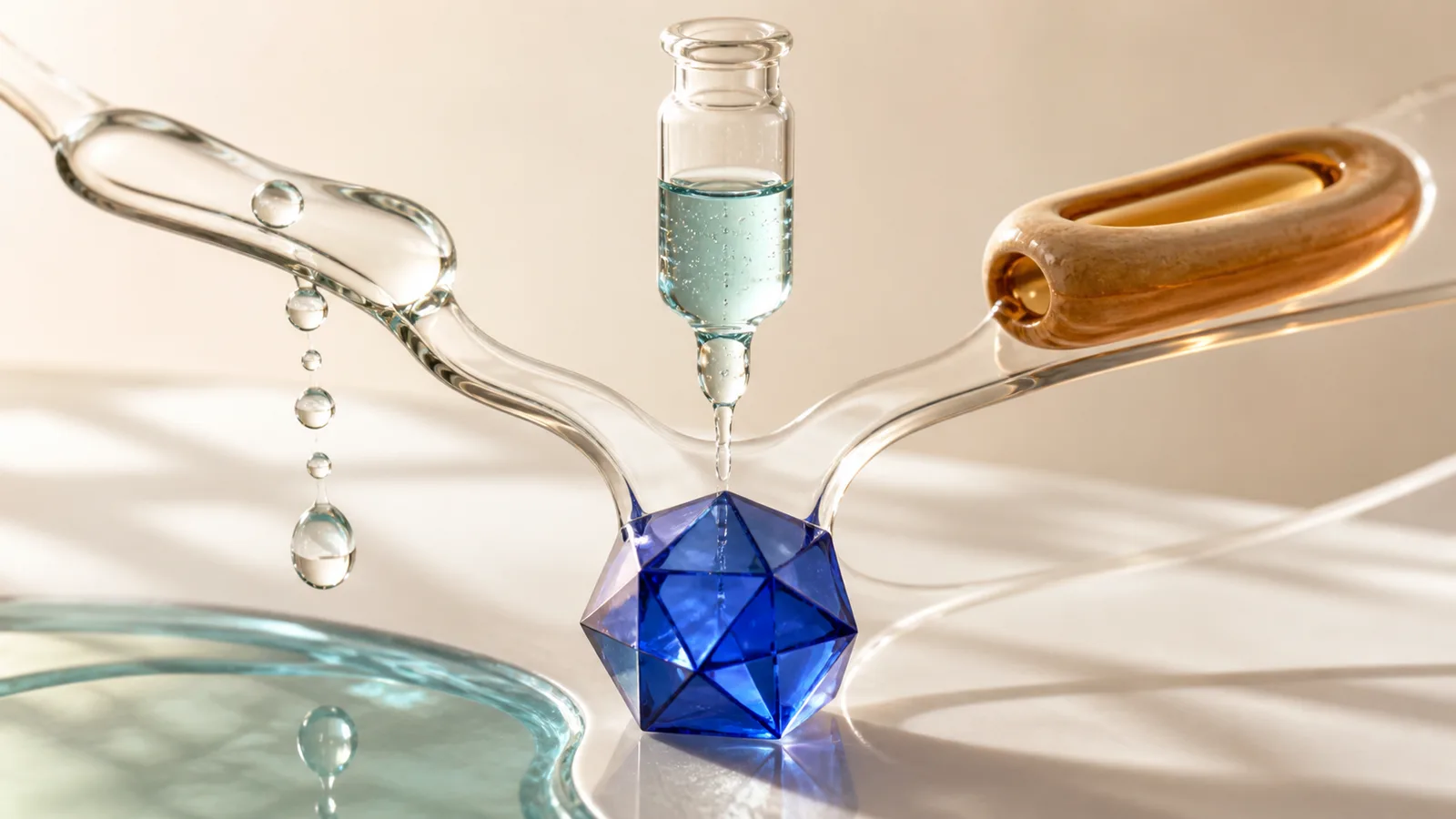
IV NAD+, NAD+ injections, oral NAD+ products, and oral precursors are different interventions. An IV places NAD+ into the bloodstream over a supervised infusion; an injection changes route and exposure; oral NAD+ must pass through the digestive system; and precursors such as nicotinamide riboside (NR) or nicotinamide mononucleotide (NMN) are molecules the body can use in NAD metabolism.
The established point is biological: NAD is central to cellular metabolism. The unsettled point is whether a particular route improves a meaningful wellness or anti-aging outcome in humans.
What changes with the route
| Route | What it delivers | Evidence and program question |
|---|---|---|
| IV NAD+ | NAD+ directly into a vein over a scheduled infusion. | Human outcome evidence for anti-aging and wellness remains sparse; ask about dose, rate, formulation, monitoring, and endpoint. |
| Injected NAD+ | NAD+ by intramuscular or subcutaneous route, depending on the product and plan. | Do not infer results from IV or oral studies; identify the compounded product, route-specific evidence, and administration plan. |
| Oral NAD+ | A finished oral NAD+ formulation. | Bioavailability depends on formulation and metabolism; product-specific human evidence matters. |
| Oral NR or NMN | Precursors that enter NAD-related metabolic pathways. | Human studies commonly show biomarker changes, but functional outcomes are mixed or endpoint-specific. |
Route is not a quality ranking. Direct bloodstream delivery can create a different concentration-time profile, but it does not itself prove a better clinical outcome. Convenience is not proof either: a capsule can be easier to study and use without being equivalent to an infusion.
What recent human evidence says
A 2026 systematic review found that oral NR and NMN consistently demonstrated biochemical target engagement in human studies and were generally well tolerated over weeks to months. Effects on functional, metabolic, vascular, and other healthspan outcomes were heterogeneous and often null or specific to one endpoint.1
The same review found no eligible outcomes trials of IV or intramuscular NAD+ itself for anti-aging or wellness; it identified an IV pharmacokinetic pilot without eligible clinical outcomes as contextual evidence.1 This is the decisive answer to “does NAD IV work?”: infusion changes delivery, but robust evidence for broad anti-aging or wellness outcomes has not yet been established.
Reviews of NAD precursors likewise describe increases in NAD-related measures in human studies while emphasizing the gap between biomarker movement and demonstrated health benefit.2 Feeling different after an infusion may be personally important, but an anecdote cannot separate NAD+, fluid, other bag ingredients, setting, expectation, or natural fluctuation.
Read the claim before the mechanism
“Supports cellular energy” can describe a biochemical story without promising a measured clinical result. “Improves fatigue,” “reverses aging,” “repairs DNA,” or “treats addiction” are different claims and need outcome-specific trials in the relevant population.
Ask the provider to name the primary endpoint: a validated fatigue score, exercise measure, laboratory marker, symptom duration, or another defined result. Then ask whether the supporting study used the same molecule, route, dose, schedule, and population.
Product and infusion questions
NAD+ used in an IV or injection may be compounded. FDA explains that compounded drugs are not FDA-approved and distinguishes 503A patient-specific compounding from 503B outsourcing facilities.3 Ask for the pharmacy or facility, concentration, lot, beyond-use date, storage, and whether the bag contains only NAD+ and fluid or additional ingredients.
For an infusion, identify the clinician who evaluates and authorizes it, the person who places and monitors the line, and the response plan. Florida’s nursing statute includes administering treatments prescribed or authorized by a duly licensed practitioner within professional nursing.4 These staffing questions overlap with any IV service without duplicating the broader ingredient-and-line guide.
For injections used at home, add training, syringe measurement, storage, disposal, missed-dose, and reaction questions. The smaller appointment footprint does not eliminate product or dosing controls.
Compare a program in seven steps
- Define the goal. Replace wellness or longevity with one measurable symptom, function, or marker.
- Name the molecule and route. Separate NAD+, NADH, NR, NMN, IV, intramuscular, subcutaneous, and oral formulations.
- Match the human evidence. Look for the same route, dose, population, duration, and clinically meaningful endpoint.
- Trace the product. Identify manufacturer or compounder, concentration, lot, storage, expiration, and all added ingredients.
- Identify the clinical team. Know who evaluates, orders, administers, monitors, and responds to problems.
- Price time as well as product. Include infusion hours, travel, initial series, maintenance, laboratory work, supplies, and cancellation terms.
- Set a stop or review point. Agree in advance when the defined outcome will be assessed and what would make the plan continue or end.
A practical decision framework
Infusion rate is part of the intervention. Ask whether the planned dose is delivered over minutes or hours, what symptoms cause the rate to change, and whether the cited study used a comparable schedule. If a clinic titrates primarily to how a person feels during the session, that protocol should be described as such rather than borrowed from a fixed-rate study.
Oral products need their own label review. Record the exact chemical form, amount per serving, other active ingredients, testing documentation, and recommended duration. NR, NMN, NADH, niacinamide, and NAD+ are not interchangeable names. A supplement facts panel also does not show that the finished product produced a clinical outcome in a trial.
When comparing routes, avoid paying twice for the same evidence. A study showing that oral NR changes a blood metabolite cannot simultaneously prove that an NAD+ injection improves fatigue and that an infusion slows aging. Each claim needs its own bridge from product and route to endpoint.
Choose the endpoint before the route. Then compare how directly the evidence supports that route, the clarity of the product source, the clinical oversight, burden, and total course. Treomark’s NAD+ search can locate programs that publish the service; the existing IV guide helps inspect the bag and staffing, while this route comparison keeps a precursor trial from being used to prove an infusion claim.
Sources
- PubMed. NAD+ supplementation for anti-aging and wellness: a PRISMA-guided systematic review. 2026 systematic review of oral and parenteral NAD-related human and preclinical evidence. Accessed .
- PubMed. NAD+ precursors in human health and disease: current status and future prospects. Review of human research on oral NR and NMN and the distinction between biochemical and clinical effects. Accessed .
- U.S. Food and Drug Administration. Human drug compounding. FDA overview of compounded drugs and 503A and 503B sourcing. Accessed .
- Florida Statutes § 464.003. Nurse Practice Act: definitions. Defines professional nursing to include administering medications and treatments prescribed or authorized by a duly licensed practitioner. Accessed .