NDC number vs FDA approval: a drug listing identifier is not a marketing authorization
An NDC identifies a listed drug product and package; it does not mean FDA verified the submitted listing or approved the product. Approved and unapproved products, repackaged products, and some reported compounded drugs can appear in the directory. Approval must be matched to an NDA, ANDA, or BLA and current labeling.
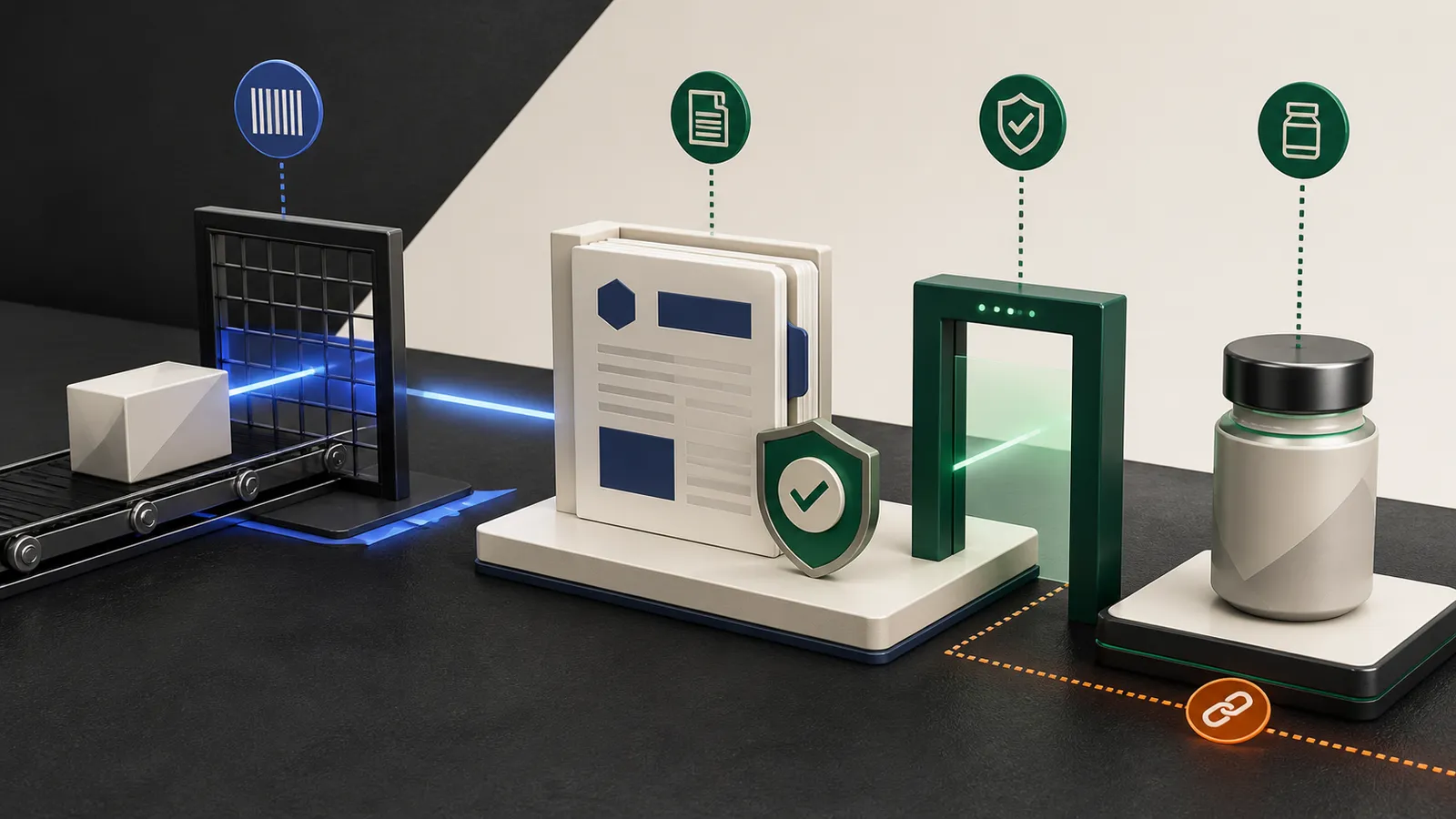
An NDC is a three-segment identifier for a listed drug product and package; it is not an FDA approval number. FDA states that NDC assignment does not denote approval and that inclusion in the NDC Directory does not mean the agency verified the submitted information, found the product legally marketed, or determined payer coverage. To prove approval, match the exact finished product to an approved NDA, ANDA, or BLA and current labeling.12
This distinction matters when a med spa, telehealth platform, pharmacy, or supplement seller displays an NDC screenshot as evidence that an injection, troche, spray, compounded vial, or wellness product is “FDA approved.”
The identifier has three segments, but approval is elsewhere
| Record | What it can establish | What it cannot establish alone |
|---|---|---|
| NDC | Labeler, product, and package identity in the submitted listing format | FDA approval, verification, effectiveness, legal marketing, reimbursement, or authenticity of the vial in hand |
| NDC Directory entry | Current published listing information submitted by a labeler for an active date range | That FDA independently confirmed every field or inspected the specific lot |
| NDA or BLA | FDA approval of a named new drug or biological product under stated conditions | That every later compounded, relabeled, imported, or look-alike product is approved |
| ANDA | FDA approval of a generic drug application tied to a reference listed drug | That any product sharing an ingredient is an approved generic |
| Orange Book code | Therapeutic-equivalence information for eligible approved small-molecule products | Automatic substitution across different dosage forms, routes, strengths, or biologics |
| Lot and transaction record | The package administered can be traced through source, receipt, storage, expiration, and patient chart | Approval of an unapproved product or clinical appropriateness |
FDA’s NDC Directory contains approved and unapproved drugs, prescription and OTC products, repackaged or relabeled products, and certain compounded-product reports from outsourcing facilities.1 That is why a valid search result can coexist with “unapproved” status.
Read the listing without upgrading it
Capture:
- 10-digit FDA NDC and any 11-digit billing conversion shown;
- labeler name and labeler code;
- proprietary and nonproprietary name;
- dosage form, route, strength, package, and marketing category;
- application number, if present;
- marketing start and end dates;
- active and inactive ingredients in current labeling; and
- source and date of the screenshot.
Then ask who submitted the entry and whether the product in hand matches the package. FDA says the content of the directory entry is the responsibility of the labeler submitting the listing.1 A typo, outdated field, changed label, counterfeit package, or diverted vial requires another record.
Approval requires an application match
Search Drugs@FDA by proprietary name, active ingredient, sponsor, or application number.3 Match:
- NDA, ANDA, or BLA number;
- applicant or holder;
- active ingredient and strength;
- dosage form and route;
- approval status and date;
- current labeling and indication; and
- whether the exact product is active, discontinued, or superseded.
An ingredient may appear in both approved and unapproved finished products. An approved tablet does not approve a compounded injection. An approved injectable concentration does not approve a nasal spray. A BLA for one biological product does not approve another manufacturer’s peptide or cell product.
For eligible approved drugs, the Orange Book can add reference-product and therapeutic-equivalence information.4 It should not be used as a list of all biologics, compounded drugs, or supplements.
Compounded products can have NDCs without approval
FDA permits outsourcing facilities to elect to assign NDCs to products they report. The directory explicitly says this does not make the compounded drug FDA approved.1 A 503A pharmacy, 503B outsourcing facility, prescriber, and finished product each have separate records.
Ask for patient-specific prescription or order context, pharmacy or outsourcing facility, formula, concentration, route, lot, beyond-use date, storage, sterility category, and legal basis. The 503A/503B verification guide explains why registration and inspection are not product approval.
Do not call a compounded drug “generic” merely because it uses the same active ingredient. FDA-approved generics have ANDAs and must meet application requirements; a compounded preparation follows a different pathway.
NDC does not prove the product is genuine
Counterfeiters can print a real number on a false package. A genuine number can also belong to a different strength, package size, labeler, or discontinued presentation. Compare carton and container labels, tamper evidence, lot, expiration, authorized supplier, receiving record, storage, and patient chart.
For an injection, ask to see the sealed labeled container before preparation and preserve the product details after treatment. The counterfeit toxin guide applies the same provenance principle to botulinum toxin.
Do not confuse 10-, 11-, and future 12-digit formats
FDA currently assigns 10-digit NDCs in multiple segment formats. Payers commonly use an 11-digit normalized format for reimbursement. FDA’s final rule will move FDA-assigned NDCs to a uniform 12-digit format in 2033, with a seven-year transition that began in March 2026.5 Formatting changes do not change approval status.
When two databases show different zero-padding, compare the segments and source rather than declaring one number fraudulent. Record the original FDA format and the transformed billing format separately.
Use a three-pass verification
- Identify the package. Match NDC segments, labeler, drug, strength, route, dosage form, package, lot, expiration, and source.
- Classify the listing. Read marketing category, application field, dates, and label without assuming FDA verified the submission.
- Prove approval separately. Match the exact product to an active NDA, ANDA, or BLA and current FDA labeling.
- Check the pathway delta. If compounded, repackaged, relabeled, imported, or used off-label, document that separate change and its basis.
- Trace the administered lot. Connect manufacturer or pharmacy, authorized supplier, receiving and storage records, container, patient chart, and reporting route.
Close the record loop by matching the finished product’s name, manufacturer, strength, route, and presentation to a current approved application and label. The NDC may help identify the listed package; it cannot fill in a missing approval match.
Sources
- U.S. Food and Drug Administration. National Drug Code Directory. Current FDA directory definitions and explicit warning that NDC assignment or inclusion does not indicate verification, approval, reimbursement, or lawful marketing. Accessed .
- U.S. Food and Drug Administration. Unapproved Drugs. Current explanation that NDC data include approved and unapproved listed drugs and that FDA uses a risk-based approach to unapproved products. Accessed .
- U.S. Food and Drug Administration. Drugs@FDA. Official application-level database for approved human drug products, approval history, labeling, and related documents. Accessed .
- U.S. Food and Drug Administration. Orange Book: Approved Drug Products With Therapeutic Equivalence Evaluations. Official database for approved small-molecule drug products, application numbers, reference products, patents, exclusivity, and therapeutic-equivalence codes where applicable. Accessed .
- U.S. Food and Drug Administration. National Drug Code Format. Current 2026 NDC format transition timeline and distinction between FDA-assigned 10-digit, future 12-digit, and reimbursement-related 11-digit formats. Accessed .