Ozone therapy and EBOO claims: verify the exact route, device, and FDA status
Ozone is not interchangeable with medical oxygen, and EBOO is not a standard IV infusion. It removes blood into an external circuit, exposes it to ozone or other energy through device components, and returns it. A wellness label cannot replace exact device authorization and evidence for the promoted condition.
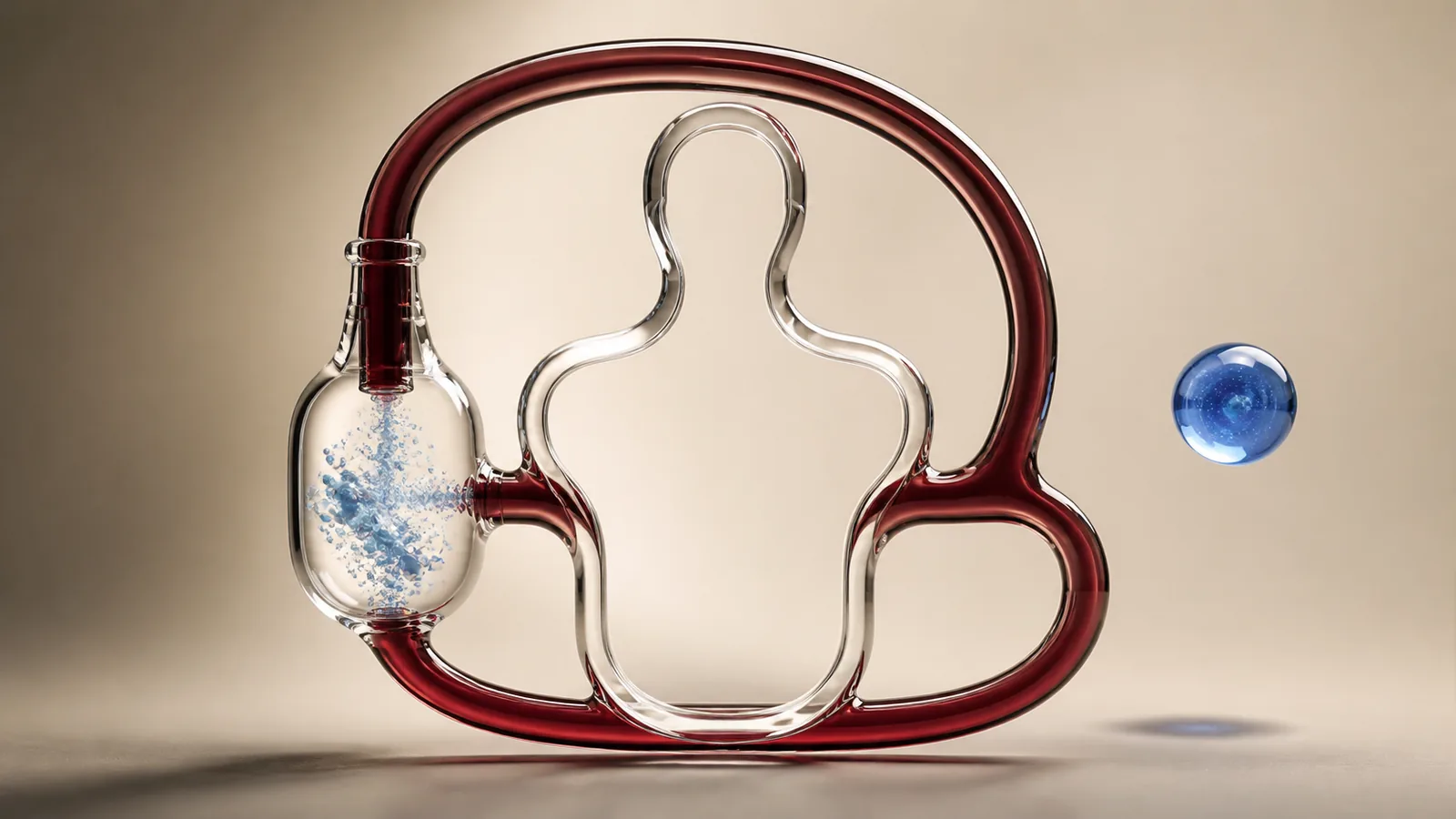
Ozone is a reactive gas, not a synonym for medical oxygen, and “EBOO” is not an ordinary IV drip. EBOO removes blood into an external circuit, exposes it to ozone and sometimes ultraviolet energy through device components, and returns it to the patient. Current federal regulation describes ozone as a toxic gas with no known useful medical application, and FDA’s July 2025 warning letter said the named EBOO and autohemotherapy devices lacked required premarket authorization. Verify the exact route, device, promoted condition, evidence, operator, and response plan; do not infer approval from an oxygen-related name.12
The umbrella phrase ozone therapy can refer to materially different exposures. A safety statement or study about one route cannot be transferred to inhalation, topical gas, ozonated liquid, injection, withdrawal-and-reinfusion autohemotherapy, or an extracorporeal circuit.
Name the route before discussing evidence
| Offering label | Physical proposition to verify |
|---|---|
| Environmental or topical ozone | Gas generated into air, a closed bag, water, oil, or another external medium; inhalation and room accumulation are separate hazards |
| Ozonated saline or direct injection claim | A substance prepared with ozone and then infused or injected; product, preparation, route, sterility, and drug status must be identified |
| Major autohemotherapy | A quantity of blood is withdrawn, exposed outside the body in a container, and reinfused |
| EBOO or extracorporeal ozonation | Blood continuously leaves through vascular access, travels through pump, filter or exchange, ozone/oxygen and sometimes UV components, and returns |
| Marketing bundle | Ozone combined with vitamins, anticoagulant, UV, filtration, peptides, or other services; every component and claim needs separate status |
Do not accept “we never inject ozone directly” as a full answer. That may distinguish one route while leaving the external circuit, gas transfer, materials, anticoagulation, sterility, air handling, and return line undefined.
The current ozone regulation is unusually direct
The current electronic Code of Federal Regulations at 21 CFR 801.415 states that ozone is a toxic gas with no known useful medical application in specific, adjunctive, or preventive therapy.1 It addresses lung irritation, delayed pulmonary edema after inhalation, odor unreliability, device-generated ambient concentrations, and use for a medical condition without proof of safety and effectiveness.
That regulation is not a treatment protocol and does not by itself describe every modern device configuration. It does establish why a seller cannot treat “three oxygen atoms” as evidence of medical benefit or room safety.
Medical oxygen is a drug with defined purity, handling, and uses. Ozone’s different chemistry is the point of the proposed oxidative exposure. Calling the treatment “oxygenation” does not make the substances or regulatory records interchangeable.
FDA’s 2025 letter concerns named devices and a named route
In July 2025, FDA published a warning letter after inspecting a manufacturer of named autohemotherapy and EBOO products. The agency described devices intended to expose a patient’s blood to ozone and ultraviolet light before intravenous return and stated that the products lacked required premarket approval, clearance notification, or an investigational-device exemption.2 FDA also described registration, listing, UDI, design-control, complaint, supplier, acceptance, record, and reporting concerns.
A warning letter records FDA’s findings about the recipient and products at that time; it is not a court judgment or an evergreen finding about every device. It is, however, a primary reason to ask for an exact FDA record rather than a statement that “EBOO is registered” or that a filter is used in other medical care.
An FDA-cleared pump, dialysis filter, tubing set, or UV lamp does not make the assembled EBOO system authorized for an ozone disease-treatment claim. Component status does not automatically transfer to a new combination and intended use.
Registration is not authorization
Device establishment registration and product listing tell FDA who is involved in manufacturing and what is listed; they do not mean FDA approved, cleared, or endorsed the device. The FDA status guide provides the precise distinction.
Ask for the FDA decision number and open the summary. Match manufacturer, model, intended use, patient population, route, and configuration. If the practice says use occurs under an investigational device exemption, request the study title, sponsor, protocol, reviewing institutional review board, consent, ClinicalTrials.gov record where applicable, and confirmation that this patient encounter is research rather than ordinary paid wellness care.
“Off-label” also cannot rescue an unauthorized system. Off-label use generally describes a clinician using a legally marketed, authorized product outside its labeling. It does not turn an unapproved or uncleared device into a legally marketed predicate.
Disease and detox claims need their own evidence
Ozone and EBOO marketing may promise immune modulation, pathogen reduction, detoxification, circulation, mitochondrial support, anti-aging, autoimmune improvement, cardiovascular benefit, or nonspecific energy. Each is a separate endpoint requiring evidence for the exact route, system, comparator, population, and outcome.
Mechanistic observations—oxidative changes in a sample, pathogen inactivation outside the body, altered laboratory markers, or improved flow through a filter—do not prove that the treatment improves symptoms, function, disease events, or survival. A before-and-after lab panel without controls cannot distinguish treatment effect, ordinary variation, hydration, timing, or selection.
FTC warning letters concerning ozone-related COVID claims show the advertising boundary: a disease prevention or treatment claim requires competent and reliable scientific evidence, including well-controlled human studies when appropriate.3 Those dated COVID enforcement records do not evaluate every modern wellness claim; they show that a mechanism story is not adequate claim substantiation.
Ask the provider for randomized human evidence using the same route and device for the same condition, with prespecified outcomes and adverse-event reporting. If the response is a list of ozone studies across unrelated routes, the source-to-claim fit is missing.
The procedure has extracorporeal risks independent of ozone
Moving blood outside the body introduces vascular access, bleeding, clotting, air, hemolysis, contamination, line disconnection, pressure, volume shift, device malfunction, and blood-return concerns. Anticoagulant choice adds contraindication, dosing, allergy, bleeding, and monitoring questions. UV or filtration adds another energy or material exposure.
This does not predict an individual’s outcome. It identifies the systems a consent and emergency plan must cover. Ask who places access, who prescribes and administers anticoagulant, who continuously monitors the circuit and patient, and what training and credential authorize each task in the setting.
A “closed system” can reduce some environmental exposure while still having connections, ports, blood-contact materials, gas transfer, and failure modes. Ask for the manufacturer’s instructions and clinic procedure—not a generic adjective.
If a device fails or a serious product-related event occurs, preserve manufacturer, model, lot or serial, operator, timing, symptoms, and follow-up. FDA’s device-reporting guidance gives patients and professionals a voluntary route for serious events, use errors, product-quality problems, and device failures.4
Facility and response capacity matter
An extracorporeal blood procedure should not be evaluated like a hydration lounge menu item. Verify the professional licenses, the setting’s applicable Florida records, infection controls, monitoring, emergency equipment, transfer relationship, after-hours coverage, and medical-record custodian. The Florida office-surgery guide helps separate individual, office, and accreditation records where relevant.
The practice should explain stop criteria for access problems, blood pressure or heart-rate changes, breathing symptoms, chest symptoms, neurologic changes, reaction to anticoagulant, circuit pressure, visible hemolysis or clot, ozone leak, device alarm, and incomplete blood return. Avoid accepting “no serious events in our practice” as the response plan.
Build a claim-to-circuit record
- Write the route in physical terms. Name what leaves the body, what it contacts, what substances or energy are added, and how it returns.
- Inventory every component. Capture manufacturer, model, UDI, single-use status, instructions, and the authorization record for the assembled intended use.
- Name the clinical claim. Replace wellness, detox, immune, and oxygenation language with the exact symptom, condition, biomarker, or outcome promoted.
- Match evidence exactly. Require human evidence for the same route, device configuration, population, comparator, and endpoint.
- Audit the extracorporeal workflow. Verify access, anticoagulation, sterile blood pathway, monitoring, air and ozone controls, emergency stop, and blood return.
- Preserve reporting fields. Keep product and device identifiers, session record, operators, substances, symptoms, follow-up, and the FDA reporting route.
The consultation question that prevents category drift is: “What exact device circuit will my blood contact, what FDA record covers that assembled use, and what controlled human evidence supports the specific outcome you are selling?”
Sources
- Electronic Code of Federal Regulations. 21 CFR 801.415: Maximum acceptable level of ozone. Current federal device-labeling regulation on ozone toxicity, atmospheric limits, and medical-condition safety and effectiveness. Accessed .
- U.S. Food and Drug Administration. O3UV, LLC warning letter. July 2025 enforcement record describing named autohemotherapy and EBOO devices, extracorporeal route, unapproved-device findings, and quality-system concerns. Accessed .
- Federal Trade Commission. FTC warning letter concerning unsupported ozone-therapy disease claims. Advertising-enforcement example showing the evidence standard for prevention and treatment claims; not a category-wide clinical evaluation. Accessed .
- U.S. Food and Drug Administration. Medical Device Reporting: how to report medical device problems. Voluntary patient and clinician route for serious events, use errors, product quality problems, and device failures. Accessed .