Shockwave vs radial acoustic wave for ED: the devices and evidence are not interchangeable
Focused low-intensity extracorporeal shockwave and radial pressure-wave devices create different energy fields; “acoustic wave” may describe either in marketing. For ED, verify the exact generator, protocol, study match, device status, clinician evaluation, and investigational boundary.
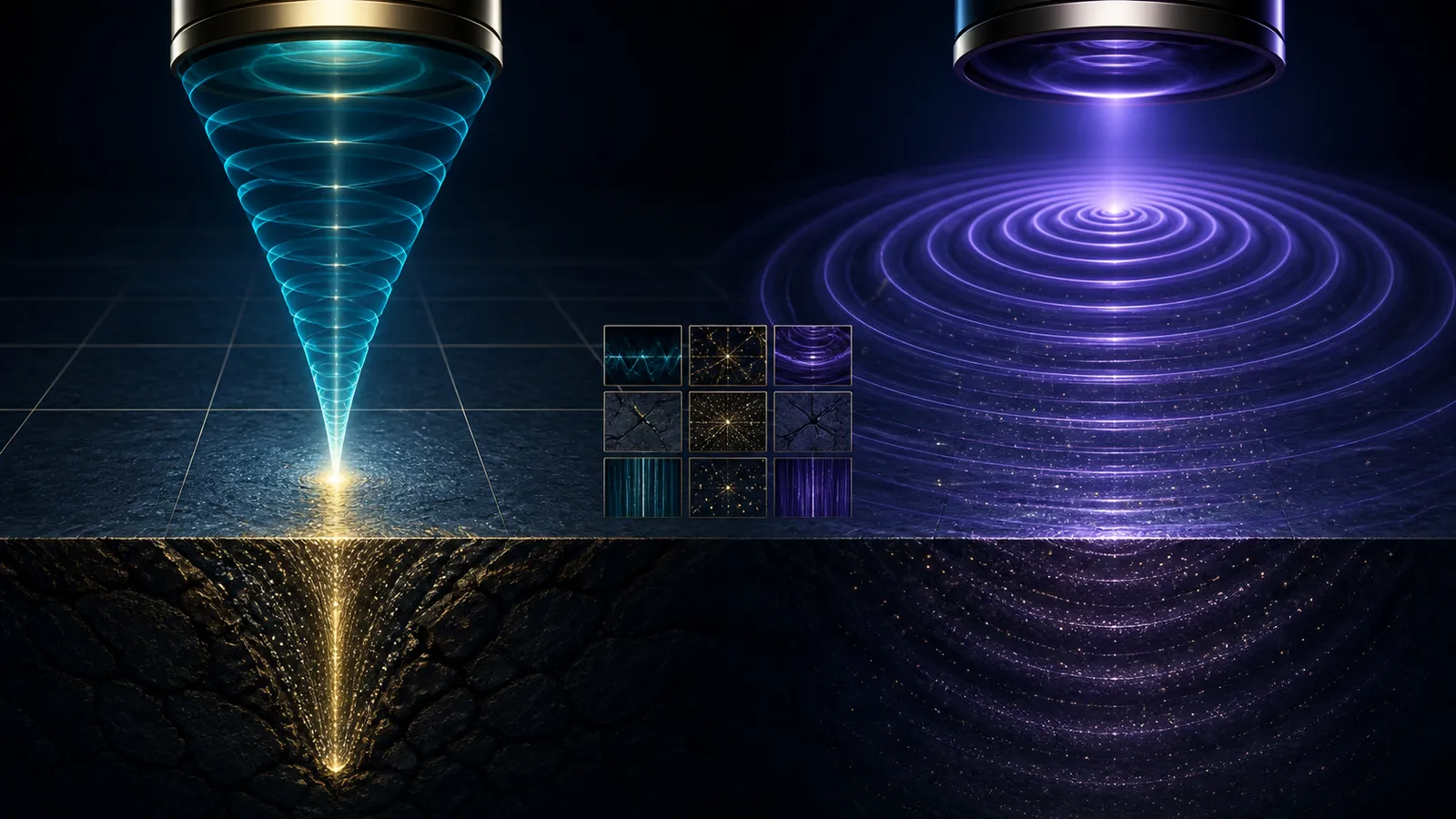
Focused low-intensity shockwave therapy and radial pressure-wave therapy are not interchangeable merely because both are marketed as “acoustic wave.” They use different generators and energy fields, and published ED protocols vary in device, energy, pulses, sites, sessions, population, and endpoint. The AUA classifies low-intensity extracorporeal shockwave therapy for erectile dysfunction as investigational; a package should not be presented as FDA-approved ED treatment without a product-specific authorization that matches the device and claim.12
This is an evidence and service-verification framework, not a diagnosis or a treatment recommendation. Erectile dysfunction can be associated with vascular, neurologic, hormonal, medication, psychological, pelvic, postoperative, or other factors, and the route starts with an appropriate evaluation rather than a device demonstration.
“Wave” is not enough device identity
| Label | Physical distinction | Verification problem |
|---|---|---|
| Focused shockwave | Energy is generated and focused into a defined treatment zone using electrohydraulic, electromagnetic, piezoelectric, or another specified method | Studies cannot be applied without matching generator, focal geometry, energy and protocol |
| Linear focused shockwave | A focused field may be delivered across a line or treatment area depending on the handpiece | “Linear” does not make every platform or dose equivalent |
| Radial pressure wave | A projectile or mechanical source produces a pressure wave that spreads from the applicator and is strongest near the surface | Radial evidence and settings should not borrow the focused-shockwave literature |
| Acoustic wave | Broad marketing term that may refer to radial, focused, or another sound/pressure technology | The phrase does not identify physics, manufacturer, model, intended use, or FDA status |
Ask to see the manufacturer, exact model, handpiece, generator type, operating manual, FDA decision number if one is claimed, and indications-for-use wording. Device registration, listing, or clearance for a non-ED use does not establish clearance or approval for erectile dysfunction.
Protocol is part of the intervention
The AUA guideline found substantial variation across randomized trials in pulses, treatment sites, sessions, and participant selection.1 The 2025 Cochrane review similarly found an evolving evidence base with methodological limitations and uncertainty around benefits and harms.2 Therefore “six sessions” or “low intensity” is not a complete protocol.
Record:
- device and wave-generation method;
- energy metric and level, including units;
- pulses per site and total pulses;
- anatomic sites and targeting method;
- session length, interval, and total course;
- use of anesthesia, gel, imaging, or another adjunct;
- ED cause, severity, duration, and prior treatment in the cited study;
- simultaneous medicines or devices; and
- primary endpoint and follow-up date.
If a clinic cannot identify the device or study until after payment, it cannot make a product-matched evidence claim.
Focused and radial evidence should stay separate
A 2025 systematic review comparing radial and focused modalities reported a difference favoring focused therapy but also very high heterogeneity.3 That does not create a universal ranking. It means the field contains unlike devices and protocols whose pooled numbers need careful interpretation.
Ask whether the study was randomized, sham-controlled, blinded where feasible, sufficiently powered, and registered before enrollment. Check whether it measured a validated erectile-function scale, return to unassisted function, medicine-assisted function, erection hardness, satisfaction, or a surrogate blood-flow measure. A statistically significant mean score change is not necessarily a clinically important improvement for an individual.
The comparison also needs a denominator: all enrolled participants or only completers. Attrition, crossover, concurrent PDE5 inhibitor use, and selective follow-up can change the apparent result.
“Regenerative” is a claim, not a measured endpoint
Marketing may say the wave grows blood vessels, repairs tissue, cures the cause, or permanently restores function. A mechanism hypothesis or animal finding is not a demonstrated human clinical outcome. Ask which human study of the exact device and protocol measured the promised result and for how long.
The SMSNA position statement keeps low-intensity shockwave and other restorative ED therapies within an experimental framework pending stronger trial evidence.4 Registration of a study does not prove a result or marketing authorization; the ClinicalTrials.gov guide explains the record boundary.
The clinic still needs an ED evaluation and response plan
A device package should not bypass history, medicines, cardiovascular risk context, sexual function, symptoms, physical findings, relevant laboratory or referral questions, and discussion of evidence-based alternatives. The seller should state who is diagnosing the problem, who orders or performs the treatment, what professional license applies, and what happens when the presentation is outside that person’s scope.
Ask what pain, bruising, skin change, urinary or genital symptoms, worsening function, or another event requires review. Ask who owns nonresponse and whether a different diagnosis is reconsidered before selling another course.
Normalize the contract
Do not compare packages by pulse count until the pulse and energy fields are physically and clinically comparable. A larger number on a radial device is not automatically a larger focused-shockwave dose.
Name the physics before counting pulses: focused shockwave, radial pressure wave, or another device. Then match the exact generator and protocol to its regulatory record and controlled ED evidence; a package comparison made before that match has no stable unit.
Sources
- American Urological Association. Erectile Dysfunction: AUA Guideline. Professional guideline classifying low-intensity extracorporeal shockwave therapy for ED as investigational and describing study heterogeneity and evidence limits. Accessed .
- Cochrane Database of Systematic Reviews. Low-Intensity Shockwave Therapy for Erectile Dysfunction. Rigorous 2025 review of randomized trials, sham comparisons, patient-important outcomes, uncertainty, and protocol variability. Accessed .
- Urology Annals. Comparative Effectiveness of Radial Versus Focused Linear Shockwave Therapy. 2025 systematic review comparing radial and focused modalities while documenting substantial heterogeneity and limited comparability. Accessed .
- Sexual Medicine Society of North America. Position Statement on Restorative Therapies for Erectile Dysfunction. Professional-society position that restorative ED therapies, including low-intensity shockwave, remain experimental and should be studied under research protocols. Accessed .