Vaginal estrogen cream, insert, or ring: choose the finished product, not the category
Local vaginal estrogen products differ in applicator use, handling, renewal, ingredients, and labeled indication. A cream, insert, and low-dose ring are not interchangeable merely because each is described as 'vaginal estrogen.'
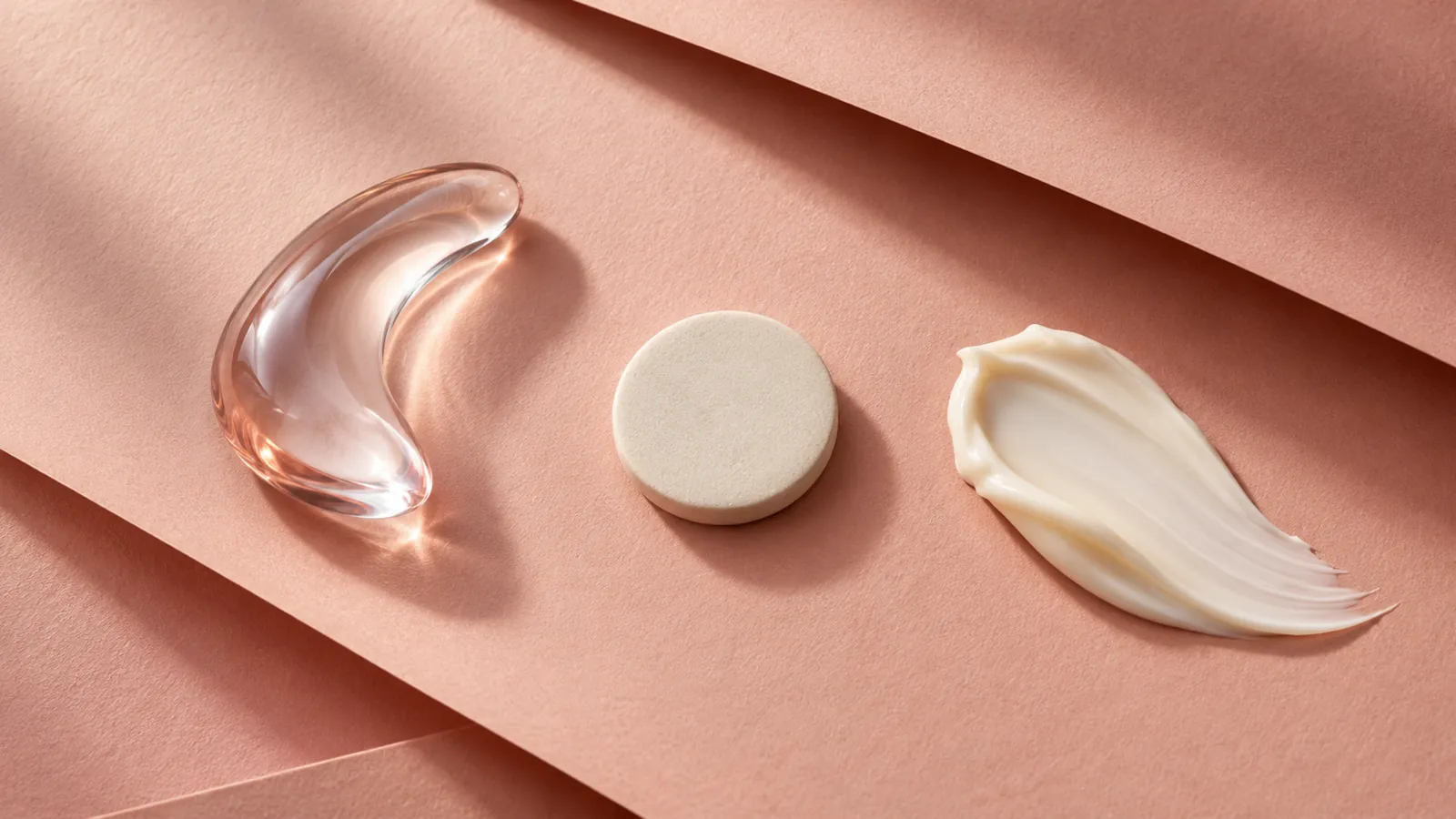
A vaginal estradiol cream, a vaginal insert, and a low-dose vaginal ring can address local menopausal genitourinary symptoms, but they are different finished products with different handling and label details. The useful choice is not “which one is strongest?” from a product menu. It is which exact indication, application routine, ingredient list, and follow-up plan match the person’s situation. The prescriber should name the product before discussing it as “local estrogen.”123
Three formats, three practical questions
Cream involves measuring and applying a prescribed amount with its product-specific applicator and may be discussed when application flexibility matters. An insert is a discrete premeasured product with its own labeled schedule and applicator instructions. Estring is a low-dose vaginal system intended to remain in place for a longer interval under its label. These descriptions help identify daily logistics; they do not supply self-dosing instructions or rank clinical effectiveness for an individual.123
| Format | Practical decision | Exact-label check |
|---|---|---|
| Cream | Comfort with measuring, applicator use, and contact with the formulation. | Which cream, concentration, ingredients, and indication? |
| Insert | Comfort with a premeasured vaginal product and recurring use. | Which insert and current instructions? |
| Low-dose ring | Comfort with an in-place vaginal system and its replacement visits or plan. | Is it Estring or a different ring with a different exposure purpose? |
Product identity is especially important for rings. The local-versus-systemic guide explains why two vaginally placed products should not be assumed to have the same systemic-exposure intent. Here, Estring is an example of the local ring format, not a proxy for every product described as a vaginal ring.3
First decide what symptom is being treated
Local formulations are often discussed for vulvovaginal or urinary symptoms associated with menopause. Hot flashes and night sweats are different goals and should not be promised away by a local-product comparison. The local-versus-systemic guide owns that larger exposure-and-goal decision. This page begins after a clinician has identified a local symptom and is comparing delivery formats.
Report unexpected bleeding, a new symptom, or difficulty using an applicator or ring to the care team. A different form might solve a practical problem, but it may also change ingredients and instructions. Avoid a DIY switch between products based on matching the word “estradiol” on the carton. The labels have contraindications and warnings, and the prescriber needs the full history, including cancer history when relevant.123
Questions that make the choice concrete
The format may also affect whether the person can actually follow the plan. Someone who finds an applicator difficult, dislikes a persistent in-place device, or wants fewer handling steps can say so plainly. Those are legitimate treatment-design inputs, not evidence that a format is medically inferior. Ask whether the clinician can demonstrate the prescribed product’s handling instructions or arrange pharmacist counseling. A substitution that changes format deserves a new explanation, even if both products contain estradiol.
When a symptom does not improve, the next step is not automatically a stronger product. The clinician may need to revisit the diagnosis, the exact label indication, use difficulties, or another cause of discomfort. Likewise, new bleeding or irritation should not be explained away as proof that a cream, insert, or ring is simply “working.” The selected product has a follow-up plan, and unexpected findings can be assessed separately from the format preference.123
Ask the clinician: “Which exact product is this and what symptom is it labeled to treat? What is the realistic application or replacement routine? Are there ingredients or handling issues relevant to me? What should I report if use is uncomfortable or symptoms persist?” A pharmacy substitution should be checked against the actual prescription and label, not treated as an automatic format swap.
Treomark’s hormone-therapy directory can help compare providers with follow-up access. The best format is the one a qualified clinician can justify and the patient can use correctly under the exact product’s instructions—not a generic winner of a cream-versus-tablet-versus-ring contest.
Sources
- National Library of Medicine DailyMed. Estradiol Vaginal Cream 0.01% prescribing information. A current cream's indication, applicator, and formulation-specific warnings. Accessed .
- National Library of Medicine DailyMed. VAGIFEM estradiol vaginal insert prescribing information. Exact insert's indication and product-specific administration and safety language. Accessed .
- National Library of Medicine DailyMed. ESTRING estradiol vaginal system prescribing information. Low-dose ring's labeled purpose and longer-wear system; not a stand-in for the systemic Femring product. Accessed .