Direct-to-consumer vs clinician-ordered lab tests
Direct-to-consumer testing begins with the consumer or a retail workflow; clinician-ordered testing starts with a clinician's order. Either path can use a CLIA-certified laboratory, while question, claims, interpretation, follow-up, privacy, and coverage still require verification.
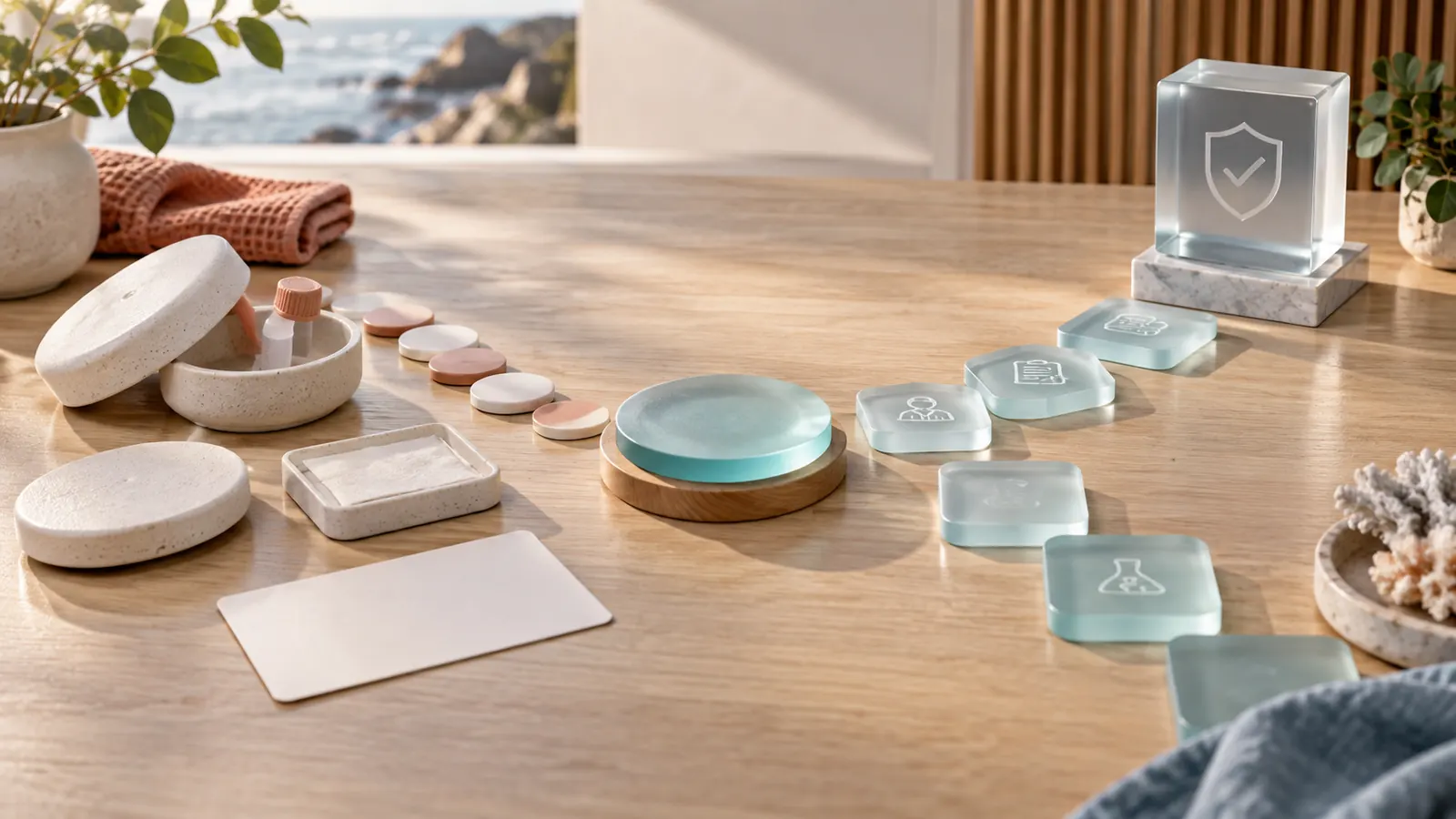
Direct-to-consumer and clinician-ordered tests can use the same specimen type or even the same laboratory, but they begin with different workflows. In direct-access testing, the consumer initiates the order directly or through a platform-arranged clinician; in clinician-ordered care, a treating professional selects or signs the order, but the ordering pathway alone does not guarantee a well-formed clinical question or follow-up plan. CLIA certification addresses laboratory quality systems, not whether the test was useful, its claims were FDA reviewed, or someone will interpret the result.12
The decision is not “convenient versus legitimate.” It is whether the complete path from question to action is visible and supported.
Trace the test through seven handoffs
| Handoff | Direct-to-consumer questions | Clinician-ordered questions |
|---|---|---|
| Question | Did the buyer select a panel from marketing or a structured intake? | Which documented problem or preventive decision prompted the order? |
| Order | Is it self-authorized, state-permitted direct access, or signed by a platform clinician? | Which treating professional ordered and will use the result? |
| Specimen | Home test, home collection sent out, retail draw or mobile phlebotomy? | Where and how is the specimen collected and transported? |
| Laboratory | Which CLIA certificate and testing location? | Which performing and referral labs, methods and networks? |
| Claim | What exact use did FDA review, if any? | Is the method authorized, an LDT, or another pathway, and does that change interpretation? |
| Report | Raw result, app score, risk estimate or clinician note? | Reference/decision limit, interpretation, prior comparison and medical record? |
| Follow-up | Who handles critical, positive, discordant or incidental findings? | Who confirms, diagnoses, treats, refers and documents? |
The access route is only one column. A strong service can answer all seven.
Home test and home collection are not synonyms
A home-use test can produce a result where the person performs the test. A home-collection kit can gather saliva, blood, urine, stool or another specimen that is shipped to a laboratory. Some kits add a remote clinician or questionnaire before release.3
Record:
- exact kit and collection device;
- self-test versus send-out design;
- specimen requirements and rejection criteria;
- temperature, packaging, transport and time limits;
- laboratory name and location;
- method and intended use;
- invalid-result process; and
- confirmatory pathway.
“At home” says nothing about analytical complexity, clinical validity or who owns a positive result.
FDA review attaches to claims and products
FDA explains that some direct-to-consumer tests are reviewed while others, including certain low-risk or general-wellness products, may not receive premarket review.1 For an authorized test, read the intended use, population, specimen, variants or analytes, limitations and follow-up language. A clearance for one genetic health-risk report does not authorize every report a platform sells.
Tests can have strong analytical performance while their wellness interpretation lacks clinical validation. Separate:
- analytical validity: does the method detect or measure what it claims?;
- clinical validity: does the result relate to the condition or outcome as claimed?;
- clinical utility: does using the result improve a meaningful decision?; and
- communication: can the intended user understand limits and next steps?
FDA notes that different genetic tests may examine different variants and can produce different risk reports; a negative result does not remove all risk.1
CLIA certification is necessary context, not endorsement
CMS applies CLIA requirements to laboratories testing human specimens for health purposes, whether the test is direct-access or provider ordered.2 CLIA certificates address laboratory systems and authorized complexity. They do not approve the test’s marketing claim, certify a platform’s clinician, prove medical necessity, or guarantee that the result improves care.
CMS also notes that state law can govern who may order or receive direct-access testing.2 A platform may insert a licensed clinician to satisfy an ordering pathway. Ask whether that clinician performed an individualized assessment, merely authorized a protocol, or will provide follow-up.
The CLIA-versus-FDA guide explains those separate records in depth.
LDT claims must reflect the current legal status
FDA’s 2024 LDT final rule was vacated by a federal court, and FDA reverted the regulatory text in 2025.4 Do not rely on stale marketing that says every LDT is now FDA-approved, newly illegal, or subject to a completed phaseout.
For a laboratory-developed test, ask which laboratory designs and performs it, CLIA complexity and specialties, method validation, intended patient population, peer-reviewed evidence, proficiency testing where applicable, report limitations and whether FDA has reviewed the specific test or claims.
“Developed by a CLIA lab” is not a synonym for FDA authorization or clinical utility.
Interpretation should precede treatment sales
Consumer panels may flag nutrients, hormones, inflammation, microbiome patterns, genetic variants, food reactions or “biological age,” then offer supplements or subscriptions. That creates a conflict-of-interest question: would the same result be interpreted differently without the product sale?
Before purchase, ask:
- who is licensed and in which state;
- how much history the interpreter receives;
- whether prior results and medicines are reviewed;
- what decision limits are validated;
- who handles a result outside the platform’s scope;
- whether confirmation uses an independent method; and
- whether the buyer can obtain the full laboratory report rather than only an app summary.
The false-positive panel guide covers multiplicity and incidental flags; this article focuses on the access and handoff chain.
Privacy follows the entities and contracts
A physician or laboratory may be a HIPAA-covered entity while a consumer app, analytics vendor or advertising partner has a different legal relationship. Do not assume an entire platform is covered—or uncovered—because one participant is.
Read the privacy notice for specimen retention, genetic or health data, research, de-identification, advertising, analytics, data sale/share, account deletion, biological-sample destruction, law-enforcement requests and corporate transfer. Ask which terms apply to the laboratory report versus the app profile.
HHS confirms that individuals can access protected health information in a designated record set, including laboratory records, from covered entities.5 That does not guarantee an app will preserve every raw file or algorithmic output.
Coverage and cash price can follow different rules
A self-purchased test may not be covered even if a similar clinician-ordered test could be, and clinician ordering does not guarantee coverage. Ask for test code, diagnosis or screening basis, in-network laboratory, prior authorization, cash price, collection fee, clinician fee and confirmatory costs.
Do not compare a kit price with an insurance explanation of benefits without including the clinician visit, phlebotomy, shipping, interpretation and follow-up.
- Define the question State the preventive, diagnostic, monitoring or wellness decision before selecting a panel.
- Trace the order and specimen Identify consumer, clinician or platform authorization; kit, collection, transport and performing laboratory.
- Verify the claim Match exact test, analytes/variants, specimen, population and intended use to any FDA record and evidence.
- Assign interpretation Name who reviews history, resolves flags, confirms findings, refers and keeps the complete report.
- Audit data and cost Read privacy/sample-retention terms and compare kit, draw, clinician, laboratory, coverage and follow-up charges.
Buy a result pathway, not just a collection kit
Ask: “Who chose and ordered this exact test, where and how will my specimen be analyzed, what claim was independently reviewed, and who owns confirmation and follow-up?” Direct access can be useful when those handoffs are visible.
Sources
- Food and Drug Administration. Direct-to-consumer tests. Current federal framework for consumer-initiated tests, claim-specific FDA review, test categories, limitations and authorized-product table. Accessed .
- Centers for Medicare & Medicaid Services. Direct Access Testing and CLIA. Federal explanation that CLIA applies to laboratories performing direct-access and provider-ordered testing but does not govern who may order in each state. Accessed .
- Food and Drug Administration. Home use tests. Product and collection distinctions for tests performed at home versus specimens collected at home and sent to a laboratory. Accessed .
- Food and Drug Administration. Laboratory developed tests. Current regulatory status, including the 2025 reversion after the 2024 LDT final rule was vacated; used to avoid outdated claims. Accessed .
- U.S. Department of Health and Human Services. Individuals' right to access laboratory reports. Federal HIPAA access guidance used for report access and record-transfer questions, not as a claim that every consumer app is HIPAA-covered. Accessed .