Eyebrow transplant vs microblading: growing follicles or deposited pigment
An eyebrow transplant relocates living follicles that keep growing hair; microblading deposits pigment into skin to create hair-like marks. Compare the desired endpoint, donor hair and grooming, pigment and fading, scars, Florida artist or clinical records, maintenance, reversibility limits, and correction plan.
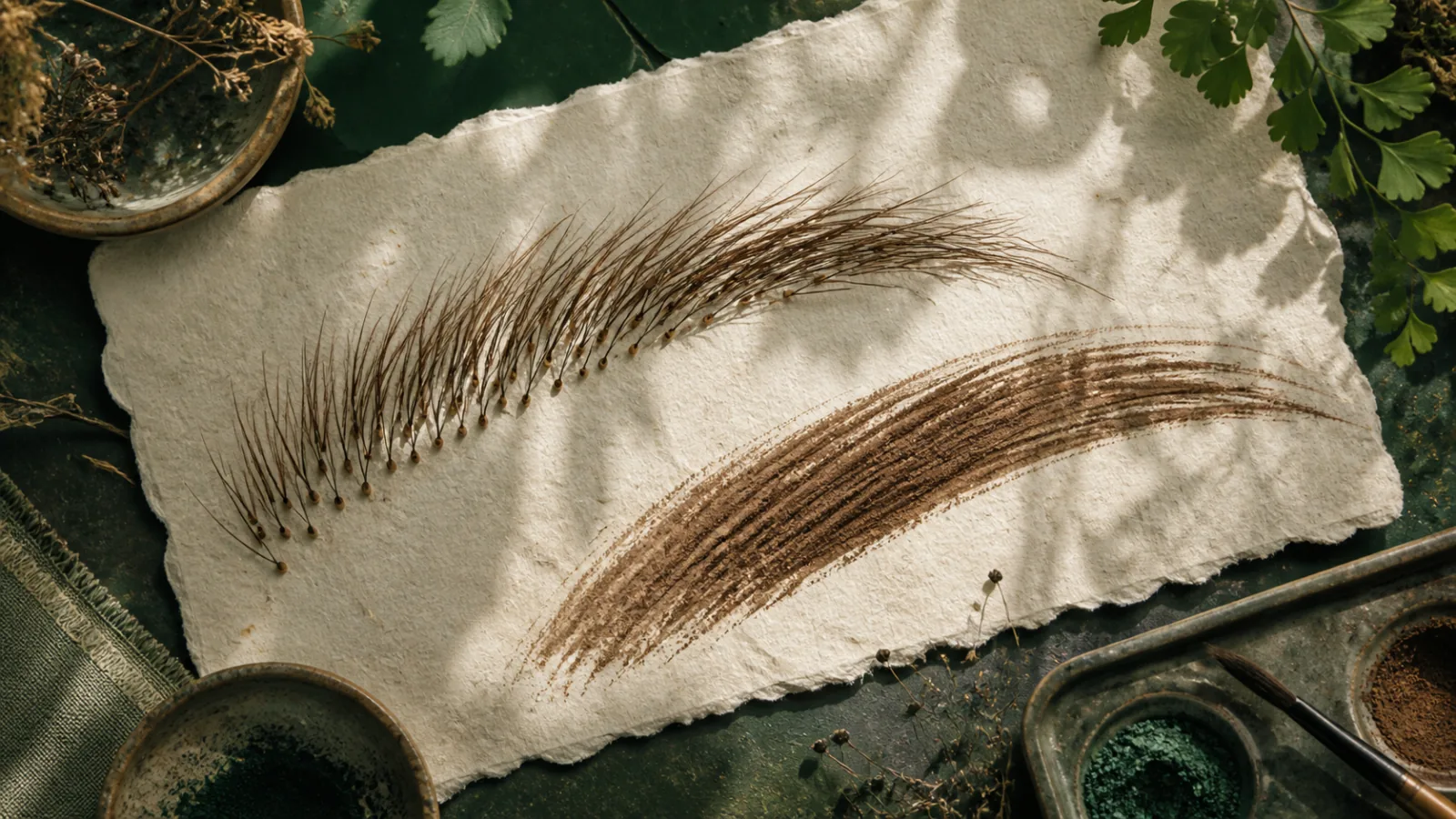
An eyebrow transplant and microblading create an eyebrow with different materials. Transplantation surgically relocates living follicles, commonly from scalp donor hair, so the new hairs continue to grow. Microblading deposits pigment into skin to simulate strokes; in Florida it is regulated as tattooing. Compare hair versus pigment, design, credentials and setting, maintenance, fading or growth, scars, and the correction plan.13
Neither option is simply the longer-lasting version of the other. One creates three-dimensional hair that needs biologic growth and grooming; the other creates a two-dimensional color pattern that changes with pigment, skin, technique, and time.
Begin with the missing element
Ask whether the goal is actual hair density, an optical outline, color where fine hair already exists, camouflage of a scar, reconstruction of a segment, or a complete design change.
| Decision | Eyebrow transplant | Microblading |
|---|---|---|
| Material | Relocated living hair follicles | Pigment deposited into skin |
| Visual endpoint | Hair shafts with texture, direction, and shadow | Drawn stroke and color effect without new hair |
| Upkeep | Trimming and grooming because donor hair may retain scalp-like growth | Color and shape reassessment as pigment changes or fades |
| Source record | Donor area, graft count, harvest, placement angles, team roles | Pigment brand, color, lot, needles, artist, establishment |
| Correction | Growth, direction, density, scar, and donor-supply problem solving | Fading, color shift, additional pigment, laser or other removal assessment |
If the goal is a crisp shape but not hair, surgery may introduce a new maintenance job. If the goal is tactile density, pigment cannot create it. Some plans use both, but each component still needs its own timing and correction strategy.
Transplanted follicles keep their donor behavior
Eyebrow transplantation requires a donor plan, harvest method, recipient-site creation, and placement at shallow, changing angles that follow eyebrow direction. Published surgical literature emphasizes design, graft selection, direction, and the continuing growth of commonly used scalp donor hairs.34
Ask who harvests, sorts, creates sites, places grafts, and supervises every step. Record the donor area and whether follicular unit extraction, strip harvesting, or another method is proposed; then ask how that choice affects donor scars and future supply. The FUE versus FUT guide explains the harvest decision without pretending the eyebrow design is the same as a scalp transplant.
The quote should state the graft definition, estimated range, whether a second session is contemplated, and how growth, non-growth, direction, curl, coarseness, and asymmetry are assessed. A graft count alone cannot predict the visible eyebrow.
Microblading is tattooing in Florida
Florida DOH states that microblading, permanent cosmetics, and microneedling used to deposit pigment, dye, or ink are forms of tattooing. The artist and establishment records are separate and address-specific.1 A cosmetology, esthetics, nursing, or training certificate is not a substitute for checking the applicable tattoo records for the service.
Ask to see the pigment container before the procedure and record manufacturer, product, shade, lot, expiration when present, and diluent. Confirm single-use needles, barrier and sterile-supply practices, written aftercare, and an infection or reaction response plan. FDA explains that tattoo and permanent-makeup inks can be associated with infection, allergic reaction, granulomas, scarring, and removal difficulties; color additives injected into skin are not FDA-approved simply because a pigment is sold for that purpose.2
“Semipermanent” does not define the exit
Microblading often fades, but timing and final color are variable. Repeated touch-ups add pigment and may add scar tissue. Laser or other removal can require multiple procedures and can change pigment unpredictably; it is not an eraser promise.2
Transplanted hair is biologic and can be cut, shaped, or sometimes removed, but donor scars and recipient changes are not undone by trimming. Ask both providers to describe the correction ladder before treatment—not only the ideal maintenance path.
Price the long-term ownership
For surgery, include consultation, laboratory or medical assessment when required, donor harvest, graft placement, facility, anesthesia, medicines, washes, follow-up, grooming, and any second-session or revision policy. For microblading, include design, initial service, expected touch-up, later refresh, aftercare, and correction or removal terms.
- Define the endpoint. Choose among real hair, optical strokes, color, outline, scar camouflage, density, or a combined goal.
- Verify the correct record system. For transplantation, verify surgical professionals and setting; for Florida microblading, verify artist and establishment tattoo records.
- Trace the material. Record donor method and graft handling for surgery or the exact pigment, lot, needles, and diluent for microblading.
- Model maintenance and correction. Compare trimming and growth with fading and touch-ups, then obtain a written path for an unwanted direction, density, shape, or color.
- Normalize total cost. Include follow-up, maintenance, possible additional sessions, transfer of records, and correction exclusions.
The decisive consultation question is: “Do I want living hair or the appearance of hair, and what donor-or-pigment record, maintenance burden, credential, and correction path comes with that material?”
Sources
- Florida Department of Health. Microblading, permanent cosmetics, and microneedling using pigment. Used for Florida's classification of microblading and pigment-depositing procedures as tattooing and the linked artist and establishment requirements. Accessed .
- U.S. Food and Drug Administration. Tattoos and Permanent Makeup Fact Sheet. Used for pigment, infection, reaction, removal, and regulatory boundaries. Accessed .
- PubMed. Clinical outcomes and technical tips for eyebrow restoration using single-follicular-unit hair transplantation: A case series review. Used for eyebrow-specific follicle direction, design, donor behavior, and procedural evidence context. Accessed .
- PubMed. Eyebrow restoration: the approach, considerations, and technique in follicular unit transplantation. Used for the surgical workflow, maintenance, and limitations of transplanted scalp follicles in eyebrows. Accessed .