Who can perform microblading and permanent makeup in Florida?
Florida treats microblading, permanent cosmetics, micropigmentation, and pigment-depositing microneedling as tattooing. A practitioner generally needs a Florida tattoo artist license and must work in a licensed tattoo establishment; an esthetician or cosmetology credential alone is not a substitute.
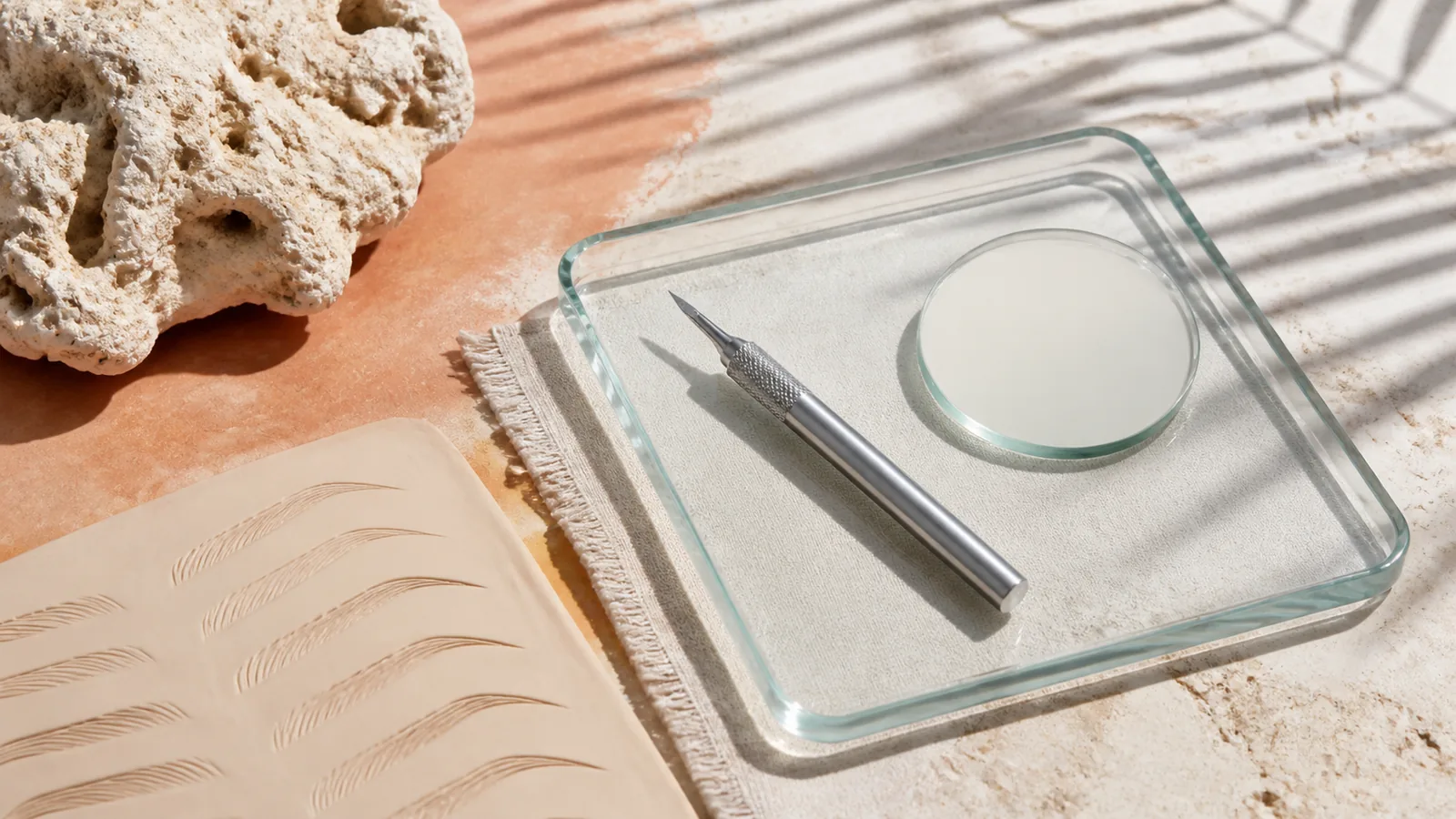
Florida classifies microblading, permanent makeup, micropigmentation, and microneedling that deposits pigment, dye, or ink as tattooing. The person generally needs a current Florida tattoo artist license, and the procedure must occur in a licensed tattoo establishment. A facial specialist, esthetician, cosmetologist, nursing credential, or training certificate does not by itself replace those tattoo records.123
That answer is specific to pigment being placed into or under skin. Pigment-free cosmetic microneedling belongs to a different scope analysis. A service name such as powder brows, ombré brows, nano brows, lip blush, or permanent eyeliner does not remove the tattoo classification when pigment is deposited.
Verify the artist and the place separately
| Record | What it establishes | What it does not establish |
|---|---|---|
| Tattoo artist license | The individual holds the Florida credential for tattooing | That the location is licensed or every technique is well performed |
| Tattoo establishment license | The fixed or qualifying temporary location is licensed | That every person working there is licensed |
| Bloodborne-pathogens course | Required training was completed | A government specialty certification in brows, eyeliner, or lips |
| Biomedical-waste permit | The relevant waste program record exists | Artist or establishment licensure |
| Cosmetology/facial-specialist license | Authority for that profession's scope | Authority to tattoo for cosmetic purposes |
| Private academy certificate | A course provider issued a certificate | Florida licensure, establishment approval, or outcome quality |
Florida DOH says a tattoo artist license is required even if a person already holds an esthetician or cosmetology credential.2 Both the artist and location should be searched by exact name and address. A photo of a license on social media may be expired, belong to another location, or omit restrictions.
Home and mobile appointments need scrutiny
Florida says cosmetic tattooing may be performed only in a licensed fixed or temporary tattoo establishment.2 A regular appointment in a client’s home is not transformed into a licensed establishment because the artist brings sterile-looking supplies.
A temporary establishment is tied to qualifying temporary events and requirements; it is not a general mobile-service license. Guest tattoo artist registration is also limited and does not substitute for a Florida artist license outside its terms.1
Ask the booking address before paying a deposit. Verify the establishment at that exact address and the artist scheduled for the appointment.
Training labels are not standardized specialties
“Certified microblading artist,” “master PMU artist,” and academy levels are private credentials unless a specific regulator says otherwise. They can describe education, but the titles are not substitutes for Florida’s license.
Evaluate training records on their own terms:
- course provider and instructor;
- supervised work on models;
- infection control and bloodborne-pathogen content;
- brow, lip, or eyeliner technique actually taught;
- pigment and device education;
- complication and referral protocols; and
- continuing education and dated portfolio work.
Do not manufacture a ranking from certificate count. A long certificate wall can coexist with an expired license or unlicensed location.
Product and sterility records matter
Needles, cartridges, handles, pigment cups, topical products, and pigments create separate traceability needs. Request unopened single-use needle or cartridge information, lot and expiration when available, pigment brand/color/lot, barrier and cleaning practices, and disposal route.
If a clinic says a pigment is “FDA approved,” ask for the exact approval record. FDA does not generally approve tattoo pigments for injection into skin as finished tattoo products. A color additive permitted for another use does not automatically authorize intradermal placement.
The consent should identify known risks such as infection, allergic reaction, scarring, pigment migration, color change, asymmetry, dissatisfaction, and the possibility that correction or removal may require additional procedures. “Semi-permanent” does not promise complete fading on a schedule.
Brows, lips, and eyeliner do not share one risk map
The anatomical site changes the decision. Eyelid work occurs near the eye; lip procedures can interact with a history of cold sores; brow placement and pigment behavior differ by skin, scar, oil, sun, and prior tattooing. A provider’s strong brow portfolio is not evidence of equivalent eyeliner or lip experience.
The lip-blush versus lip-filler guide separates pigment from volume. The microneedling guide owns pigment-free needling-device decisions.
A Florida booking checklist
- Name the legal service. Confirm whether pigment, dye, or ink is deposited and do not let a branding term conceal tattooing.
- Verify the individual license. Search the exact artist, current status, expiration, restrictions, and disciplinary history.
- Verify the exact establishment. Match the appointment address to a current tattoo-establishment record and applicable waste permit.
- Inspect product traceability. Record pigment, lot, needle or cartridge, topical products, sterilization or single-use status, and disposal.
- Match the portfolio to the site. Review healed—not only fresh—work for the exact brow, lip, or eyeliner technique and similar skin context.
- Preserve consent and follow-up. Document aftercare, urgent symptoms, touch-up terms, correction limits, complaint route, and who owns complications.
The decisive question is not “Is the artist certified?” It is “Can the exact artist, establishment, pigment, sterile supply chain, consent, and follow-up route all be verified for this Florida appointment?”
Sources
- Florida Department of Health. Microblading, Permanent Cosmetics, and Microneedling Using Pigments, Dye, or Ink. Current Florida artist, establishment, biomedical-waste, training, guest-registration, and inspection requirements. Accessed .
- Florida Department of Health. Tattoo License Frequently Asked Questions. Clarifies that cosmetology or esthetician credentials do not replace tattoo licensure and that work must occur in a licensed establishment. Accessed .
- Florida Legislature. Florida Statutes Section 381.00777—Tattooing Licensure. Current statutory artist and guest-artist licensure framework and requirements. Accessed .