Gua sha vs a facial roller: what a small comparison can tell you
A small randomized comparison found changes in measured facial distances in both groups, without a statistically significant difference between groups. Instrument readings did not establish lasting sculpting.
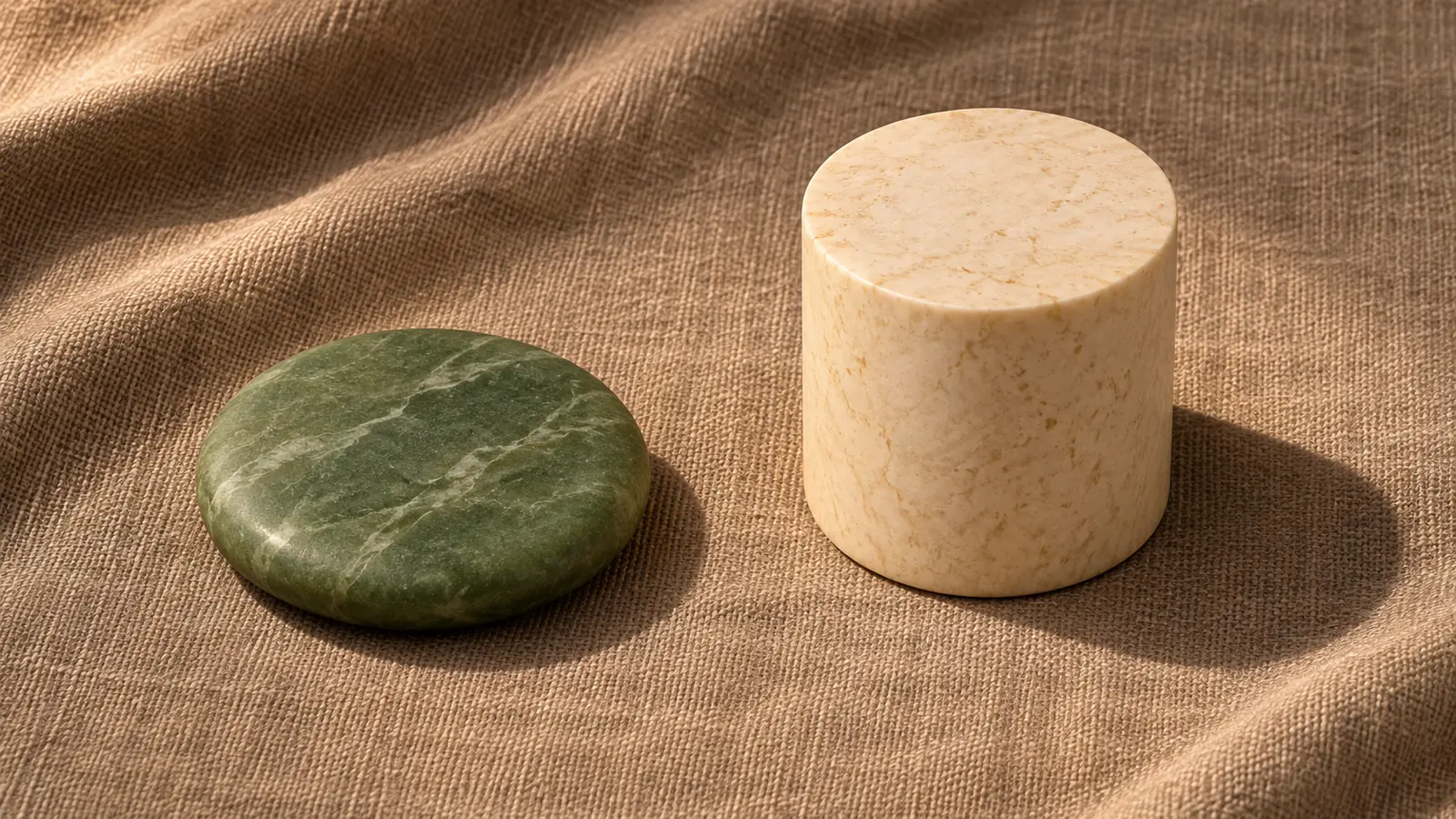
A small randomized study did not find a significant difference between gua sha and a facial roller on its measured facial distances. It reported differences on some instrument readings for skin elasticity and muscle properties. Those are not evidence that one tool sculpts the face better, moves lymph, or produces a lasting visible change.1
Follow the people through the comparison
The researchers randomized 34 women to two active groups. One person assigned to the roller group did not complete the study, leaving 17 gua sha and 16 roller participants. The trial did not include an untreated group. Changes within both groups can be described, but the study cannot establish how the same measurements would have changed without either approach.1
The authors reported changes in four facial surface distances within both groups, with no significant between-group difference for those distances. Some measures of elasticity and muscle properties differed between the groups. That does not make either instrument reading a substitute for a blinded judgment of visible change, a participant’s experience or follow-up after the study ended. The study did not establish those outcomes.1
A circulation study is a different claim
An earlier roller study measured local skin blood flow and vascular reactivity. Its outcome is not a measurement of lymphatic drainage, puffiness or facial contour. If a treatment menu says a tool “drains” or “lifts,” ask what the practice means by that word and what evidence it has for the same outcome. A source about local circulation cannot answer every appearance claim made for the service.12
Ask what comparison is missing from an add-on offer
The trial compared two tools used by people in the study. It did not compare a facial with and without an add-on, so it cannot tell you what the tool adds to a package you are considering. It also did not include an untreated group or observe whether measured changes persisted after the study period. If a practice describes a visible result, ask whether it refers to a participant’s impression, a photograph or one of the study’s measurements. None should be substituted for the others without saying so.1
A source about local circulation is useful for a narrowly defined physiology claim. If the menu uses terms such as “drainage” or “sculpting,” the question is whether the evidence measured that specific effect and whether it relates to the service you would actually receive.12
| Claim | What the source would need to show |
|---|---|
| Changes contour | The same visible feature measured with a comparison that can distinguish the effect. |
| Changes elasticity | Which skin measure changed and what that means for the person’s goal. |
| Moves lymph | A study that actually measured lymphatic function rather than local blood flow. |
| Lasts afterward | Follow-up after the measured study period. |
When comparing facial services, ask what is included in the visit and how the practice describes any tool-based add-on. If you want a relaxing appointment, that is a different goal from expecting a measurable, sustained contour change. Ask which result is being offered and whether it was measured after a single visit, across a study or at a later follow-up. A listing alone does not establish that a practice offers either tool.12
Sources
- Journal of Cosmetic Dermatology / original randomized trial. Comparative Effects of Facial Roller and Gua Sha Massage on Facial Contour, Muscle Tone, and Skin Elasticity: Randomized Controlled Trial. Full trial reports randomization, 33 completers, separate instrument and surface-distance measures, and limitations. Accessed .
- Complementary Therapies in Medicine / original study. Short- and long-term effects of using a facial massage roller on facial skin blood flow and vascular reactivity. Public abstract reports local blood flow and vascular reactivity, not drainage or contour change. Accessed .