HydraFacial vs microdermabrasion: what each facial does
HydraFacial is a branded tip-and-fluid workflow combining surface exfoliation, suction-based extraction, and solution delivery; microdermabrasion abrades the outer skin with a crystal or diamond-tip system and suction. Both are surface-focused, not substitutes for diagnosis or deeper resurfacing.
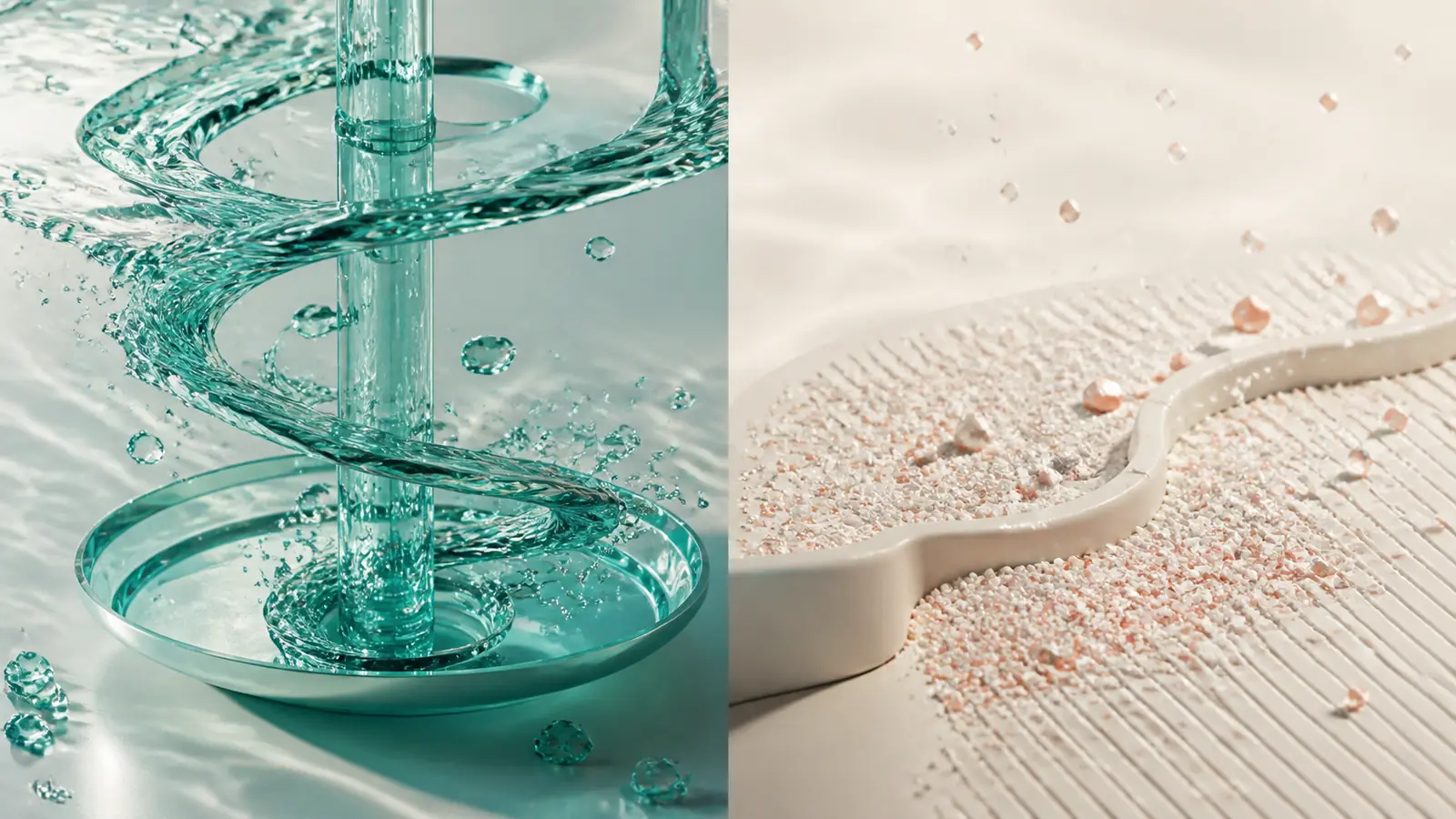
HydraFacial and microdermabrasion are surface-focused facial services with different delivery systems. HydraFacial is a branded workflow using tips, suction, fluids, and topical solutions; microdermabrasion mechanically abrades the outer surface with a diamond tip or crystals and removes debris with suction. Neither is a generic name for all facials, and neither reaches the treatment depth of a medium peel or resurfacing laser. 13
Choose by the actual skin goal, current skin condition, device and consumables, operator, and tolerance for friction or ingredients—not by the promise of a “deep clean.”
What each system physically does
| Dimension | HydraFacial | Microdermabrasion |
|---|---|---|
| Identity | A brand-specific platform, tips and solution workflow | A general procedure category with crystal or diamond-tip devices |
| Surface action | Tip contact plus fluid flow and suction | Controlled mechanical abrasion plus suction |
| Topicals | Cleansing, exfoliating and hydrating solutions; optional boosters | May be paired with skincare, but abrasion is the defining step |
| Main variable | Tip, suction, passes, solution, booster and hygiene | Tip or crystal, grit, suction, passes, pressure and hygiene |
| Typical recovery | Often marketed as minimal; sensitivity depends on settings and products | Pinkness, tenderness or sensitivity can occur; intensity matters |
| Evidence question | Separate manufacturer workflow claims from evidence for each outcome and booster | Separate temporary surface smoothing from treatment of deeper pigment, scars or wrinkles |
Hydrafacial’s own FAQ describes cleansing, exfoliation, extraction, and hydration in one visit. 1 That source defines the product; it does not independently prove every clinic claim or add-on. Microdermabrasion removes cells at the outermost skin layer, according to AAD, and generally produces subtler, temporary surface changes rather than deep remodeling. 34
“Extraction” needs a realistic definition
Suction and fluid can remove surface debris and some material from follicular openings, but a waste canister is not a diagnostic readout of toxins, pore health, or long-term acne clearance. Its appearance depends on solutions, water, makeup, sebum, debris, and machine settings.
Neither procedure permanently opens or closes pores. Pore appearance can change with oil, keratin, inflammation, sun damage, hydration, lighting, and temporary surface smoothing. Ask the provider to state the measurable target—comfortable exfoliation before an event, temporary brightness, comedonal acne support, rough texture—rather than promise “detoxification.”
Inflamed acne, rosacea, eczema, open skin, infection, sunburn, recent procedures, and prescription topicals may change whether and how a facial is performed. A facial should not replace evaluation of a new rash, persistent acne, changing lesion, or pigment condition.
Fluids and boosters are separate products
HydraFacial protocols may deliver cleansing or exfoliating solutions and optional branded or clinic-selected boosters. Ask for the exact ingredient list, concentration when relevant, lot and expiration, intended purpose, allergy and sensitivity review, and whether the booster is included or separately charged.
FDA generally does not preapprove cosmetic products before market, with limited exceptions such as color additives, so “FDA approved serum” requires an exact product and regulatory basis. 5 A device’s market status does not make every solution used through it approved for every claim.
Be cautious when a facial is combined with prescription drugs, compounded ingredients, exosomes, platelet products, acids, microneedling, light, or another energy device. The combined service has a different risk and evidence profile. “HydraFacial” should not be used as a halo term for an unlisted add-on.
Microdermabrasion can also be combined with peels or topicals. Abrading the barrier may change penetration and irritation. Ask which step is responsible for the result and whether the combination is supported and appropriate, rather than assuming more steps create more benefit.
Match the goal to the depth
For short-term surface smoothness or a low-recovery facial, either category may be discussed after a skin assessment. HydraFacial emphasizes solution delivery and suction; microdermabrasion emphasizes mechanical resurfacing. Preference may hinge on friction sensitivity, ingredient sensitivity, active breakouts, dryness, and the specific platform.
For deeper acne scars, pronounced wrinkles, vascular redness, melasma, or significant photodamage, these services may not reach the relevant structure. A superficial glow immediately after hydration is not evidence of collagen remodeling. Compare the claimed endpoint and follow-up time with the depth of action.
AAD notes that microdermabrasion results usually require a series and maintenance, and that effects and recovery vary. 4 Ask a HydraFacial provider the same questions rather than accepting an open-ended monthly membership as the protocol.
Hygiene and consumables matter
Ask which tips, tubing, containers, filters, and solution-contact parts are single-use, disinfected, or replaced; how the device is flushed; and how backflow or cross-contamination is prevented. Consult the exact device’s current instructions for use rather than a generic cleaning claim. Hydrafacial publishes electronic user guides for its device models. 2
For crystal microdermabrasion, ask how crystals are supplied and collected and whether any component can recirculate. For diamond-tip systems, ask how reusable tips and suction pathways are cleaned between clients. Eye, nose, and mouth protection and controlled use around broken skin should be visible in the protocol.
An operator should wash hands, use appropriate gloves, open single-use parts in view when practical, and avoid dipping contaminated tools back into shared product. A luxury room does not answer equipment hygiene.
Compare a base treatment, not a menu stack
HydraFacial pricing can vary by device generation, treatment time, tip, booster, LED add-on, lymphatic-style suction, body area, and membership. Microdermabrasion pricing can vary by device, area, intensity, peel or mask, and series. Normalize the base procedure first.
Request a line item for consultation, base facial, each solution or booster, LED or other device, gratuity policy, follow-up, package expiration, and membership. Remove add-ons one at a time and ask what evidence and incremental result each is supposed to add.
Do not let package credits determine frequency. Ask what observable finding would justify the next treatment and when the skin should be reassessed.
Plan around barrier response, not an event guarantee
Both services disturb or manipulate the outer skin surface. Even when the usual recovery is short, a first treatment immediately before a wedding, flight, beach day, or photography session leaves little room for unexpected redness, dryness, breakout, contact reaction, or pigment change. Ask how long the clinic wants between a first exposure and an important event and what products, heat, exercise, swimming, shaving, or sun it restricts.
Patch testing an individual booster may help with some ingredient questions, but it does not recreate suction, abrasion, multiple solutions, or full-face exposure. A history of adhesive, fragrance, preservative, acid, shellfish, aspirin-related, or topical-product reactions should be translated into the exact ingredient and protocol review rather than a generic “sensitive skin” setting.
Get a copy of every product used. If a reaction appears later, the useful record includes device, tip or abrasion settings, passes, suction, lot numbers, contact time, add-ons, pre-treatment products, photographs, and timing—not just the receipt name.
A facial can feel pleasant and still fail its stated endpoint. Decide whether comfort, temporary hydration, surface smoothness, or comedone reduction is the priority, then assess that outcome after immediate shine and moisturizer have settled.
A clean comparison workflow
- 1. Name the skin goal Choose one measurable priority and separate a cosmetic surface concern from acne, pigment, rash, lesion, or another condition needing evaluation.
- 2. Identify the exact system For HydraFacial, record device, tip, solutions and boosters; for microdermabrasion, record diamond or crystal system, suction, grit and passes.
- 3. Screen ingredients and skin state Review allergies, sensitivities, active irritation, infection, sunburn, medications, prescription topicals and recent procedures.
- 4. Verify hygiene Ask about single-use parts, reusable-tip disinfection, tubing and reservoir cleaning, solution handling, gloves and cross-contamination controls.
- 5. Separate every add-on Price and justify boosters, acids, masks, light, lymphatic-style steps, extractions, or combined procedures independently.
- 6. Define the endpoint Agree on when to assess temporary hydration or smoothness, what the procedure cannot treat, and the evidence required before buying a series.
The better facial is the one whose mechanism, ingredients, hygiene, and endpoint are fully visible. A branded name or aggressive abrasion cannot substitute for that clarity.
Sources
- Hydrafacial. Frequently asked questions. Manufacturer source used only to identify the branded workflow and its stated cleansing, exfoliation, extraction, and hydration steps. Accessed .
- Hydrafacial. Electronic instructions for use. Manufacturer source used to direct exact-device questions to current user guides rather than treating all branded devices and tips as identical. Accessed .
- American Academy of Dermatology. Microdermabrasion: overview. Dermatology guidance used for microdermabrasion mechanism, surface-level limits, common uses, and consultation context. Accessed .
- American Academy of Dermatology. Microdermabrasion: FAQs. Dermatology guidance used for treatment series, temporary reactions, recovery, and provider questions. Accessed .
- U.S. Food and Drug Administration. Cosmetics safety Q&A: personal care products. FDA consumer guidance used to distinguish cosmetic-product marketing from FDA premarket approval and to evaluate solution claims separately from a facial device. Accessed .