Laser and light treatments for darker skin tones
Darker skin is not excluded from laser and light treatment, but epidermal melanin can compete with the intended target. Safe planning requires the right diagnosis, wavelength or filter, pulse and cooling strategy, conservative endpoint, operator experience, and a plan for post-inflammatory darkening or lightening.
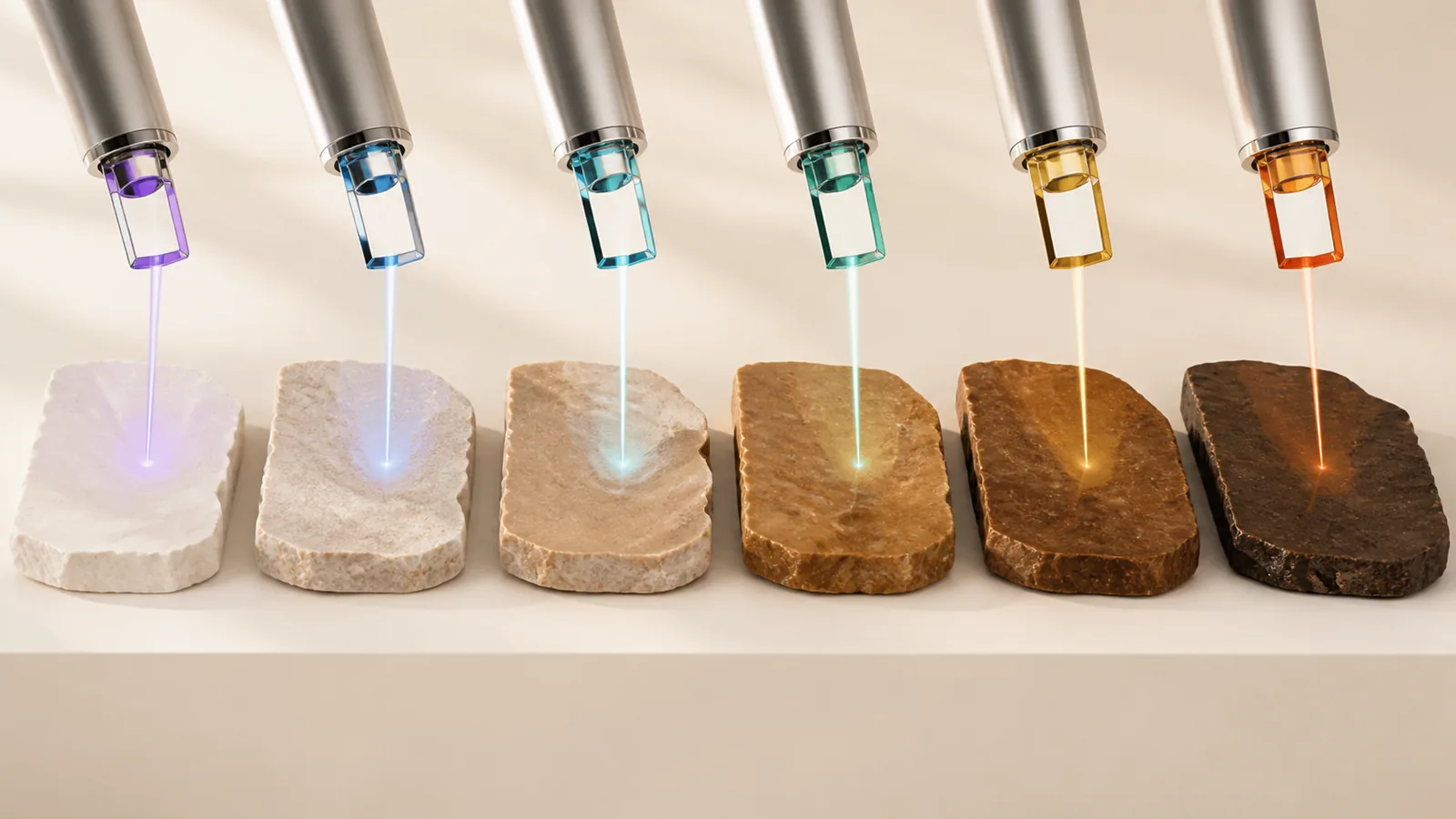
People with darker skin tones can receive many laser and light treatments, but device choice and technique must account for epidermal melanin. Melanin can absorb energy intended for hair, pigment, vessels, or water-related resurfacing, increasing the risk of burns and post-inflammatory darkening or lightening when wavelength, pulse, fluence, cooling, recent tanning, and operator judgment do not fit. 123
“Safe for all skin types” is a marketing sentence, not a protocol. The useful answer names the condition, target, exact device and handpiece, settings logic, operator experience, and early-response plan.
Skin tone is one variable, not the diagnosis
Fitzpatrick skin type estimates response to sun and tendency to burn or tan; it is not a complete measurement of skin color, ancestry, pigment biology, or procedure risk. Current tan, baseline color in the treatment area, melasma, recent inflammation, medications, prior pigment changes, scars, and the target condition also matter.
| Planning layer | Question | Weak shortcut |
|---|---|---|
| Diagnosis | Is the target hair, a sun spot, melasma, post-inflammatory pigment, vessel, scar, tattoo or texture? | Calling every dark feature pigment |
| Chromophore | Is energy intended for melanin, hemoglobin, water or another target? | Choosing a machine by brand reputation |
| Device | What wavelength or IPL filter, pulse, spot, cooling and handpiece? | “Medical-grade” or “safe for all skin” |
| Operator | What comparable cases, training and complication response? | Relying on the clinic owner's credential |
| Endpoint | What immediate and delayed response is acceptable? | Turning up energy until change is visible |
| Recovery | How are inflammation, UV, heat and early pigment change managed? | A universal no-downtime promise |
Diagnosis is decisive. Melasma may darken with inflammation or heat; a discrete lentigo, tattoo pigment, vascular lesion, acne mark, and hair follicle require different logic. AAD describes lasers and lights as condition-specific tools and emphasizes dermatologist expertise, especially for skin of color. 1
Wavelength and pulse shape the melanin margin
Longer wavelengths generally interact differently with epidermal melanin and penetrate differently than shorter wavelengths, but wavelength alone does not make a protocol safe. Fluence, pulse duration, spot size, repetition, overlap, cooling, target depth, device calibration, and operator response all shape delivered injury.
IPL is a range of filtered light, not a laser. “BBL” often refers to a branded broadband-light platform, still within an IPL-style category. A laser emits a narrower wavelength. The IPL, BBL and laser guide explains why the terms should not be used interchangeably.
Ask the clinic to write down model, handpiece, wavelength or filter, target, skin assessment, and planned endpoint. FDA’s device resources can help verify the exact product and intended use; a clearance for one model, anatomy, or endpoint does not automatically cover every setting or use. 2
Cooling protects a margin but does not erase risk
Contact cooling, cryogen spray, chilled air, gel, and pauses can protect epidermis or improve comfort depending on the platform. Cooling cannot correct a wrong diagnosis, recent tan, excessive fluence, poor pulse selection, overlap, or an inexperienced operator.
Ask how the system confirms contact, what happens when a handpiece loses cooling, how gel thickness is controlled, and which immediate skin signs trigger a stop. A painful “hot spot,” gray or white change, blister, unexpected swelling, or sharply patterned reaction should not be dismissed as proof the treatment worked.
Eye protection must match the wavelength or light system for the patient, operator, and anyone in the room. FDA treats lasers as radiation-emitting products with specific hazards and labeling. 3 Generic sunglasses or closed eyes are not a device-specific protection plan.
A test area is information, not a warranty
A small test exposure can inform immediate and delayed reaction under the chosen conditions. It cannot guarantee the full field will respond identically, especially when anatomy, pigment density, overlap, sun exposure, or device contact varies.
Ask how large the test is, where it is placed, which settings are recorded, how long the clinic waits, what photography is used, and what delayed change disqualifies treatment. A same-minute “test spot” followed by full treatment may not observe delayed post-inflammatory pigmentation.
Test-area terms should be clear in the quote. If the response is unsuitable, determine whether the package is refundable or transferable before paying.
Match the risk plan to the target
For hair reduction, hair pigment, skin pigment, hair thickness, growth cycle, and device wavelength matter. Ask what happens with fine or light hair and how the clinic avoids treating recently tanned skin.
For brown spots, identify the lesion. A device should not be used to erase a changing or uncertain pigmented lesion without appropriate evaluation. For melasma, ask why energy is being added to topical and light-protection care and how rebound is handled.
For vascular redness, the target is hemoglobin, but epidermal melanin still affects the path. For resurfacing, water absorption and controlled thermal injury create a different wound and pigment risk. Ablative, nonablative, fractional, IPL, and radiofrequency are not intensity levels on one ladder.
For acne scars, map ice-pick, rolling, boxcar, raised scars, and pigment separately. A field pass may soften texture but cannot release every tether or reconstruct every deep tract.
Operator experience should be visible in the workflow
Ask for the legal name and license of the actual operator, not only the supervising physician or website expert. Request examples using the same device, indication, and comparable skin tone with standardized lighting and known follow-up. Photographs cannot guarantee an outcome, but inconsistent photos reveal weak measurement.
Relevant experience includes recognizing when not to treat, reducing settings or area, staging care, and responding to pigment change. Ask what the provider does after a burn, blister, prolonged redness, darkening, lightening, infection concern, eye symptom, or scar.
An adverse-event plan should include direct contact, early evaluation, documentation of settings and device, appropriate escalation, and follow-up—not only a generic instruction to wait.
Keep the settings record after every visit. Manufacturer, model, handpiece, wavelength or filter, spot size, pulse duration, fluence, repetition, cooling, number of passes, overlap, endpoint, test area, and operator create the treatment’s technical identity. A chart that says only “laser facial, level 3” cannot support a careful adjustment after darkening or transfer to another clinic.
If a clinic treats settings as proprietary, request the medical record and adverse-event details anyway. Continuity and response planning require more than a package name.
South Florida exposure belongs in the protocol
Recent tanning and strong incidental UV can narrow the safety margin. Plan outdoor work, driving, water activities, sports, travel, and the recovery window. Self-tanner can also interfere with assessment or some treatments even though it is not a UV tan.
Ask exactly how long to avoid sun before and after, which sunscreen and protective clothing strategy is required, and what happens if exposure occurs. Do not hide a tan to preserve a prepaid appointment.
Heat, sweating, friction, pools, and active skincare may be restricted after treatment depending on injury. Get written instructions specific to the device and intensity.
A device-and-skin verification sequence
- 1. Name the target precisely Separate hair, melasma, sun spots, post-inflammatory pigment, vessels, scars, tattoos, texture and any uncertain lesion.
- 2. Map pigment risk Review baseline tone, current tan or self-tanner, prior darkening or lightening, melasma, keloids, medicines, dermatitis and recent procedures.
- 3. Identify the platform Record manufacturer, model, handpiece, wavelength or IPL filter, target chromophore, FDA record and intended use.
- 4. Test the operator's plan Ask how wavelength, pulse, fluence, spot, overlap, cooling, endpoint and eyewear change for this skin and condition.
- 5. Define test and stopping rules Set a delayed test-area review when useful and list immediate or delayed signs that pause the full treatment or series.
- 6. Build the pigment response Write photoprotection, wound care, early-contact path, setting records, photographs, treatment for inflammation and referral for persistent change.
Darker skin does not need a blanket ban or a blanket guarantee. It needs a device-specific margin, an experienced operator, and a plan that treats pigment response as a central outcome.
Sources
- American Academy of Dermatology. Lasers and lights: how well do they treat skin conditions?. Dermatology guidance used for condition-specific laser and light treatment, operator expertise, skin-color considerations, limitations, and outcome questions. Accessed .
- U.S. Food and Drug Administration. Aesthetic (cosmetic) devices. FDA overview used for exact-device and intended-use verification, risks, operator questions, and the boundary between cosmetic appearance claims and health outcomes. Accessed .
- U.S. Food and Drug Administration. Laser products and instruments. FDA radiation-emitting product guidance used for laser-product oversight, labeling, hazards, and the distinction between lasers and other light systems. Accessed .