PRP microneedling facial infection-control checklist
A PRP microneedling facial creates a patient-specific blood-product chain. Verify collection identity, centrifuge handling, labeled transfer, single-patient cartridges and syringes, surfaces, sharps, exposure response, and records. Device clearance does not itself authorize delivering PRP through microneedling.
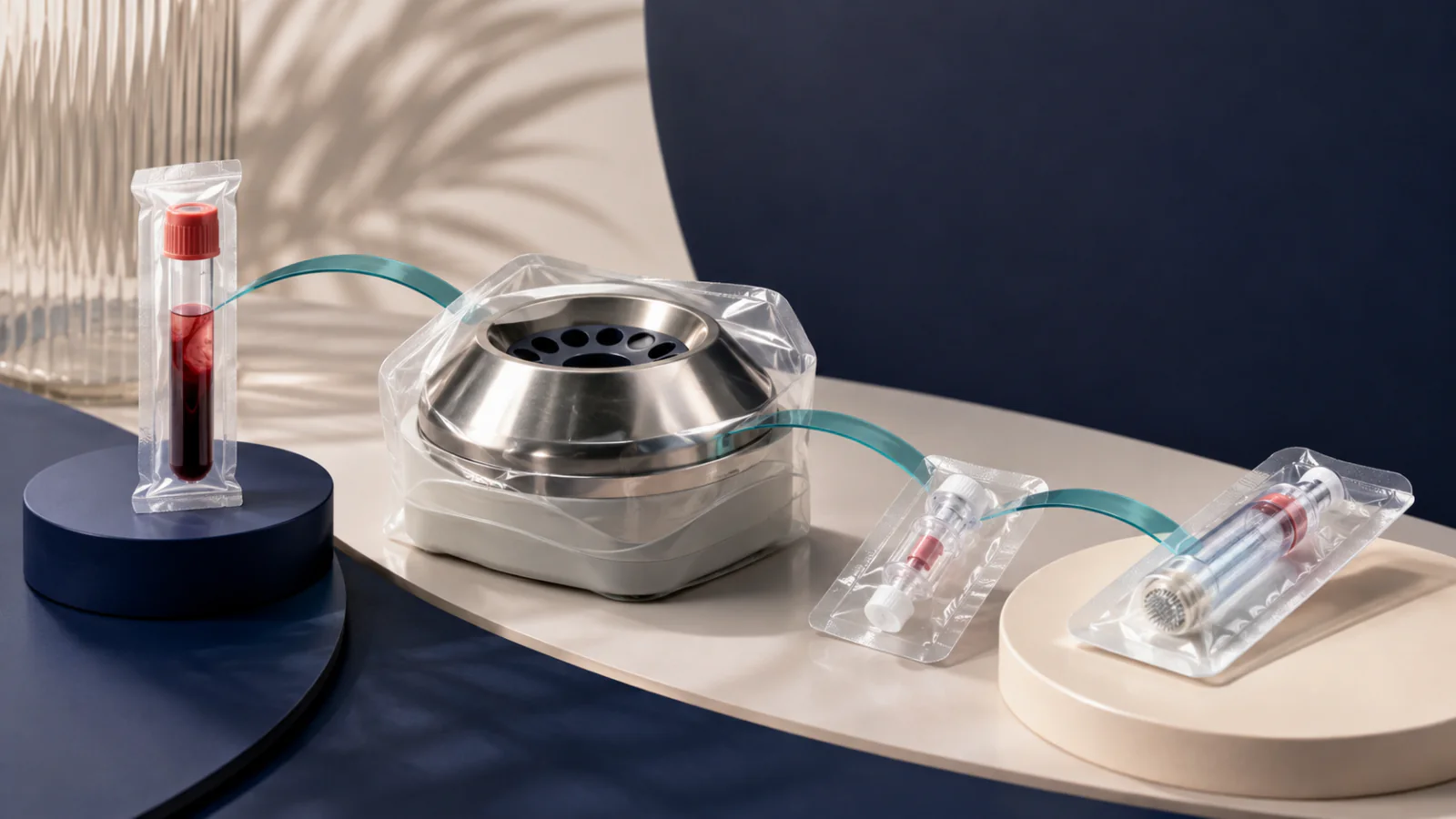
A PRP microneedling facial requires a traceable, single-patient blood-product workflow from draw to final application. Verify patient identification, collection tubes, centrifuge handling, closed labeled transfer, new cartridges and syringes, clean-to-dirty separation, surface disinfection, sharps disposal, exposure response, and documentation. A microneedling device’s FDA clearance does not by itself authorize delivering PRP or another blood product through the skin.12
The point is not to treat every PRP service as unsafe. It is to make the controls visible enough that “we use sterile supplies” can be checked.
Follow the blood, not the brand name
| Stage | Control to verify | Failure the control is designed to prevent |
|---|---|---|
| Collection | Two identifiers, labeled tubes, new needle and holder, clean preparation | Wrong-patient material, contaminated equipment, sharps exposure |
| Processing | Validated tube and centrifuge system, balanced loading, clean rotor and work area, separation of specimens | Mix-up, open contamination, carryover between clients |
| Transfer | Closed or controlled transfer into new labeled single-patient syringes or containers | Unlabeled product, reused syringe, shared container, environmental exposure |
| Microneedling | Exact device, new compatible cartridge, single patient and session, intact packaging, correct disposal | Cartridge or fluid-path reuse and cross-patient exposure |
| Room turnover | Defined clean/dirty zones, approved disinfectant and contact time, fresh barriers, waste and sharps removal | Blood remaining on high-touch or treatment surfaces |
CDC’s investigation of an unlicensed New Mexico spa documented the first likely HIV transmissions associated with cosmetic injection services and linked the cluster to PRP microneedling facials amid multiple unsafe infection-control practices.1 It was one facility investigation, not an estimated risk rate for all PRP. Its durable lesson is that cross-patient failures can occur anywhere the chain is not controlled.
Ask for a one-patient flow
The service should be able to describe how only one person’s blood and supplies occupy each processing zone at a time, or how parallel work is physically and electronically separated. Labels should remain attached from collection through final containers. Staff should never rely on remembering whose tubes are in a rack.
Watch for process answers, not theater:
- Who confirms two identifiers at draw and again before application?
- Are tubes and syringes labeled immediately in the presence of the patient?
- Does the centrifuge accept the chosen tube and operating parameters?
- How are the rotor, lid, controls, rack, counter, and touch screen handled between patients?
- Is any syringe, vial, tube holder, transfer device, or remaining material shared or saved?
- Where do used cartridges and sharps go before the room is reset?
The PRP-versus-PRF guide compares preparation variables and evidence. This article owns a different question: whether the identity and infection-control chain stays intact.
Verify the microneedling device boundary
FDA explains that authorized microneedling devices have specific intended uses and that cartridges intended for one-time use should not be reused.2 FDA also states that microneedling devices are not approved for delivery of cosmetics, topical medications, vitamin solutions, drugs, or blood products such as PRP into the skin. A clinic should not turn a clearance for one device and indication into “FDA approved vampire facial.”
Capture manufacturer, model, authorization number, current instructions, cartridge model, lot, packaging, needle configuration, depth/settings plan, cleaning instructions, and operator. Then record the PRP preparation separately. Combining two familiar components creates a new protocol; the status of one component does not transfer to the whole service.
Separate employee controls from patient controls
OSHA’s bloodborne-pathogens standard addresses occupational exposure and requires covered employers to use an exposure-control plan, engineering and work-practice controls, protective equipment, training, sharps practices, and post-exposure procedures.3 Those protections matter, but an employee-compliance poster alone does not demonstrate patient-to-patient separation.
CDC Standard Precautions apply to patient care and include hand hygiene, risk-based protective equipment, injection and sharps safety, and cleaning/disinfection of equipment and environment.4 Ask how the facility translates both systems into the exact room workflow.
Build a record before and after the session
- Identify the team and facility. Verify each person's license and role, the business and treatment address, and who directs infection control.
- Trace collection. Record identifiers, tube manufacturer and lot, anticoagulant or additives, draw time, collector, and sealed handling.
- Trace processing. Capture centrifuge, program, timing, transfers, labels, clean/dirty separation, and material disposition.
- Open single-use components. Confirm new cartridge, syringe, transfer pieces, barriers, and other blood-contact supplies for this patient and session.
- Verify room turnover. Ask about product, dilution if applicable, contact time, covered surfaces, reusable equipment, sharps, waste, and hand hygiene.
- Know the response path. Preserve the procedure note and contacts for an exposure, infection concern, product problem, record request, or public-health follow-up.
The decisive question is: “Can the facility account for this patient’s blood and every blood-contact surface or component from collection through disposal, with no opportunity for cross-patient reuse or mix-up?”
Sources
- Centers for Disease Control and Prevention. Investigation of HIV infections associated with receipt of platelet-rich plasma microneedling facials. Used for the documented New Mexico cluster, investigation findings, and infection-control lessons without generalizing one event to all PRP services. Accessed .
- U.S. Food and Drug Administration. Microneedling Devices. Used for device authorization boundaries, cartridge reuse warnings, cleaning, risks, and FDA's statement about use with blood products such as PRP. Accessed .
- Occupational Safety and Health Administration. 29 CFR 1910.1030: Bloodborne pathogens. Used for employee-facing bloodborne-pathogen controls, engineering/work-practice controls, sharps, training, and exposure plans. Accessed .
- Centers for Disease Control and Prevention. Standard Precautions for All Patient Care. Used for the broader patient-care infection-control framework. Accessed .