Traveling with semaglutide: storage rules follow the exact product and container
Wegovy tablets, single-dose injections, and multidose pens do not share one storage rule. Identify the actual container, first-use status, temperature history, and dispensing contact before a trip or after a questionable delivery.
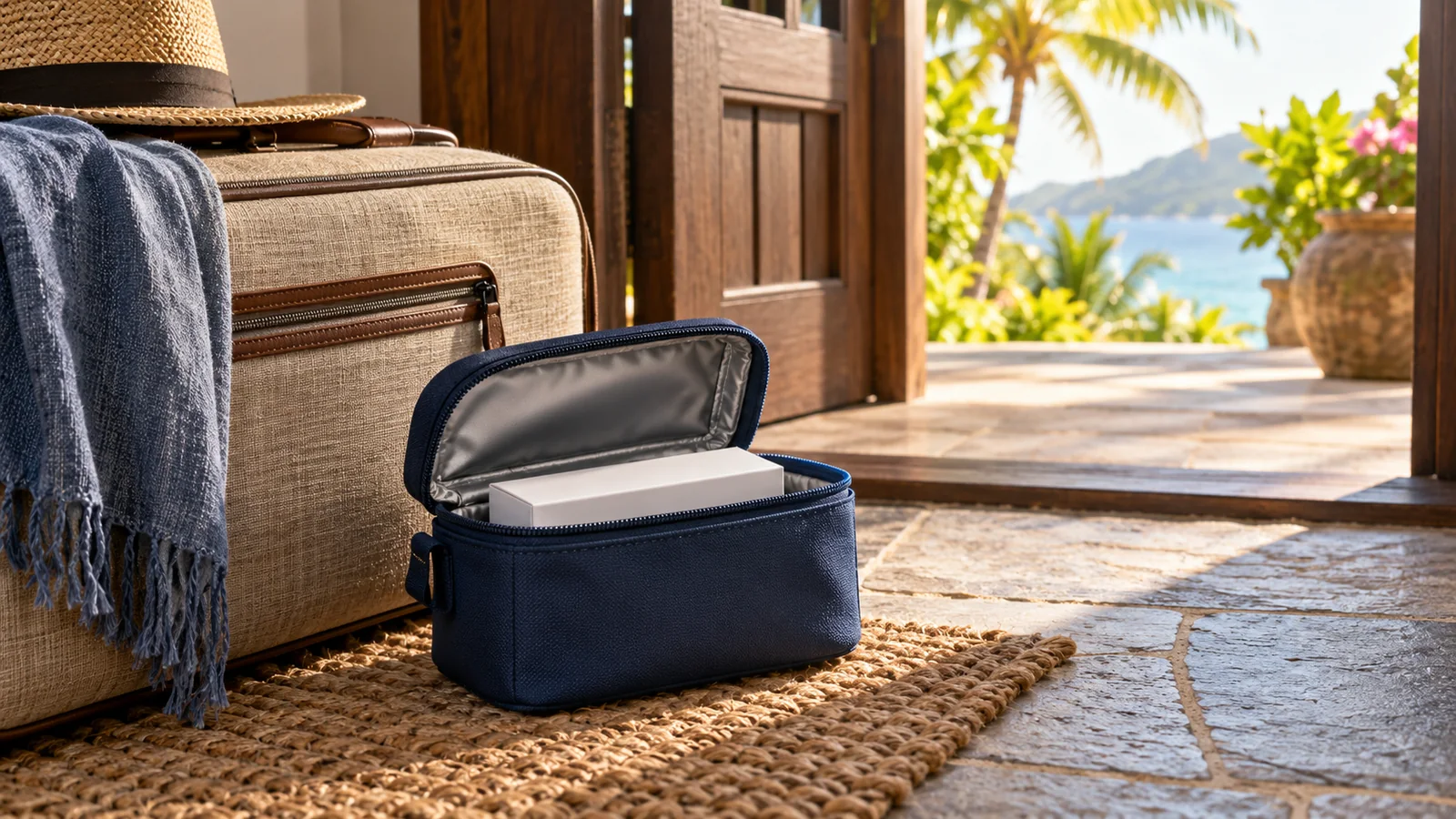
Semaglutide storage instructions belong to the exact finished product and presentation—not the ingredient name alone. Check whether you have a tablet bottle, single-dose pen or syringe, or multidose pen, and whether it has been started. If shipping or travel leaves the temperature history uncertain, contact the dispensing pharmacy or manufacturer before assuming the product is usable.123
Identify the container before counting days
Current U.S. labeling contains more presentations than a simple “Wegovy versus Ozempic” comparison suggests. The following examples show why the container and first-use status matter; they are not substitutes for the instructions supplied with the actual medicine.12
| Presentation | Storage distinction in current labeling |
|---|---|
| Wegovy single-dose pen or syringe | Refrigerated storage; a defined allowance up to 28 days at 46–86°F before cap removal, with original-carton and light precautions. |
| Wegovy FlexTouch multidose pen | Refrigeration before first use; after first use, a 56-day refrigerated or specified room-temperature period. |
| Ozempic multidose pen | Refrigeration before first use; a 56-day in-use period refrigerated or at 59–86°F. |
| Ozempic single-dose prefilled syringe | Refrigerated storage, with an allowance up to 28 days at 46–86°F. |
| Wegovy tablets | Controlled room temperature, in the original bottle to protect from moisture; not an injectable cold-chain rule. |
The injectable labels prohibit freezing and using a product that has frozen.12 “Room temperature” is a bounded label condition, not any temperature encountered inside a car, luggage compartment, or sunny room.
Keep four dates separate
Record the printed expiration date, date received, date first removed from refrigeration where relevant, and date first used for a multidose presentation. Ask the pharmacist which date starts the applicable clock.
A calendar entry such as “opened Monday” may be too vague if the carton was opened earlier but the pen was not used. Have the pharmacist explain the event that matters for the actual presentation.
Do not assume returning a product to refrigeration resets a time limit. If the storage history spans several periods or is incomplete, give the pharmacist that history rather than calculating a new expiration from an internet rule.
A warm shipment needs a product-quality decision
FDA reports complaints of compounded GLP-1 medicines arriving warm or inadequately cooled. The agency recommends not using an injectable GLP-1 product that arrives warm or with insufficient refrigeration because its quality may be affected.3
Preserve the package, dispensing label, tracking times, and any temperature indicator or photographs. Contact the pharmacy promptly and ask for written instructions about the shipment and replacement process. A sales representative’s general assurance should not replace the dispensing team’s product-specific assessment.
A melted ice pack alone does not reconstruct every temperature the medicine experienced, and a clear-looking solution does not prove the entire history. Describe what you observed without inventing a maximum temperature.
Plan the whole journey, not only the flight
Ask the pharmacist how to keep the specific product within its instructions during the airport journey, connections, ground transport, and the stay itself. Discuss the proposed insulated container and how to avoid freezing as well as overheating.
Confirm storage at the destination before departure. A room advertised as having a refrigerator does not explain its actual temperature control or access during a late arrival. Build in a contact route for delays, lost luggage, or an uncertain storage event.
TSA’s rules address what can pass through security and how medication is screened.4 They do not certify a travel pouch’s temperature performance or decide whether a medicine remains stable. Check the current security requirements for the actual supplies, while keeping the pharmaceutical question with the pharmacy or manufacturer.
Compounded products need their own instructions
Do not transfer a branded pen’s storage allowance to a compounded vial because both contain semaglutide. FDA distinguishes compounded drugs from approved products and identifies quality concerns involving unapproved GLP-1 offerings.3
Ask the dispensing pharmacy for the exact formulation, beyond-use date, storage range, after-puncture instructions, and response to an excursion. Keep those directions with the labeled container. The compounding guide addresses regulatory status; this article addresses keeping the dispensed product’s handling record intact.
If packaging or presentation changes at a refill, review the new instructions even when the ingredient and prescribed treatment seem familiar.
Give the prescriber a chance to plan around disruption
A lost or unusable supply also creates a prescribing question. Ask who will arrange a replacement and who provides instructions if a scheduled dose cannot be taken. Do not compensate by doubling, borrowing a different presentation, or switching to someone else’s medicine.
A useful travel handoff contains the product and container, relevant dates, labeled conditions, planned storage, pharmacy contact, and prescriber contact. That is more durable than memorizing one number for “how long semaglutide can be unrefrigerated.”
Sources
- Novo Nordisk. Wegovy prescribing information. Current storage distinctions for single-dose pens and syringes, FlexTouch multidose presentation, and moisture-sensitive tablets. Accessed .
- Novo Nordisk. Ozempic prescribing information. Current multidose-pen versus single-dose-prefilled-syringe storage and in-use time limits. Accessed .
- U.S. Food and Drug Administration. FDA's concerns with unapproved GLP-1 drugs used for weight loss. Shipping-temperature complaints and recommendation not to use injectable GLP-1 products arriving warm or with insufficient refrigeration. Accessed .
- Transportation Security Administration. Medications (liquid). Medication security-screening rules are a separate travel issue from pharmaceutical temperature stability. Accessed .