Therapeutic plasma exchange for longevity vs young plasma: removal and infusion are different
Therapeutic plasma exchange removes plasma and returns blood cells with replacement fluid; young-plasma infusion adds donor plasma. They are not the same intervention. Biomarker or epigenetic-clock changes in small studies do not establish slower aging, better function, or longer life.
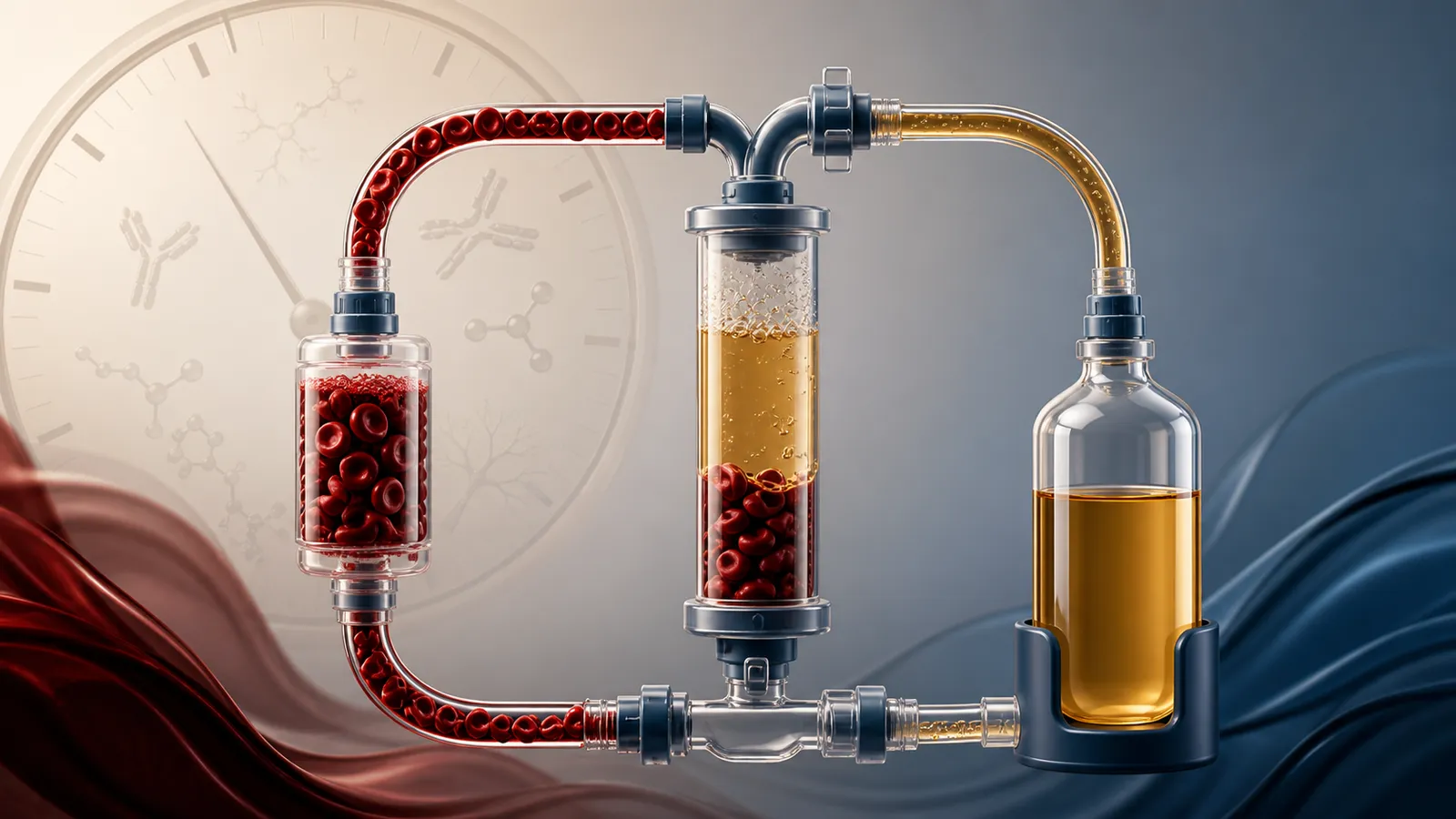
Therapeutic plasma exchange and young-plasma infusion are not the same longevity intervention. TPE removes a person’s plasma and returns blood cells with replacement fluid; a young-plasma infusion administers donor plasma selected by donor age. FDA says young-donor plasma is not approved for aging or the promoted neurologic and wellness uses. Small studies of TPE or plasmapheresis can move proteins, lipids, immune measures, or epigenetic clocks without proving that people age more slowly, function better, avoid disease, or live longer.123
The fastest way to audit a clinic package is to draw the fluid circuit. What leaves the body, what returns, what donor or manufactured product enters, and what outcome is promised should all be explicit.
Four procedures can hide under “plasma therapy”
| Procedure | What physically happens | Critical distinction |
|---|---|---|
| Plasma donation or plasmapheresis | A device separates and collects plasma while returning cellular components, typically under a donor protocol | A donor procedure and its biomarker changes are not automatically a longevity treatment |
| Therapeutic plasma exchange | Plasma is removed and cells are returned with a replacement fluid such as albumin solution, donor plasma, or another protocol-specific fluid | The indication, exchanged volume, replacement, anticoagulant, schedule, and clinical setting define the intervention |
| Young-donor plasma infusion | Plasma collected from younger donors is transfused without necessarily removing the recipient's plasma | FDA has not approved young plasma for aging or the promoted wellness uses |
| Young-donor plasma exchange | Recipient plasma is removed and young-donor plasma is used as replacement | For a longevity use outside a Circular-listed plasma indication, FDA requires an active IND with a qualified investigator or sponsor |
| EBOO or ozone circuit | Blood or plasma moves through an extracorporeal circuit involving ozone or oxygen-related claims | Shared tubing language does not make it TPE; device, gas, route, and evidence are different |
The EBOO guide explains why an ozone circuit cannot borrow the evidence or status of therapeutic apheresis.
FDA’s young-plasma warning is specific
FDA’s December 2024 update states that it is not aware of evidence demonstrating clinical benefit from young-donor plasma for preventing aging or memory loss or treating the marketed neurologic and other conditions.1 The agency distinguishes recognized uses of plasma components from young-plasma wellness claims and states that administration for other uses must occur under an active IND with a qualified investigator or sponsor.
An establishment registration, study listing, or claim that the plasma came from a licensed blood source does not approve the anti-aging indication. Each record answers a separate question: collection and testing of the component, clinical use, research authorization, and marketing claim.
Removal and replacement need a complete dose record
“One exchange” is not a standardized dose. Record:
- procedure purpose and clinical indication;
- device, disposable kit, operator, and facility;
- estimated plasma volume and volume actually processed or removed;
- anticoagulant, calcium or other supportive medicines;
- replacement fluid, manufacturer or blood-component source, lot or unit identifiers, and amount;
- donor selection, if donor plasma is used;
- schedule, number of procedures, and interval;
- vascular access, monitoring, laboratory plan, and stopping criteria; and
- adverse-event, emergency, and longitudinal follow-up ownership.
Albumin replacement, saline, IVIG, ordinary donor plasma, and young-donor plasma are not interchangeable. A trial combining TPE and IVIG cannot prove the result of TPE alone, and a plasma-donation study cannot establish the effect of a clinic’s exchange-and-replacement protocol.
Biomarker change is not clinical rejuvenation
The 2025 randomized multi-omics study enrolled 42 adults over 50 across TPE regimens and placebo and explored multiple epigenetic and other biological-age measures.2 Even where clock changes were reported, the study was small, used many exploratory biomarkers, and did not demonstrate longer life or prevention of age-related disease. Its protocols, replacement fluids, and participant selection must match before a clinic cites it.
A separate 2025 randomized crossover plasmapheresis study reported changes in lipids, proteins, minerals, and blood measures but no conclusive epigenetic rejuvenation; some measured clocks moved in the opposite direction.3 That contradiction is not a reason to select the more favorable graphic. It is evidence that protocol, biomarker, analysis, and biological meaning remain unsettled.
The biological-age test guide explains why clocks estimate different constructs and can move without a validated clinical decision.
The 2026 young-plasma study is a pilot, not a consumer endpoint
A July 2026 report described feasibility and safety in twelve people with recent mild cognitive impairment and biomarker evidence related to Alzheimer’s disease who underwent a defined young-donor plasma-exchange protocol.4 It was not a trial showing that healthy consumers became younger, and the selected population, large plasma volumes, monitoring, donor product, and endpoints matter.
“Published in 2026” does not mean proven. Ask whether the study was randomized, blinded, controlled, powered for a clinical endpoint, and long enough to detect benefit and important harm. A feasibility study primarily asks whether a procedure can be delivered and studied.
Risks belong to the exact circuit and replacement product
FDA’s communication lists transfusion risks including infectious-disease transmission, allergic reactions, and respiratory complications.1 Exchange adds vascular access, anticoagulant, fluid, blood-pressure, electrolyte, bleeding, and device-procedure questions. Replacement with plasma, albumin, IVIG, or another fluid changes the exposure.
Ask who evaluates medications, bleeding and clotting context, infection, heart or kidney issues, immune reactions, and vascular access. This is not a home eligibility checklist; it is a reason to verify a qualified clinical team, appropriate facility, monitoring, and emergency transfer plan.
Translate the longevity contract
Reduce the offer to a circulation ledger: what leaves, what returns, whether donor plasma enters, which authorized clinical or research pathway applies, and which human outcome the same protocol has improved. Biomarker movement alone does not close that ledger.
Sources
- U.S. Food and Drug Administration. Update to Important Information About Young Donor Plasma Infusions Offered for Profit. Current FDA warning that young-donor plasma is not approved for aging or the promoted neurologic and wellness uses, plus distinctions among recognized plasma uses, research, and ClinicalTrials.gov listing. Accessed .
- Aging Cell. Multi-Omics Analysis of Therapeutic Plasma Exchange and Biological-Age Biomarkers. 2025 randomized placebo-controlled study in 42 adults evaluating TPE regimens, IVIG, safety, and multiple biomarker clocks rather than clinical rejuvenation outcomes. Accessed .
- Scientific Reports. Human Clinical Trial of Plasmapheresis Effects on Biomarkers of Aging. 2025 randomized crossover study reporting no conclusive epigenetic rejuvenation and multiple laboratory changes under a distinct plasmapheresis protocol. Accessed .
- GeroScience. Young-Donor Plasma Exchange in Cognitively Impaired Patients: Pilot Safety and Feasibility. July 2026 twelve-person pilot focused on feasibility and safety in a defined cognitively impaired population, not proof of anti-aging effectiveness in healthy consumers. Accessed .