Micro-coring vs microneedling and laser resurfacing
Micro-coring removes tiny full-thickness columns of skin without thermal energy; microneedling creates punctures without intentionally removing cores; laser resurfacing delivers controlled optical energy to tissue. Their mechanisms, endpoints, downtime, evidence, and device records are not interchangeable.
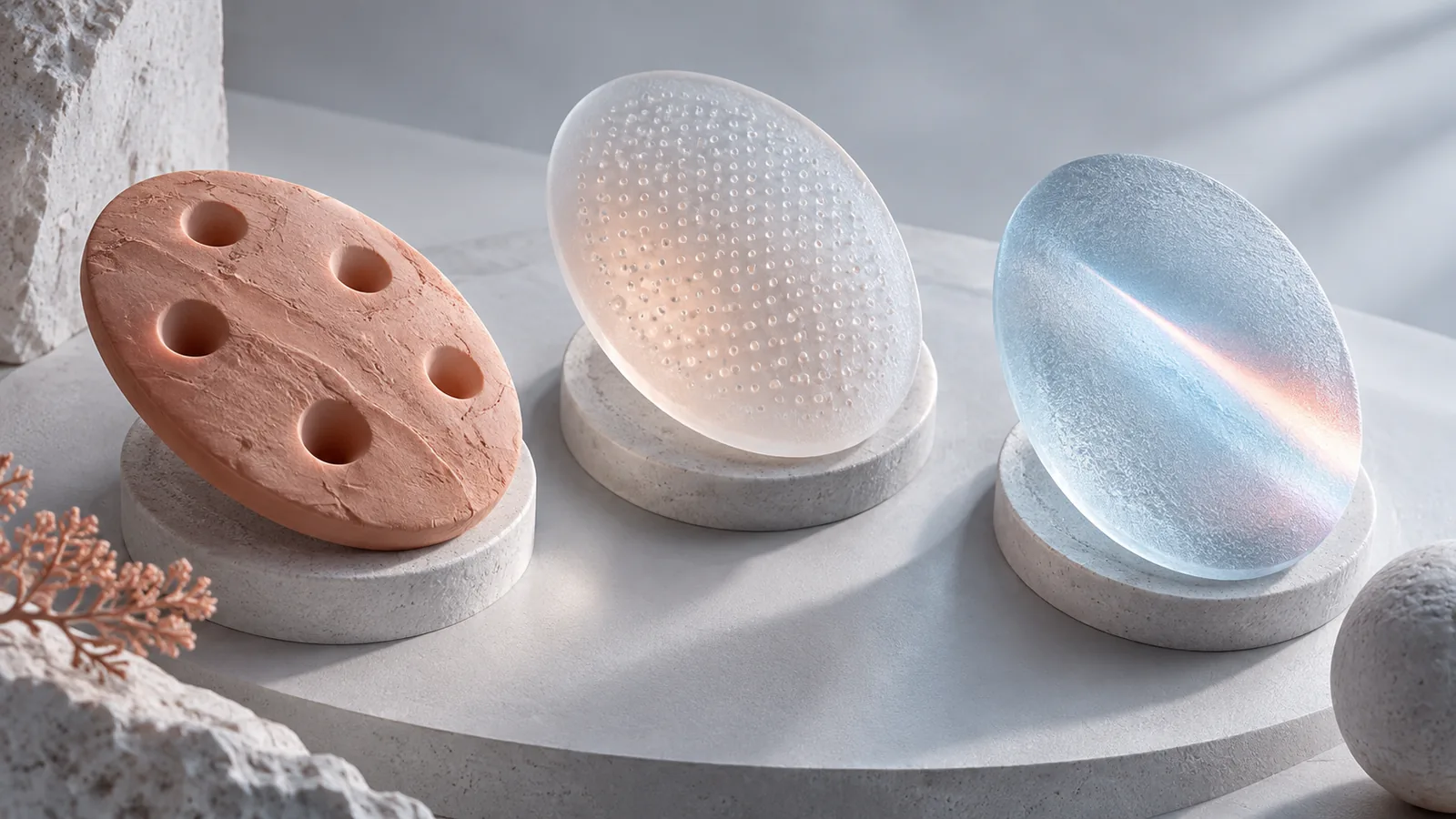
Micro-coring, microneedling, RF microneedling, and laser resurfacing are not four intensities of the same treatment. Micro-coring mechanically removes microscopic columns of skin; conventional microneedling creates channels without planned tissue removal; RF microneedling adds heat through needles; and laser resurfacing uses light energy to create controlled thermal or ablative injury.13467
That mechanism determines what must be verified: the exact device, treated depth and density, tissue endpoint, anesthesia plan, recovery, evidence, and complication response. A menu word such as “collagen treatment” is too broad to compare them.
Define the tissue event before comparing downtime
| Approach | Primary tissue event | Record that makes the plan comparable |
|---|---|---|
| Micro-coring | Hollow needles extract microscopic full-thickness skin cores without adding heat | Device, core size/depth, coring percentage or density, passes, area, anesthesia |
| Conventional microneedling | Solid needles create controlled puncture channels | Exact device, needle configuration, depth, passes, endpoint, any topical product |
| RF microneedling | Needles deliver radiofrequency energy at selected depths | Needle type, depth, energy, pulse, stacking, cooling, treatment zone |
| Fractional laser | Microscopic columns of optical energy leave intervening tissue | Wavelength, ablative/nonablative mode, density, energy, passes, overlap |
| Full-field resurfacing | A continuous surface area is treated rather than fractionated | Wavelength or method, depth/endpoint, zone, anesthesia, wound care |
Micro-coring is sometimes described as “scarless skin removal.” That phrase hides two qualifications. First, removing tissue creates many small healing sites even when it does not create one long surgical incision. Second, visible scarring is an outcome, not something a device category can rule out. The FDA clearance and current review support a bounded indication and evidence record, not a universal no-scar guarantee.12
Clearance follows the exact device and intended use
FDA’s 510(k) pathway determines substantial equivalence for a particular device and intended use. It does not approve “micro-coring” as a generic procedure, certify an operator, or establish superiority over microneedling, laser, surgery, or no treatment.1
Device history also matters. FDA’s completed recall record for an earlier micro-coring system describes irregular or overlapping cores and the possibility of prolonged healing, texture irregularity, or scarring.5 A current clearance and current model should therefore be verified rather than inferred from an older brochure or review.
Ask for the manufacturer and model, then retrieve its current decision summary and labeling. Match the age range, anatomical region, indication, contraindications, accessories, and instructions to the proposed plan. A newer handpiece, needle cartridge, software setting, or expanded region may have a separate record.
Conventional microneedling devices also vary. FDA notes that some are authorized for specific uses and that using unapproved products with microneedling can add risk.3 A facial serum, exosome product, platelet preparation, compounded drug, or pigment does not become approved for intradermal delivery because it is paired with a cleared needling device.
RF microneedling belongs in its own column
RF microneedling is not conventional microneedling with a stronger needle. The needles act as electrodes and create heat within tissue. Depth, energy, pulse duration, insulated versus noninsulated needles, repeated passes, and overlap all affect the exposure.
FDA’s current safety communication reports serious complications associated with certain RF-microneedling uses, including burns, scarring, fat loss, disfigurement, and nerve damage.4 That warning does not mean every RF treatment produces those outcomes. It does mean a quote or consent form that groups RF needling under ordinary “microneedling” is missing a decisive mechanism.
Laser names are incomplete without mode and settings
“Laser resurfacing” can mean ablative or nonablative treatment, fractional or full-field coverage, and different wavelengths, pulse structures, densities, and endpoints. Two sessions with the same wavelength can create different tissue effects. Conversely, different devices may target a similar clinical endpoint through different exposures.67
The useful comparison is not “laser versus needles” in the abstract. It is the complete proposed protocol for a defined concern and skin site. Record:
- exact device and regulatory record;
- treatment mode, depth, density, energy, passes, and overlap;
- skin type and pigment-change plan;
- antiviral, acne, dermatitis, scar, and wound-healing history as relevant;
- eye protection and smoke-plume controls where applicable;
- anesthesia and pain-control plan; and
- wound care, contact route, and escalation thresholds.
The laser category guide helps decode those settings before a technique comparison.
Evidence does not yet support a universal ranking
The 2025 micro-coring systematic review found encouraging changes in laxity and wrinkles in published studies while also identifying heterogeneity and limitations in study design, outcome measures, follow-up, and evidence volume.2 A before-and-after series can show that improvement occurred in selected participants; it cannot by itself prove that micro-coring is better than a specific laser, surgery, or another device.
Compare evidence at three levels:
- Device evidence: Does the study use the model and generation offered?
- Protocol evidence: Are depth, density, passes, area, and session count similar?
- Patient and endpoint evidence: Does the population resemble the concern being treated, and is the outcome a validated scale, blinded rating, patient report, or selected photograph?
A study of facial wrinkles cannot automatically support abdominal laxity. A short follow-up cannot establish durability. A satisfaction score cannot substitute for a measured endpoint, and a manufacturer-sponsored study is not invalid solely because of funding—but its role belongs in the interpretation.
Match the target, not the novelty
Micro-coring physically removes a small fraction of tissue, which may make laxity or wrinkle reduction the proposed target. Microneedling may be discussed for texture or scars. Lasers can target surface change, water-containing tissue, pigment, vessels, or remodeling depending on the platform. Surgery changes larger tissue relationships that no fractional device reproduces.
One person may have several targets: laxity, etched lines, dyschromia, acne scars, volume loss, jowling, or muscle-driven folds. A device selected for one target can leave another unchanged. Ask the practice to name the primary target and the measure used to judge it before discussing package size.
Recovery labels need observable milestones
“Three days of downtime” can mean three days until makeup, work, exercise, public comfort, or complete barrier recovery. Ask for observable milestones: pinpoint bleeding, oozing, crusting, swelling, redness, peeling, tenderness, sun sensitivity, and the time to resume specific products.
The plan should distinguish expected findings from reasons to contact the practice promptly. It should also identify who evaluates delayed texture change, persistent redness, pigment alteration, infection signs, scarring, or unwanted fat loss. A recovery estimate is more credible when the clinic names the protocol, patient factors, and evidence behind it.
- Name the tissue event Is the plan removing microcores, creating channels, delivering RF heat, or using optical energy? Do not compare labels until that is clear.
- Retrieve the device record Match manufacturer, model, indication, region, patient population, accessories, and instructions with the proposed use.
- Normalize the protocol Write down depth, density, energy, passes, treatment area, session count, anesthesia, and products used.
- Audit the evidence Look for the same device, protocol, population, target, outcome, follow-up, comparator, and funding disclosure.
- Assign recovery ownership Keep the aftercare plan, expected milestones, urgent contact route, and clinician responsible for complications.
Compare the tissue event, not the buzzword
Ask: “What tissue event does this exact protocol create, and what evidence compares that event with the alternative for my stated target?” A useful answer names a device, settings, endpoint, population, and uncertainty. “It makes collagen with less downtime” does not.
Sources
- U.S. Food and Drug Administration. 510(k) summary K252752. Current clearance summary defining the micro-coring device, full-thickness excision mechanism, adult population, facial region, and performance record. Accessed .
- PubMed. Micro-coring technology for skin rejuvenation: a systematic review. 2025 systematic review of clinical evidence, endpoints, adverse events, and evidence limitations for micro-coring. Accessed .
- U.S. Food and Drug Administration. Microneedling devices. FDA distinctions among legally marketed microneedling devices, products used with them, and known risks. Accessed .
- U.S. Food and Drug Administration. Radiofrequency microneedling: safety communication. Current FDA warning that RF microneedling has a thermal energy component and reports of serious complications. Accessed .
- U.S. Food and Drug Administration. Class 2 device recall: earlier micro-coring system. Completed recall record for an earlier system involving irregular or overlapping cores and possible prolonged healing, texture change, or scarring. Accessed .
- U.S. Food and Drug Administration. 510(k) indications for use K244060. Official example distinguishing fractional and nonfractional handpieces and ablation, resurfacing, and coagulation indications for an exact CO2 platform. Accessed .
- U.S. Food and Drug Administration. 510(k) summary K221770. Official example of a nonablative fractional erbium-fiber laser intended for fractional skin resurfacing and soft-tissue coagulation. Accessed .