Treatments, explained: page 3

What a treatment is, who regulates it, and what to ask. 186 articles, newest first.

Treatments, explained

Open vs closed rhinoplasty: access, scars, grafting, and evidence

Open rhinoplasty adds a transcolumellar incision to internal incisions; closed rhinoplasty uses internal incisions. Access affects exposure and scar location, but current evidence does not establish one approach as the universal choice for appearance, breathing, recovery, or revision risk.

4 min read Source checked

Treatments, explained

What an internal bra means—and the FDA status of breast mesh

“Internal bra” is not one standardized device or operation. It can mean synthetic mesh, acellular dermal matrix, sutures, tissue flaps, muscle support, or combinations. FDA says no surgical mesh is cleared or approved specifically for breast surgery; broad soft-tissue status must be verified separately.

7 min read Source checked

Treatments, explained

GLP-1 maintenance after goal weight: continue, reduce, or stop?

Reaching a goal weight does not create one evidence-based exit rule. Continued labeled treatment, a prescriber-directed change, and discontinuation have different evidence, monitoring, access, and regain implications; reduced-frequency or “microdosing” plans are not interchangeable with approved maintenance schedules.


7 min read Source checked

Treatments, explained

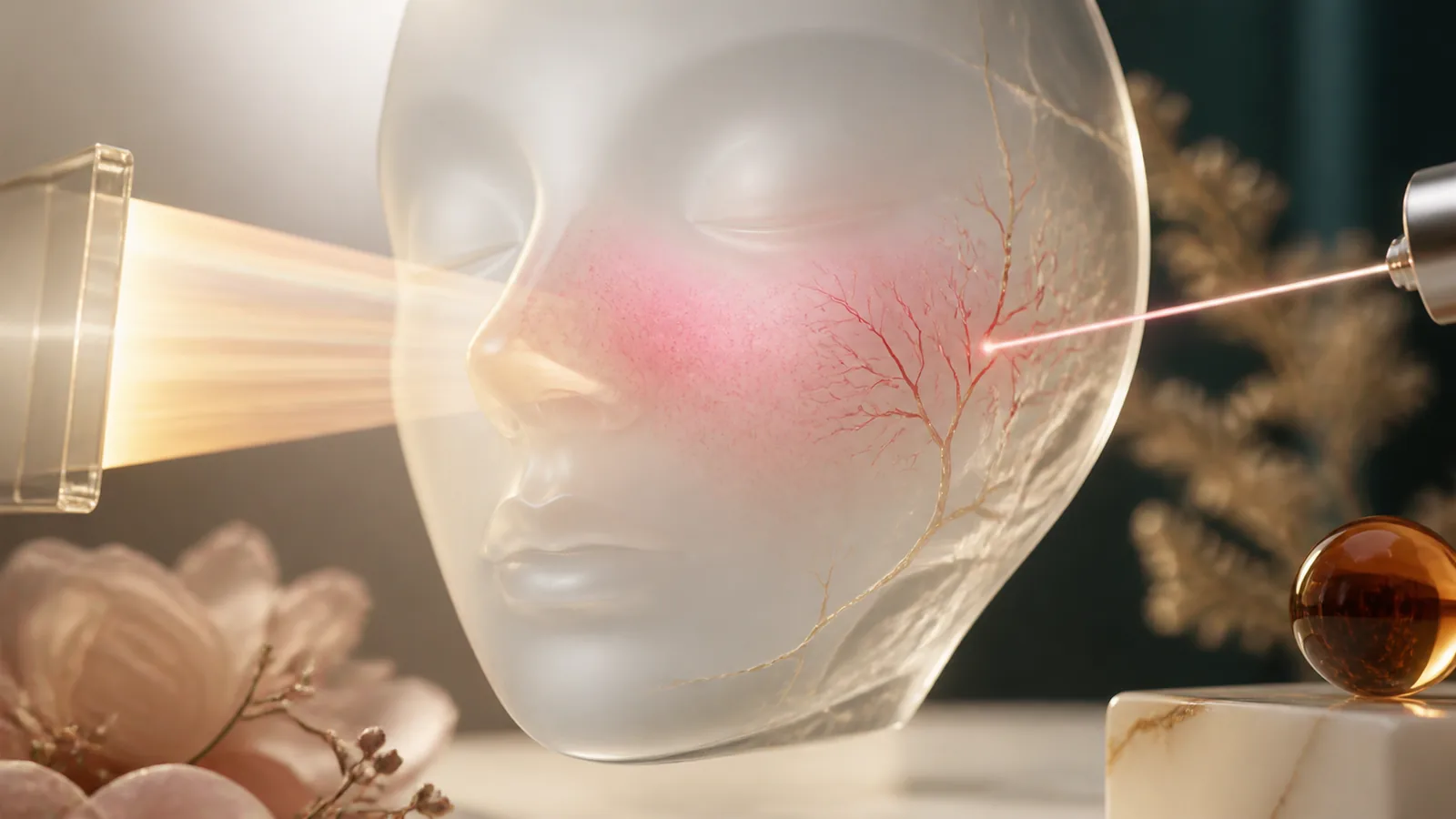
Rosacea: IPL vs vascular laser starts with the feature being treated

IPL and vascular lasers can reduce visible vessels or persistent redness in selected rosacea plans, but they are not interchangeable cures. Choose after naming the phenotype, exact spectrum or wavelength, vessel target, skin context, test strategy, endpoint, maintenance, and plan for nonvascular features.

6 min read Source checked

Treatments, explained

Wegovy pill vs injection: the same ingredient, different regimen

Both Wegovy formulations contain semaglutide, but the pill is a daily fasting regimen for adults and the injection is a weekly regimen with broader labeled populations. Their milligram numbers, administration rules, evidence, and switching instructions are not interchangeable.

6 min read Source checked

Treatments, explained

AI skin analysis at a med spa: accuracy, privacy, and recommendations

An AI skin scan may quantify image features such as spots, redness, texture, pores, wrinkles, or estimated age, but performance depends on camera, lighting, calibration, training data, reference labels, skin tone, and intended use. A treatment recommendation is a separate commercial or clinical step, not a measurement.

7 min read Source checked

Treatments, explained

B12 shots: deficiency treatment versus wellness marketing

Vitamin B12 injections are established treatment when deficiency or impaired absorption makes parenteral replacement appropriate. Feeling tired is not by itself a B12 diagnosis, and B12 does not provide extra energy or weight loss when status is already adequate.

6 min read Source checked

Treatments, explained

Baby Botox and preventative Botox: marketing terms translated

“Baby Botox” and “preventative Botox” are marketing terms, not FDA product names, standardized doses, or distinct procedures. A real plan still has to name the prescription product, product-specific dose, muscles, placement, intended effect, and whether the use is labeled or off-label.

6 min read Source checked

Treatments, explained

Body contouring after GLP-1 weight loss: define the tissue first

After substantial weight loss, loose skin, residual subcutaneous fat, possible changes in lean mass, muscle quantity or strength, cellulite, and abdominal-wall structure are different findings. Noninvasive contouring can target selected appearance features; only surgery removes substantial excess skin.

6 min read Source checked